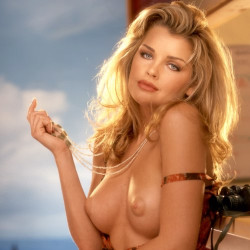
Melissa Holliday Bio
Melissa Holliday is an American actress, glamour and nude model. She was born Melissa Deanne Holliday on October 30, 1969, in Greenwood, California. Playboy named her its January 1995 Playmate at 25. Her appearance came during Playboy's 1990s print era, a period increasingly shaped by entertainment and celebrity culture.
Holliday has natural breasts, blue eyes and blond hair. Her measurements are 34-24-34.
Holliday’s trajectory into public life grew out of a childhood on stage and behind the microphone: she appeared in regional productions ranging from Annie to Capricious Pearls, recorded radio commercials, and collected pageant crowns along the way. As an adult she moved between Denver, Los Angeles and New York, auditioning for acting work while recording country-music demos and seeking a first record deal. Those early-performance habits also sent her to conventions and automobile shows; among the more unusual bookings in her résumé was an appearance before Lee Iacocca at an industry event.
Her Playboy centerfold was shot by Richard Fegley and staged with a Western-inflected look near Denver, a pictorial that led to additional brand work. Holliday appears in Playboy video releases, including the Playboy Video Playmate Calendar 1996 and Playboy: Voluptuous Vixens, and she picked up small screen credits during the same period, among them a brief Baywatch appearance. She supplemented on-camera work with live-event bookings — singing at a Chrysler convention — and later lent her voice to television-commercial voiceovers.
The public record also includes a consequential medical and legal episode. In the summer of 1995 Holliday underwent electroconvulsive therapy while treated at St. John’s Hospital and Health Center in Santa Monica; she subsequently filed a civil suit alleging medical malpractice, assault and battery, and personal injury. In public statements she characterized the experience in stark terms, saying, “I’ve been through a rape, and electroshock therapy is worse.” Those claims were made in her lawsuit and reporting; they remain allegations rather than adjudicated findings in the archive.
Viewed together, the documents that follow her centerfold map a short, busy spell of entertainment work interrupted by a widely reported health and legal struggle. The record that survives is one of a performer who moved easily between live shows, studio demos, commercial work and the kind of magazine and video exposure that defined many mid‑1990s careers — and whose later legal complaint became as central to her public story as any of those early gigs.