For most of its history, the Playboy Mansion operated on a simple principle: almost everyone knew about it, but relatively few people ever made it through the gates. There were the photographs, legendary parties, the grotto, movie nights, Playmates by the pool and endless stories about celebrities disappearing up the driveway on Charing Cross Road. Over the decades, the Mansion became less like a private home and more like its own little country, with Hugh Hefner as its pajama-clad head of state.
Then, in the summer of 2005, television cameras moved in.
When The Girls Next Door premiered on E! on August 7, viewers were ostensibly being invited into Hugh Hefner's world. What they actually discovered were Holly Madison, Bridget Marquardt and Kendra Wilkinson, three women who shared the same famous address but could hardly have been more different from one another. Over the next several years, they turned Mansion bedrooms, birthday preparations, costume fittings, Playboy photo shoots, trips to Las Vegas, pets, parties and the peculiar rhythms of life with Hef into remarkably addictive television.
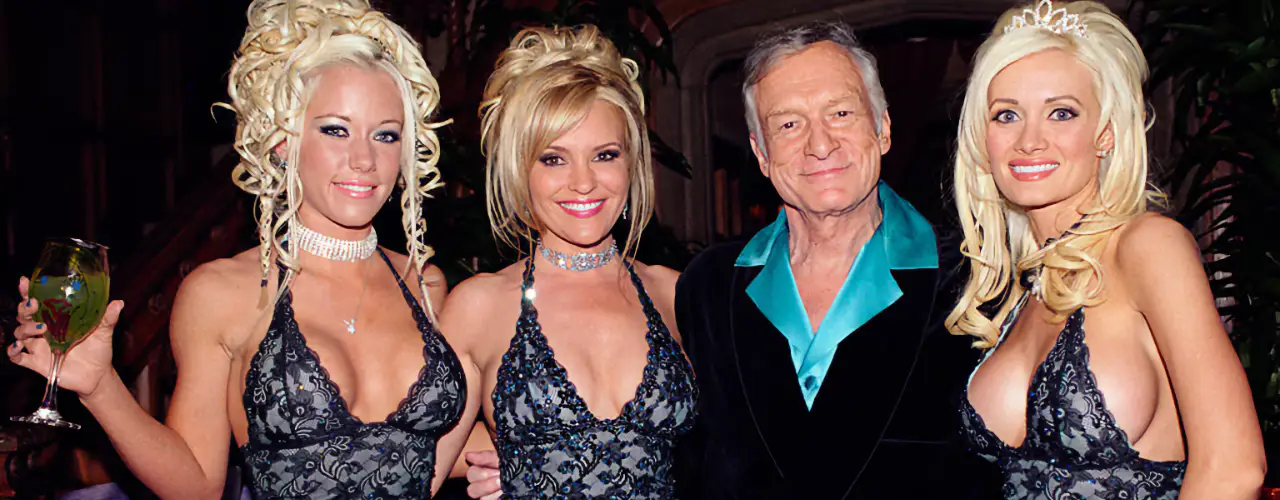
The show did something Playboy itself had never quite managed before: it gave millions of viewers a weekly look at the everyday machinery behind the fantasy. More surprisingly, it became a major hit not simply with the male audience one might have expected from anything involving Playboy, but with young women.
That wasn't the original plan. It may have been the secret of the show's success.
How The Girls Next Door TV Series Was Created
By the mid-2000s, reality television had learned an important lesson: famous people could be highly entertaining while doing almost nothing conventionally important. The Osbournes had turned family arguments and breakfast-table chaos into appointment television. Newlyweds made the marriage of Jessica Simpson and Nick Lachey into an unscripted sitcom. The Simple Life sent Paris Hilton and Nicole Richie into ordinary America and waited for the collision.
Against that backdrop, the Playboy Mansion looked like an obvious target for reality TV. The setting already had everything producers normally had to manufacture: an instantly recognizable central figure, beautiful women, celebrity guests, parties, unusual house rules and a location that viewers were curious to enter.
Hefner, however, had been approached repeatedly about reality television and wasn't especially enthusiastic. After decades of controlling Playboy's image with extraordinary care, allowing cameras into his private home was hardly an obvious decision.
The man who changed his mind was producer Kevin Burns.

Burns was not simply another producer pitching Hef a reality-show treatment. An Emmy-winning documentarian, he had already produced a two-hour A&E Biography about Hefner and later worked on other Playboy-related projects. Over time, Burns and Hefner developed a friendship, and that trust gave him a level of access other producers did not have.
An early idea discussed with A&E would have placed Hefner alongside his former wife and children in something closer to The Osbournes. When that concept went nowhere, attention shifted to Hefner's current life at the Mansion, where he was living with three girlfriends.
Burns shot a test program called Hef's World. It featured Hefner, the Mansion, the girlfriends, the staff and the unusual domestic ecosystem surrounding Playboy's founder. A&E ultimately passed on the project, which could easily have ended the experiment before The Girls Next Door ever existed.
Instead, Burns showed the footage to Lisa Berger, then a senior programming executive at E!. Berger noticed something important. Hefner was famous and the Mansion was undeniably fascinating, but the three women around him seemed capable of becoming much more than supporting characters.
Burns returned to the Mansion and filmed more material with Holly Madison, Bridget Marquardt and Kendra Wilkinson individually. The result revealed three strong, distinctly different personalities. The show stopped being primarily about Hef's world and became a series about the women living inside it.
That change in perspective created The Girls Next Door.
Kevin Burns, Hugh Hefner and the Production Behind The Girls Next Door
The creative partnership between Burns and Hefner was central to the series. Burns brought the instincts of a documentary producer, while Hefner provided access to a world that had spent decades cultivating its mystique.
The production involved Burns' Prometheus Entertainment, Playboy's Alta Loma Entertainment, Fox Television Studios and E! Entertainment. Yet the show's tone was shaped as much by Hefner's expectations as by corporate production machinery.
Hef did not want a series built around cruelty, humiliation or the kind of manufactured conflict that increasingly defined reality television. Burns later explained that Hefner wanted him personally involved, wanted the show to avoid turning nasty, and wanted the people participating to enjoy making it.

That decision would become one of the show's defining characteristics. While plenty of reality television was becoming louder, angrier and more confrontational, The Girls Next Door often behaved more like an unscripted sitcom. There were disagreements and awkward moments, but the series rarely depended on making its cast miserable.
Burns himself leaned into that idea. He sometimes compared his approach not to contemporary reality programs but to old television comedies such as Green Acres or Petticoat Junction. The Mansion already contained an eccentric cast, absurd situations and its own strange internal logic. There was little need to manufacture chaos when the location itself supplied so much material.
Holly Madison, Bridget Marquardt and Kendra Wilkinson: Three Very Different Stars
The great accident of The Girls Next Door was that Holly, Bridget and Kendra had not been assembled by a television casting department. They were already living at the Mansion when the program was developed, yet they arrived on screen with the kind of sharply differentiated personalities producers usually spend months trying to find.
Holly Madison was the woman closest to Hefner and increasingly became the keeper of Playboy history within the series. She developed a visible interest in the magazine's archives, classic Playmates, photography, fashion and the creative process behind Playboy itself. Over time, viewers saw her move from simply living inside the Playboy world toward actively trying to understand and contribute to it. If the Mansion was a miniature kingdom, Holly often appeared as its first lady.
Bridget Marquardt brought a different energy. She loved the mythology, theatricality and pageantry of Playboy: costumes, holidays, themes, parties, travel and old-school glamour. She could approach Halloween decorating or a birthday theme with the seriousness of a Broadway producer mounting opening night. Her enthusiasm helped make the Mansion's traditions accessible rather than intimidating.
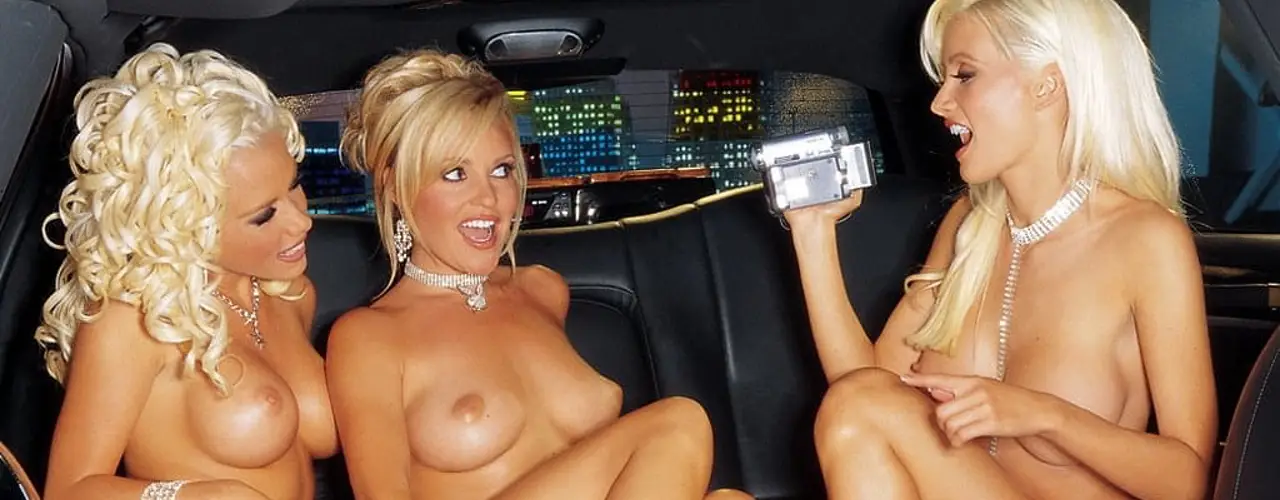
Kendra Wilkinson was the wildcard. Younger, louder and more openly irreverent, she was as likely to be talking about football, hip-hop or the gym as she was Playboy history. Her bedroom frequently looked as if conventional organization had been outlawed. Her laugh was impossible to miss, and her unpredictability made her a natural reality-TV personality.
Their differences gave viewers an immediate way into the show. People didn't necessarily have to fantasize about Hugh Hefner's life to enjoy The Girls Next Door. They could identify with Holly, Bridget or Kendra, argue about which one they liked best and follow each woman for entirely different reasons.
That proved far more powerful than simply offering viewers a tour of the Mansion.
The Playboy Mansion Became the Fourth Star
By 2005, the Playboy Mansion was already one of the most recognizable private homes in America. Yet its public image had traditionally been built around a very specific set of images: glamorous parties, the swimming pool, the grotto, beautiful women and celebrity guests.
Television needed more than that. It needed kitchens, dogs, laundry, luggage, cakes, birthday decorations and people worrying about getting to the airport on time.
The Girls Next Door gradually transformed the Mansion from a cultural symbol into a functioning household, albeit a spectacularly unusual one. Audiences met members of the kitchen staff, butlers, assistants and regular visitors. Hefner's longtime secretary Mary O'Connor became an especially familiar presence, quietly anchoring a house that often seemed to operate according to rules understood only by the people inside it.
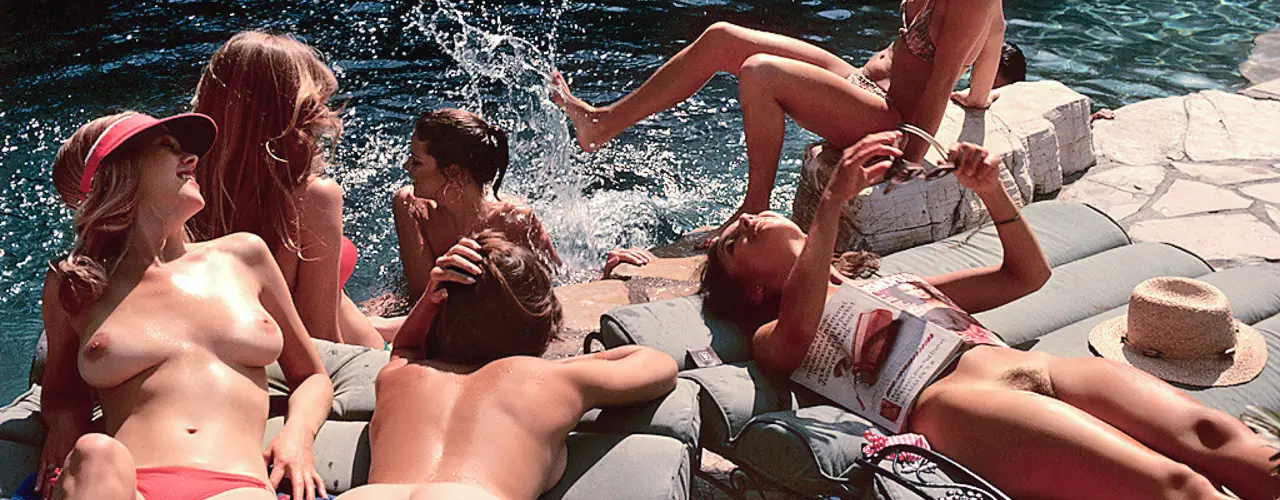
The series also opened up the calendar of Mansion traditions. Viewers saw movie nights, Fight Night, Fourth of July celebrations, Midsummer Night's Dream, Halloween preparations, trips to the Playboy Jazz Festival, Playmate test shoots and visits to Playboy Studio West. Major events shared screen time with the far less glamorous business of packing suitcases, decorating rooms or managing pets.
That contrast became part of the show's charm. One evening could involve a party legendary across Hollywood, while the next scene might feature the girls sitting in the Mansion kitchen discussing something completely mundane.
For longtime Playboy fans, the access was unprecedented. For everybody else, the attraction was almost anthropological: this was a chance to see how one of America's most famous fantasies functioned when the party was over.
Why The Girls Next Door Became So Popular With Women
The demographics of the show's success remain one of the most interesting parts of its history. E! had good reason to expect The Girls Next Door to appeal primarily to men. The network had lost The Howard Stern Show, which had delivered a valuable male audience, and a program built around Playboy, Hefner and three beautiful girlfriends looked like an obvious replacement.
Instead, young women became a core part of the audience.
By the fourth season, The Girls Next Door was averaging around 1.4 million viewers per episode, dramatically outperforming E!'s normal prime-time numbers. The audience was heavily female, particularly among younger viewers.
In retrospect, the explanation is not difficult to see. The show looked provocative from a distance but was surprisingly gentle once you watched it. Its real currency was less sex than aspiration, friendship, celebrity and access.
The women traveled, dressed up, met famous people, threw elaborate parties, planned birthdays, went shopping and doted on their pets. There was a fantasy element to almost everything, but it was often presented in a tone closer to a glossy sitcom than an adult entertainment product.
Most importantly, the emotional center of the series was often the relationship among the three women rather than their relationship with Hefner. Viewers could identify with their individual personalities and ambitions even if the Mansion itself felt completely removed from ordinary life.
The series also lacked much of the hostility that defined other reality shows. Instead of asking viewers to tune in because somebody might be humiliated, eliminated or betrayed, The Girls Next Door often asked a much simpler question: what are Holly, Bridget and Kendra doing this week?
For millions of viewers, that was enough.
How The Girls Next Door Brought Playboy to a New Generation
Playboy had always occupied a strange position in American culture. It could be provocative and mainstream at the same time, part of adult entertainment while also interviewing presidents, publishing major writers and hosting some of Hollywood's most recognizable stars.
The Girls Next Door gave the brand another route into mainstream popular culture.
A viewer no longer needed to buy Playboy magazine to know the people around it. The Rabbit Head appeared comfortably within the same television universe as celebrity news, fashion, entertainment and reality TV. Holly, Bridget and Kendra became recognizable far beyond the traditional Playboy audience.
The Mansion itself helped connect those worlds. Celebrity guests had always moved through its gates, but television now captured some of those encounters for a mass audience. Pamela Anderson, Jenny McCarthy and Barbi Benton connected different generations of Playboy history, while actors, musicians, athletes, designers and television personalities regularly appeared around Mansion events.
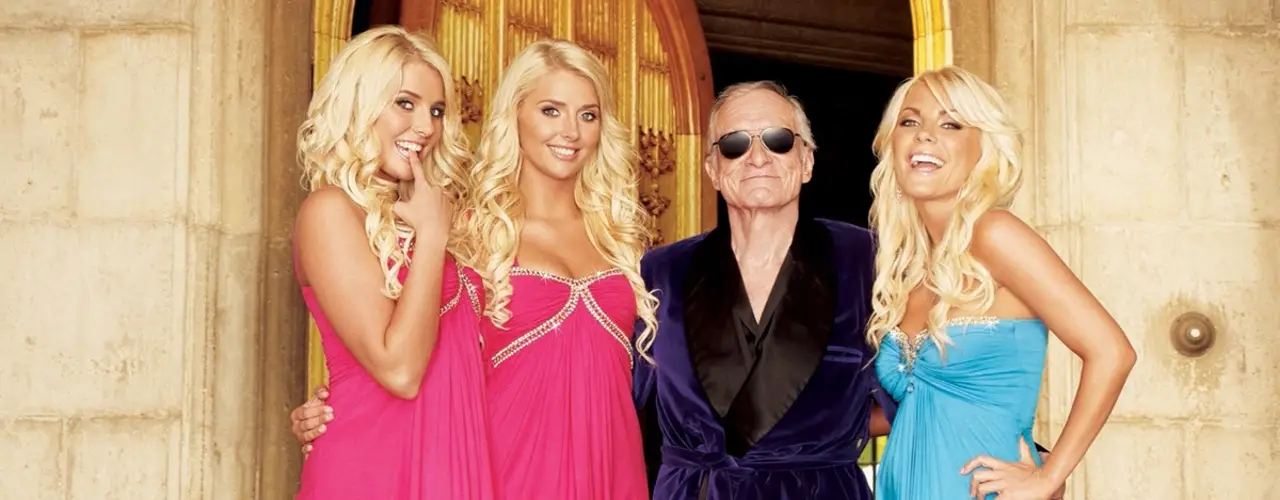
The result is now valuable for another reason: The Girls Next Door became an accidental television archive of the Playboy Mansion during the final major period of its celebrity influence.
It also gave recurring exposure to Playmates and models who might otherwise have been familiar mainly to readers of the magazine. Sara Jean Underwood, for example, appeared within the Girls Next Door universe during the period surrounding her rise from Playmate of the Month to Playmate of the Year.
Playboy had spent decades creating personalities through print. Now television was helping create a new kind of Playboy celebrity.
When Holly, Bridget and Kendra Became Bigger Than the Original Premise
At the beginning of the series, Hugh Hefner and Playboy were unquestionably the famous names. Holly Madison, Bridget Marquardt and Kendra Wilkinson were the women audiences were being introduced to. Over time, that relationship changed.
The women developed fan bases of their own, and their ambitions increasingly became part of the program. Holly became more involved with Playboy's creative world and later built a substantial career in Las Vegas. Bridget's interest in travel and television hosting developed into Bridget's Sexiest Beaches for the Travel Channel. Kendra's personality was so perfectly suited to reality television that her life outside the Mansion quickly became its own franchise.
By the fifth season, the women were no longer simply characters within Hugh Hefner's world. They had become celebrities capable of carrying projects independently.

The fifth-season finale, broadcast in 2009, drew approximately 2.2 million viewers, the largest audience in the show's history. Yet that high point also marked the effective end of the original trio.
Kendra left the Mansion and became engaged to NFL player Hank Baskett. Bridget moved ahead with her television career. Holly and Hefner's relationship ended as their expectations for the future moved in different directions.
Remarkably, leaving the Mansion did not end their relevance. In some cases, it expanded it.
Kendra debuted on E! in 2009 with around 2.6 million viewers, becoming one of the network's strongest series launches of the era. She later continued her reality career with Kendra on Top. Holly moved to Las Vegas, appeared in the stage production Peepshow and received her own E! series, Holly's World. Bridget became the host of Bridget's Sexiest Beaches.
A television series that had introduced them as Hugh Hefner's girlfriends had succeeded in turning all three into independent media personalities.
Fun Facts and Behind-the-Scenes Stories From The Girls Next Door
Part of the charm of The Girls Next Door was that the premise was already stranger than almost anything a television writer could have invented. Producers didn't need to construct a fictional mansion filled with celebrities, beautiful women, exotic birds, endless parties, a private zoo and an octogenarian publishing legend walking around in silk pajamas. Reality had supplied the setting.
Even the casting process was unusual because, strictly speaking, there wasn't one. Holly, Bridget and Kendra were not selected through auditions or assembled specifically for the program; they were already living at the Mansion when Kevin Burns developed the concept. Burns later said that the women were not initially paid specifically for appearing in the series, something that sounds almost impossible in hindsight given how central they became to its success.
The series also maintained clearer privacy boundaries than viewers may have assumed. Cameras were given extraordinary access, but the Mansion was never treated as a surveillance experiment. Bedrooms could remain private, and parts of personal relationships stayed outside the show. The television version of Mansion life was always a selected one.

Some of the best moments came from situations nobody needed to manufacture. During a European trip, Bridget and Kendra famously found themselves briefly detained in Monaco while trying to navigate their way around the principality, exactly the kind of mildly chaotic adventure that suited their personalities perfectly.
There was also a delicious irony at the heart of the show's success: E! wanted a Playboy program partly because it hoped to hold onto more male viewers, yet the series became a phenomenon among young women.
Perhaps the best behind-the-scenes example of how life continually outran the producers came later, when Kevin Burns began developing Kendra's spin-off. The basic idea was to follow her as a newly independent woman after leaving the Mansion. Then Kendra revealed that she was engaged to Hank Baskett, a major life development the production team had not been expecting. Suddenly, the entire concept had to evolve.
That unpredictability was precisely what made the original series work. The production could shape episodes, but the people inside them kept supplying better material.
Celebrity Guests and Playmates on The Girls Next Door
The Mansion's celebrity traffic was another natural source of television material. By the 2000s, Playboy parties had long been a fixture of Hollywood social life, and The Girls Next Door gave viewers glimpses of that network.
Pamela Anderson, Barbi Benton, Jenny McCarthy and Carmen Electra appeared within the broader Playboy orbit, while various episodes featured actors, athletes, designers and musicians crossing paths with the girls at Mansion events. One early Fight Night episode alone reflected the extraordinary mix of people the Mansion could attract, from sports stars to television and film personalities.

Yet the most interesting recurring guests were often those connected directly to Playboy. Playmates, former Playmates of the Year and models appeared throughout the series, making the show something of a weekly catalogue of the wider Playboy universe.
What had once existed mainly in the pages of the magazine now had personalities, voices and recurring storylines on television.
Why Season Six Could Not Replace the Original Girls Next Door Cast
Reality television often assumes that a successful format can survive a change of cast. The sixth season of The Girls Next Door tested that theory.
With Holly, Bridget and Kendra gone, the series shifted its attention to Hugh Hefner's new girlfriends, Crystal Harris and twins Kristina and Karissa Shannon.
On paper, almost everything was still there. Hef remained at the center of the Mansion. The house was unchanged. The parties continued. There were Playmates, celebrity guests and the familiar Playboy setting.
What was missing was chemistry.
By that point, viewers had spent five seasons getting to know Holly, Bridget and Kendra. Their contrasting personalities were not incidental to the series; they had become its structure. Replacing the women revealed something the show's original success had partially disguised.
The Playboy Mansion was the setting. The original three women were the franchise. Season six became the final season, bringing the series to an end in 2010 after more than 90 episodes across its run.
How The Girls Next Door Looks Different Today
Two decades later, The Girls Next Door has become a fascinating cultural time capsule.
Part of that has nothing specifically to do with Playboy. The show belongs to the final years before social media fundamentally changed celebrity culture. Instagram had not yet turned famous people's kitchens, bedrooms, holidays and morning routines into permanent public broadcasts. Influencers had not built industries around providing followers with constant access to private life.
In 2005, getting inside the Playboy Mansion still felt like getting somewhere.
The show also captured Playboy at a particular historical moment: decades after the magazine's original cultural revolution, but before Hugh Hefner's death in 2017 and the eventual end of the Mansion era as generations had known it.
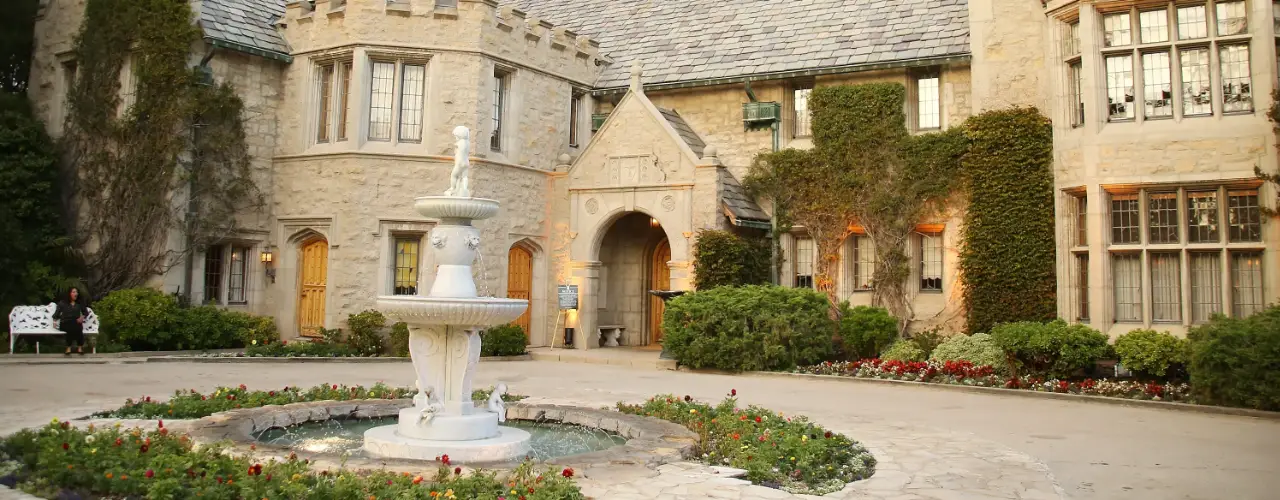
Inevitably, the program also looks more complicated in retrospect. Holly Madison and others have subsequently discussed their Mansion years in books, interviews, podcasts and documentaries, sometimes describing experiences very differently from the cheerful television version shown on E!.
Those later accounts do not mean every moment captured by The Girls Next Door was false. They do remind us that reality television is always an edited version of reality.
Burns acknowledged even during the original run that certain matters remained private and that not everything belonged in the program. The Playboy Mansion viewers visited each week was therefore both a real place and a curated version of one.
That distinction is important when looking back at the series today.
The Legacy of The Girls Next Door and the Playboy Mansion Era
The Girls Next Door began with one of entertainment's oldest promises: we'll take you behind the velvet rope.
What viewers found there turned out to be more interesting than the expected fantasy. Yes, there were Playmates, lavish parties, the famous grotto, celebrity guests and Hefner wandering through the Mansion in pajamas. But the show's staying power came from smaller, more human moments.
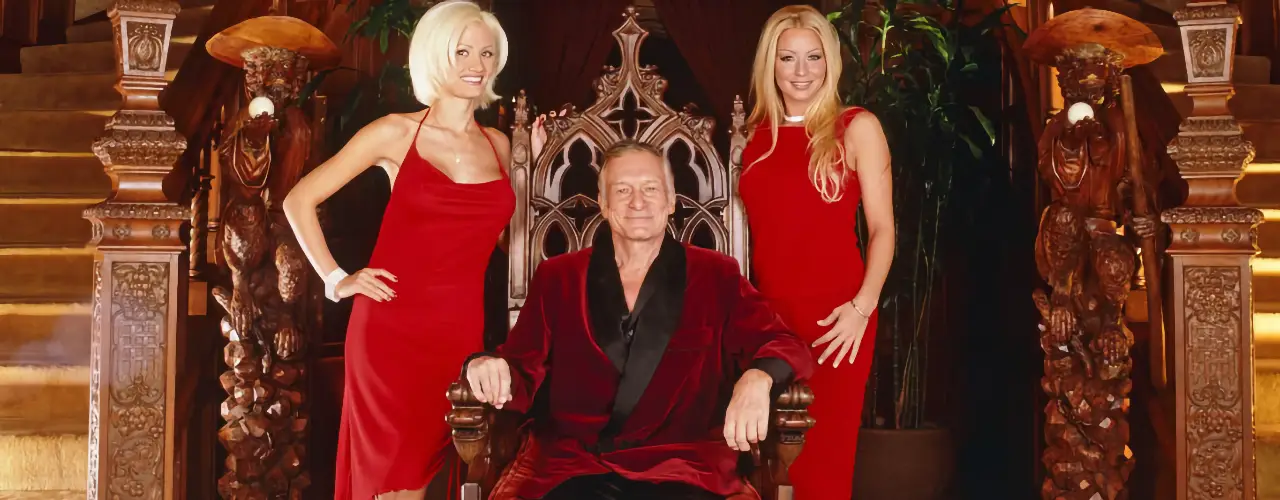
There was Bridget planning another impossibly elaborate theme, Kendra's laugh erupting somewhere down the hallway and Holly studying Playboy history or trying to create the perfect celebration for Hef. There was Mary O'Connor quietly helping hold Mansion life together, pets running underfoot, packing disasters, costumes, airports and birthdays.
The series took a place famous for fantasy and made viewers curious about its routine.
More importantly, it reversed the premise with which the whole project had begun. Kevin Burns initially went looking for a television program about Hugh Hefner's world, while E! expected Playboy to help deliver male viewers. Instead, the cameras entered one of America's most famous male fantasies and discovered three women capable of carrying the story themselves.
For five seasons, millions of viewers—many of them young women—returned to the Playboy Mansion each week because they wanted to know what Holly, Bridget and Kendra were doing next.
The Girls Next Door was supposed to let television inside Playboy.
Instead, it helped an entirely new generation discover the Playboy world.