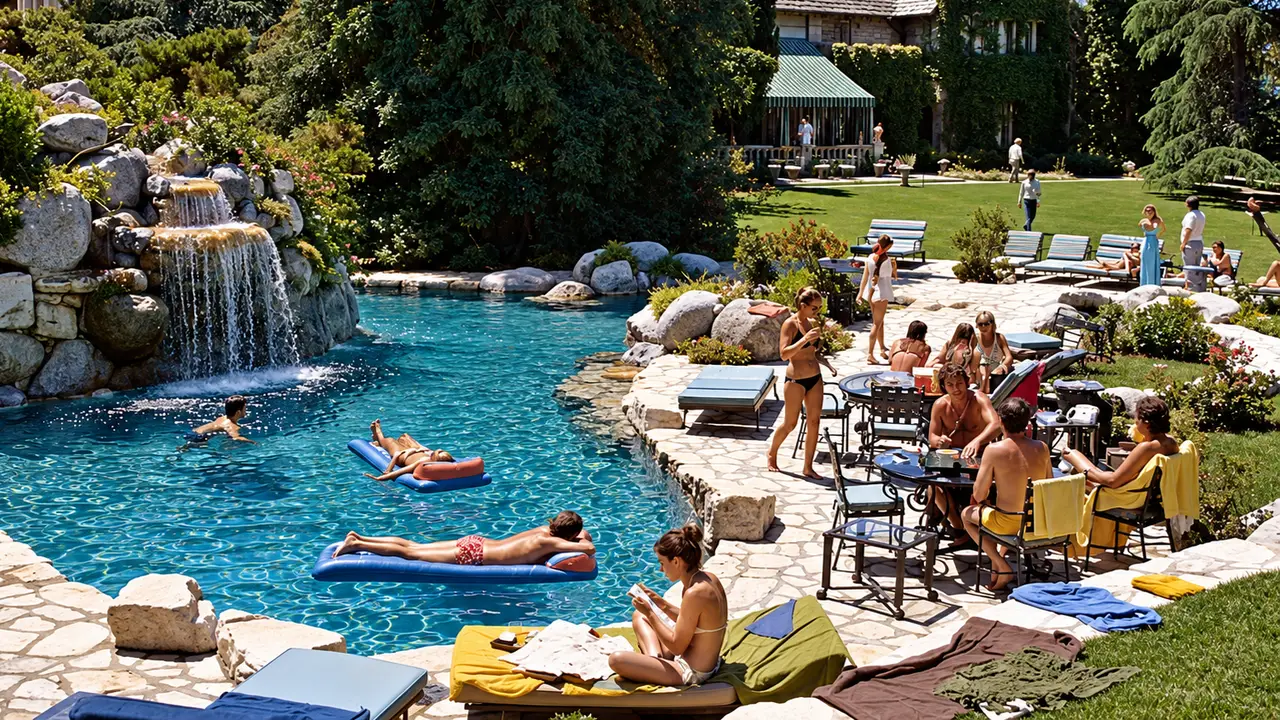
There are famous houses, and then there are houses that become part of the culture. The Playboy Mansion belonged firmly to the second category. For decades, its wrought-iron gates guarded a world that millions of people knew without ever setting foot inside: Hugh Hefner in silk pajamas, Playmates beside the pool, movie stars arriving after dark, peacocks wandering across manicured lawns and the legendary grotto waiting somewhere beyond the trees. It was private property with an unusually public identity. More importantly, it was the place where the fantasy sold by Playboy magazine seemed to become real.
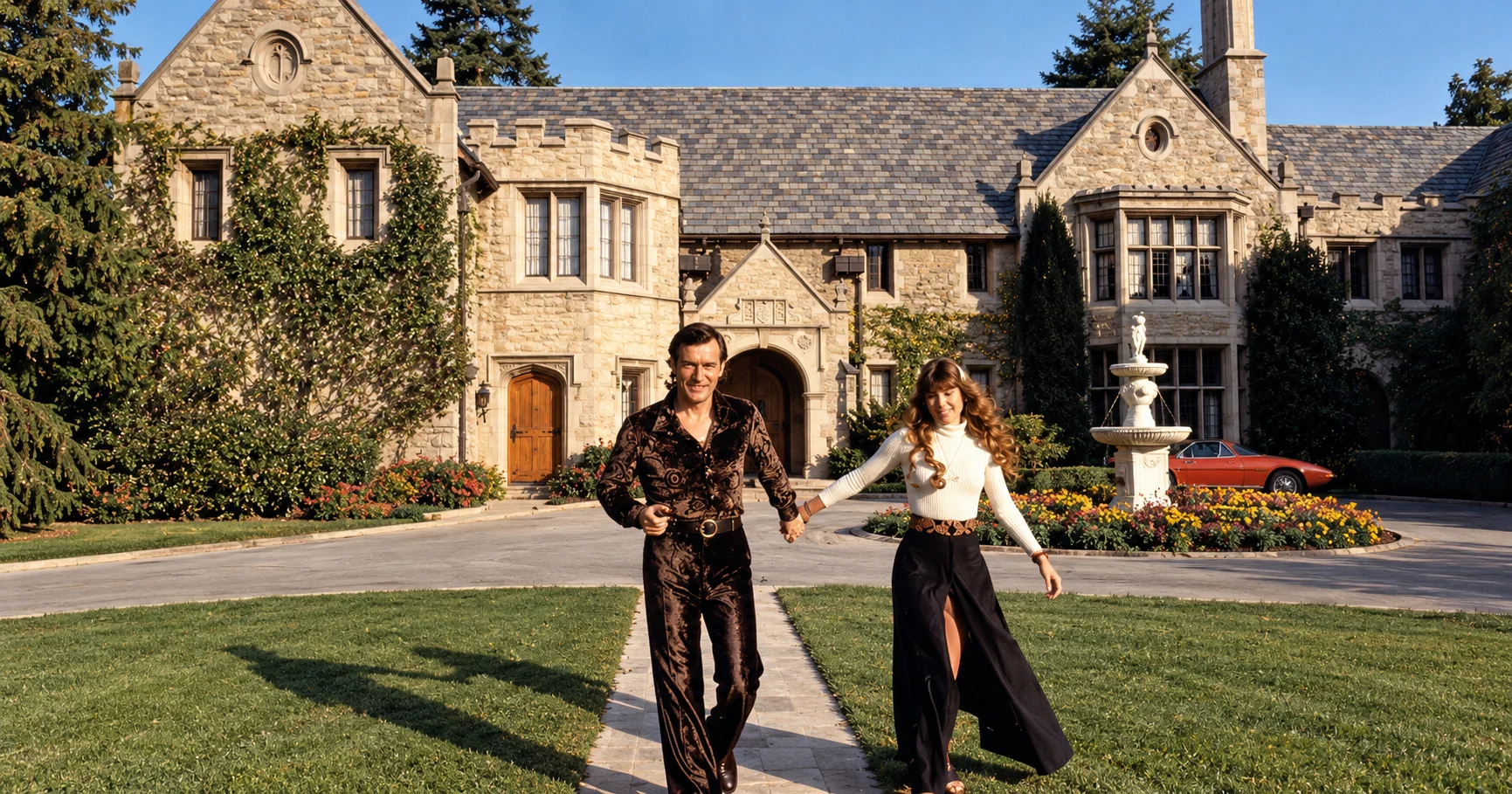 Long before Holmby Hills became synonymous with Playboy, however, there was another Mansion — and another city at the center of Hefner's universe.
From Chicago to the Playboy Mansion
Playboy was born in Chicago in 1953, and the first Playboy Mansion followed six years later. In 1959, with the magazine already a publishing phenomenon, Hefner purchased a grand brick-and-limestone residence at 1340 North State Parkway on Chicago's Gold Coast. It became known as the Playboy Mansion, and it quickly developed into something more interesting than an expensive bachelor's home.
Hefner lived and worked there. Playboy staff, models, entertainers, writers and assorted figures from Chicago nightlife passed through its doors. The house included an indoor swimming pool, and a brass plate reportedly bearing the Latin phrase Si Non Oscillas, Noli Tintinnare — usually translated along the lines of "If you don't swing, don't ring" — captured the spirit rather neatly
The timing was perfect. Playboy was expanding beyond the magazine itself. The first Playboy Club opened in Chicago in 1960, introducing the Playboy Bunny to nightlife and turning the Rabbit Head into one of the most recognizable logos of the era. Hefner was no longer simply editing a successful magazine. He was constructing an entire Playboy world, and the Chicago Mansion served as its private clubhouse.
But American entertainment was drifting west, and Playboy was drifting with it.
Hef Goes Hollywood
In 1971, Playboy acquired a spectacular estate in Holmby Hills, Los Angeles, for roughly $1.1 million — an extraordinary residential purchase for its day. Built in 1927 for Arthur Letts Jr. and designed by architect Arthur R. Kelly, the Gothic Tudor residence sat on more than five acres close to Beverly Hills, Bel Air and the increasingly important entertainment machinery of Hollywood.
It became the Playboy Mansion West.
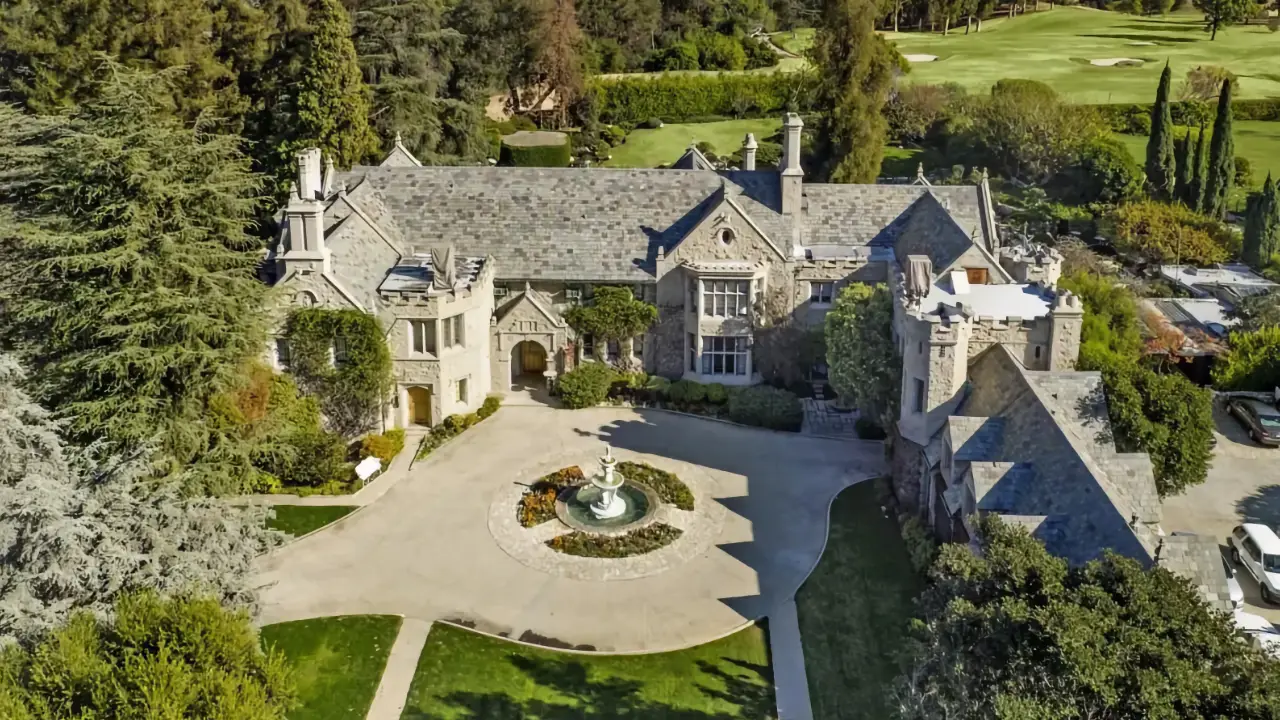
The name eventually became unnecessary. There was only one Playboy Mansion in the public imagination, and this was it.
The move suited the direction Playboy was taking. The magazine remained the heart of the company, but Playboy had long since escaped the boundaries of print. There were television productions, clubs, resorts, licensing deals, celebrity relationships and an ever-growing presence in Hollywood. California gave Hefner a stage on which all those pieces could meet.
Over time, the Mansion also became inseparable from Hefner himself. The pajamas, captain's hat, pipe and rotating company of beautiful women became familiar parts of his public persona, but the house completed the picture. Hefner without the Mansion was imaginable. Hefner at the Mansion looked like a man who had managed to move permanently inside his own magazine.
Playboy, Built in Brick and Stone
That was the real genius of the place.
Playboy had never sold itself merely on beautiful women. From its earliest years, the magazine surrounded its Playmates with fiction, interviews, jazz, cars, cocktails, travel, architecture, fashion, politics and expensive toys. The ideal Playboy reader was supposed to know what record to put on, what drink to mix, what chair to buy and what conversation to have after his date arrived.
The Mansion turned that editorial proposition into scenery.
There were formal rooms and sprawling gardens, a screening room, game room, wine cellar, tennis court, gym, swimming pool and guesthouse. There were aviaries and exotic birds. Monkeys lived on the grounds. Peacocks wandered about with the casual entitlement of permanent residents. The property even held one of Los Angeles's relatively rare private zoo licenses.
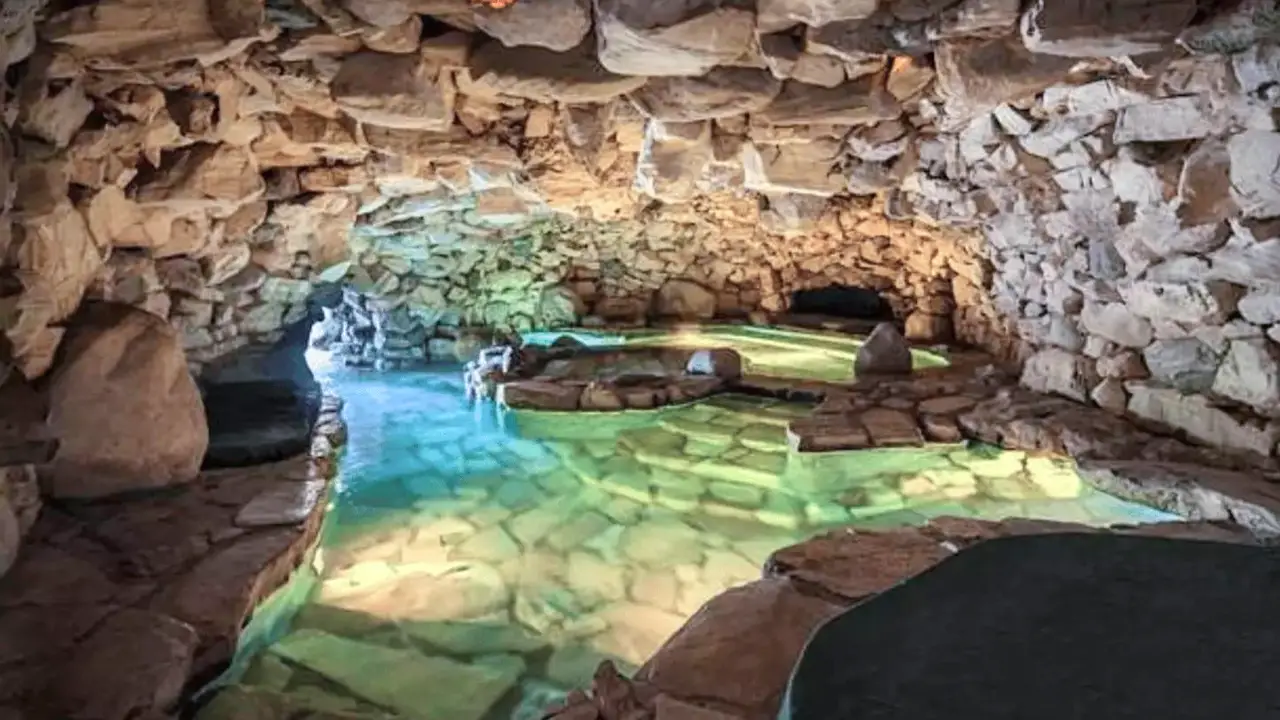
And then, of course, there was the grotto.
Part cave, part swimming-pool fantasy, it became perhaps the Mansion's most notorious feature. Photographed endlessly and discussed even more often, the grotto occupied exactly the right territory between reality and Playboy mythology. You knew it existed. What happened there was left largely to the imagination.
For a magazine built on the art of suggestion, that was perfect.
The Playmates at the Mansion
No group became more closely identified with the Playboy Mansion than the women of Playboy. Yet popular memory has a habit of compressing several different worlds into one.
A Playboy Playmate was a woman selected for the magazine's celebrated Playmate pictorial, usually as a Playmate of the Month. Playboy also featured countless other models, actresses and celebrities who were not Playmates. Then there were Hugh Hefner's girlfriends, some of whom actually lived at the Mansion. These circles frequently overlapped, but they were never quite the same thing.
For generations of Playmates, Holmby Hills served as the ceremonial center of the Playboy family. Playmate of the Year celebrations, photo shoots, promotional appearances and parties brought models through its gates long after their centerfolds had appeared. Pamela Anderson, Anna Nicole Smith, Jenny McCarthy and Donna D'Errico were among the women whose Playboy careers became part of the Mansion-era mythology, even though being a famous Playmate did not automatically mean calling the Mansion home.
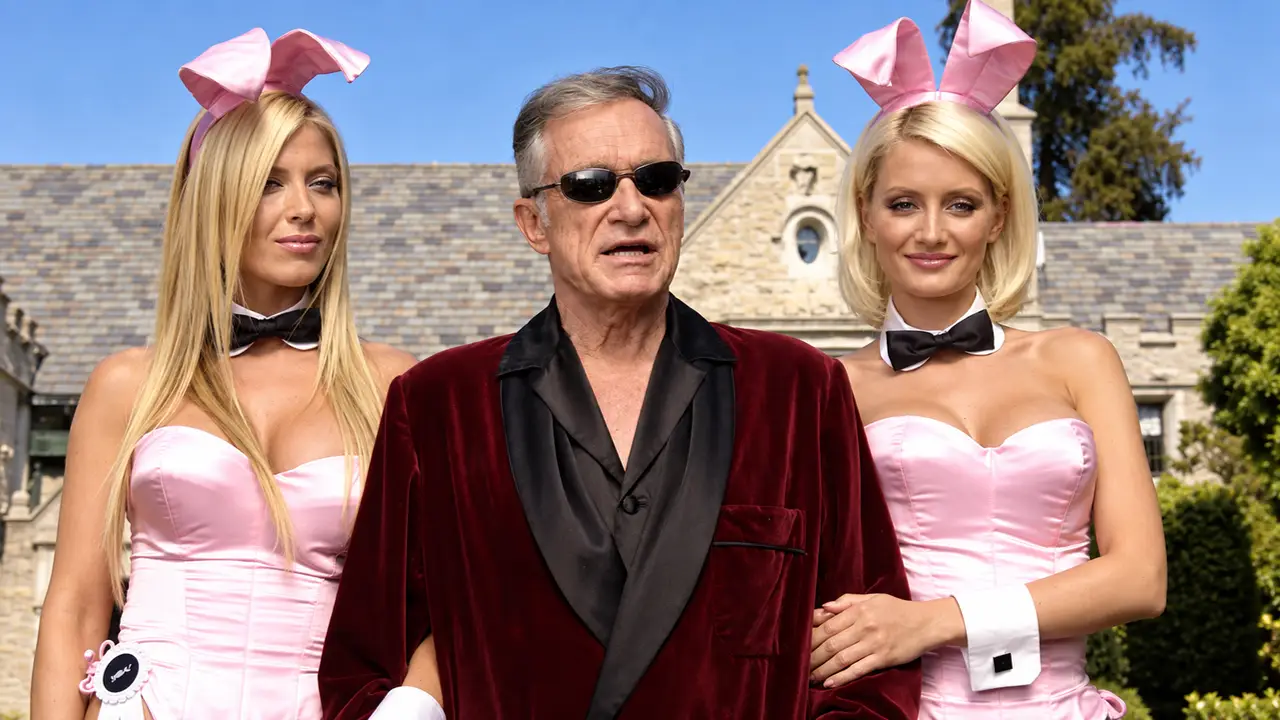
Living there was a more exclusive — and considerably more unusual — arrangement. During different periods of Hefner's life, a number of his girlfriends shared the Mansion with him, and several became Playboy personalities in their own right. In the late 1990s and early 2000s, twins Sandy and Mandy Bentley were among the best-known residents, while Brande Roderick — April 2000 Playmate of the Month and later 2001 Playmate of the Year — was also part of Hefner's circle during this period.
But the most famous resident trio arrived in the following decade. Holly Madison, Bridget Marquardt and Kendra Wilkinson became the women most closely associated with everyday life at the Playboy Mansion. Wilkinson was named Playboy's Miss December 2005, while Madison and Marquardt became prominent Playboy personalities through their relationship with Hefner and their appearances in the magazine and on television. All three lived at Holmby Hills, transforming what had previously been a largely private arrangement into pop-culture entertainment.
After their departure, Crystal Harris became Hefner's principal companion at the Mansion. Playboy's Miss December 2009, she later married Hefner in 2012 and remained his wife until his death in 2017. By then, the Mansion had witnessed several generations of Playboy women — from visiting centerfolds and Playmates of the Year to girlfriends who actually called its bedrooms home.
That distinction is important. The Mansion was never simply a dormitory for Playmates, as its mythology sometimes suggests. Most Playboy models never lived there. Instead, it functioned as a clubhouse, workplace, party venue, photographic backdrop and, for a comparatively small group of women, a very unconventional home.
The Most Famous Invitation in Hollywood
If the magazine made the Mansion desirable, the parties made it legendary.
For decades, an invitation to Holmby Hills carried a particular Hollywood currency. Actors, musicians, athletes, comedians, executives and models passed through the gates. Some events were intimate. Others filled the grounds with enormous crowds.
The annual Midsummer Night's Dream party became one of the signature dates on the Playboy calendar, with guests encouraged to arrive in lingerie or sleepwear. Halloween at the Mansion developed its own reputation. New Year's Eve celebrations, Playmate events, movie nights, charity benefits and private gatherings kept the property in circulation even when no magazine shoot was taking place.
The guest lists could be wonderfully improbable. Old Hollywood mingled with rock stars; athletes found themselves beside comedians; established Playmates met actresses and models who had grown up seeing Playboy on newsstands.
This was where Hefner was at his best as host and impresario. He understood that exclusivity becomes more powerful when everybody knows what they're missing.
The gates were therefore essential to the fantasy. Playboy showed the world just enough of what happened behind them to make people curious about the rest.
The Grotto, Peacocks and a House Like No Other
Physically, the Mansion was eccentric enough to deserve its reputation even without the parties.
The Gothic Tudor house contained 29 rooms, including 12 bedrooms, as well as kitchens designed to handle large-scale entertaining and a screening room with a pipe organ. Outside, the property unfolded into lawns, gardens, paths, aviaries and recreational spaces.
Then there were the animals.
Peacocks became almost as characteristic of the estate as the Rabbit Head. Exotic birds and monkeys added to the impression that the property existed according to rules quite different from those governing the rest of Los Angeles.
Visitors could move from a formal old-world interior to a game room, then outside through lush gardens toward a lagoon-style swimming pool and the grotto. It was part English country estate, part private zoo, part Hollywood playground.
Architecturally, it should have made no sense as the headquarters of the sexual revolution.
Somehow, that made it better.
When Television Opened the Gates
For years, the Mansion's greatest asset was mystery. People had seen photographs and heard stories, but relatively few knew what ordinary life there actually looked like.
Then came The Girls Next Door.
Premiering on E! in 2005, the reality series followed Hefner and his girlfriends Holly Madison, Bridget Marquardt and Kendra Wilkinson. Suddenly viewers were not merely glimpsing the Mansion during a celebrity party. They were watching breakfast, birthdays, trips, photo shoots, conversations, pets and the domestic rhythms of life behind the gates.
The effect on Playboy's cultural reach was considerable.
By the mid-2000s, the internet had transformed the adult-media business and the great era of mass-market men's magazines was already receding. Yet the Mansion found an entirely new audience through reality television. Younger viewers who might never have bought an issue of Playboy knew the grotto, the Great Hall and Hefner's movie nights.
For a few more years, the house was once again at the center of pop culture.
There was an irony to it. Playboy had spent decades making the Mansion mysterious. Television made it famous all over again by showing what happened on an ordinary Tuesday.
The Last Years of Hef's Mansion
No party lasts forever.
As Hefner grew older, the character of the Mansion inevitably changed. The publishing world that had created it was changing too. Newsstands were shrinking, print advertising was migrating online, and Playboy's position in American culture was no longer what it had been during the magazine's extraordinary twentieth-century peak.
In 2016, the Mansion was sold to businessman Daren Metropoulos for $100 million. The deal came with an unusual condition: Hefner could continue living there for the rest of his life. He did.
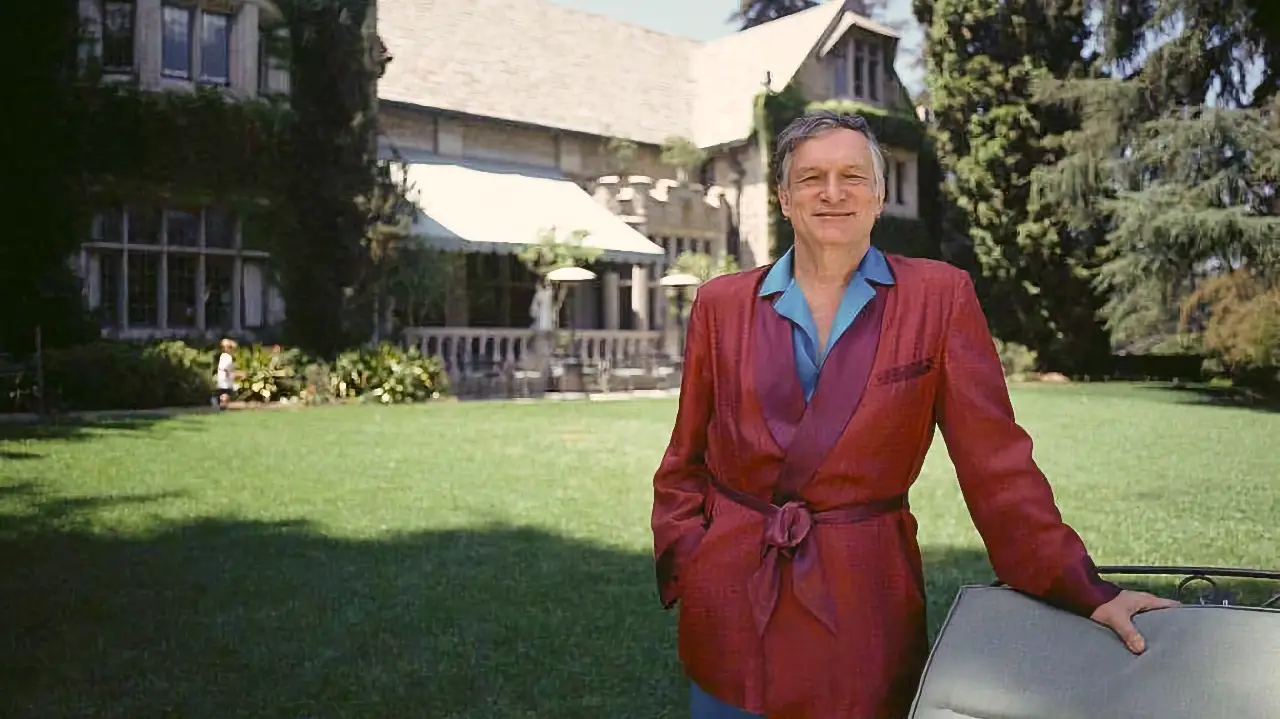
Hugh Hefner died on September 27, 2017, at the age of 91.
His death closed the defining chapter in the Mansion's history. In later years, former residents — most prominently Holly Madison — also offered accounts that challenged the carefree image once projected to the outside world. Those recollections form part of the Mansion's history too. A place that existed for decades as a carefully photographed fantasy was always going to look different when described by the people who actually lived there.
The mythology survived, but it became more complicated.
The House That Became Playboy
Playboy had many symbols. There was the Rabbit Head, the Bunny costume, the centerfold and Hefner himself. But none gave the brand a physical presence quite like the Playboy Mansion.
It connected the magazine to Hollywood, Playmates to celebrities, private life to public spectacle. It gave Hefner somewhere to perform the role he had created for himself and gave Playboy a place where its particular mixture of glamour, pleasure, sophistication and mischief could appear to exist around the clock.
Most readers never passed through those gates. That was probably part of the point.
For nearly half a century, the Mansion offered something more valuable than access: the possibility of imagining what might be happening on the other side.
And in the Playboy world, imagination was always half the fun.