Connie Mason Bio
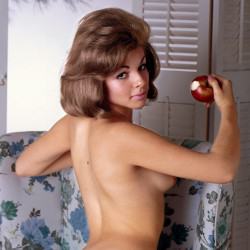
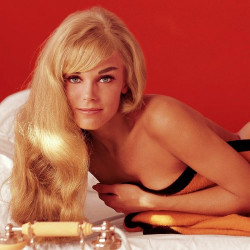
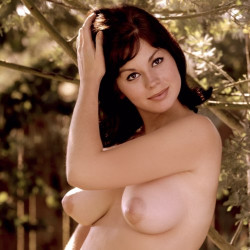
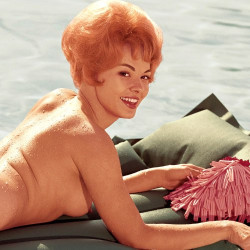
Connie Mason is an American Playboy Bunny, actress, fashion and nude model. She was born Connie Cusick on August 24, 1937, in Washington, Washington. Playboy named her its June 1963 Playmate at 25. Her appearance came during the 1960s, as Playboy grew into a major force in American magazine publishing.
Mason has natural breasts, blue eyes and blond hair. Her measurements are 34-23-34.
Her centerfold was shot by Pompeo Posar, a studio credit that anchored Mason’s brief but lively turn in the magazine’s visual storybook and left a clear trail through fashion and film work that followed. The images were only one chapter: a few decisive introductions soon pushed her into new professional directions.
Her route to the camera was, by her own account, social as much as strategic. When her parents attended the opening of the Miami club as guests of family friend Tony Roma, Roma urged Mason to try out; she was hired on the spot as the club’s “camera bunny,” a role that made her an immediate favorite with patrons. A later move to Chicago brought an encounter with Hugh Hefner — he invited her to live at the Mansion and introduced her to the magazine’s staff photographer, producing the shoot that became her centerfold.
After the spread ran, Mason spent time in New York where designer Oleg Cassini encouraged her toward fashion work and introduced her to the Eileen Ford Agency. That connection brought modeling assignments and national television commercial work, shifting her public-facing career from night-club visibility to agency bookings and the studio systems that fed advertising and print fashion in the era.
Mason also crossed into genre cinema when director Herschell Gordon Lewis cast her in Blood Feast and Two Thousand Maniacs!. Those films sit at the origin of cult gore cinema, and her appearances there gave her a secondary audience among horror aficionados. Her personal life followed the same mixed circuit: she married Shelly Kasten, the entertainment director for the Playboy Clubs, after an earlier marriage to actor Tony Young (1958–1962). The result is offbeat screen work in a way that still interests collectors and cult-film viewers alike.