Dolores Del Monte Bio
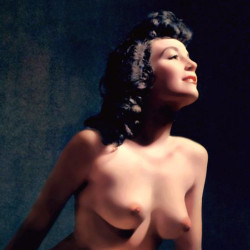
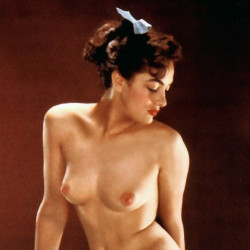
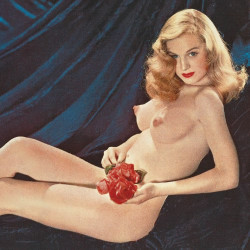
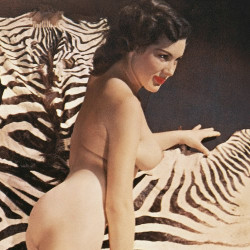
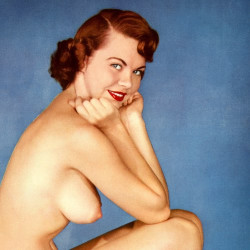
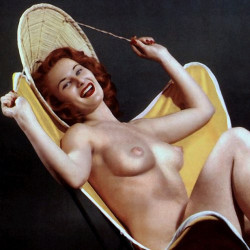
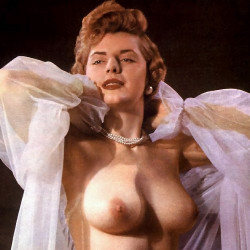
Dolores Del Monte was an American glamour and nude model. She was born on March 15, 1932, in Spokane, Washington. Playboy named her its March 1954 Playmate at 21. Her appearance dates from the magazine's formative 1950s, when the Playmate format was still taking shape.
Del Monte had natural breasts, brown eyes and brown hair. Her measurements are 34-24-35.
Dolores Del Monte entered Playboy through the commercial pin-up trade rather than through the magazine itself. She modeled for photographer Bruno Bernard, whose figure studies and calendar photographs were licensed to companies including the John Baumgarth Calendar Company in Illinois. One of those images, a leopard-print bathing-suit pin-up Bernard catalogued as “Radiant Beauty,” eventually found its way to Hugh Hefner during Playboy’s earliest months.
Del Monte later recalled that she had signed a routine release without knowing exactly where the photograph would appear. She assumed it was destined for ordinary calendar use and received $50 for the shoot. Playboy acquired the image from Baumgarth and published it only 26 pages into its fourth issue, illustrating how heavily the young magazine initially relied on existing commercial pin-up photography rather than commissioning every pictorial directly.
The twist is that Del Monte did not immediately know what had happened to the photograph. She married later in 1954, had children and left modeling behind, eventually working in public relations. According to her later account, she only learned that the picture had appeared in Playboy many years afterward, when her son recognized her in a 25th-anniversary retrospective and called to tell her. Del Monte described the discovery as both embarrassing and a source of pride.
Looking back decades later, she remained decidedly old-school about glamour photography, telling The New Yorker in 2014 that contemporary models revealed too much and that she herself would not pose again. Del Monte died in 2023 at the age of 90. Her place in Playboy history is unusual precisely because it was so accidental: a commercial calendar photograph, licensed through the ordinary machinery of the pin-up business, quietly became part of the visual foundation of a magazine that was still inventing itself.