Margie Harrison Bio
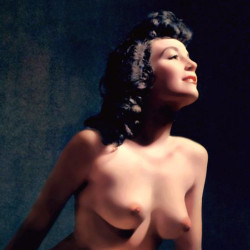
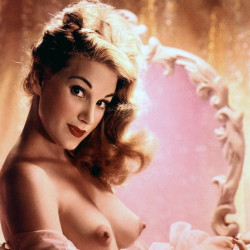
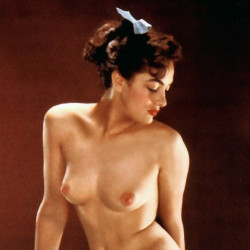
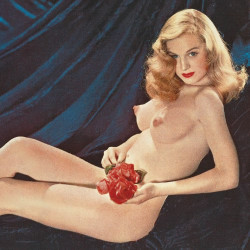
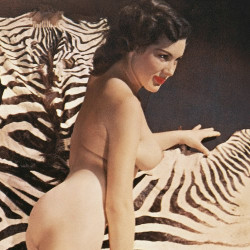
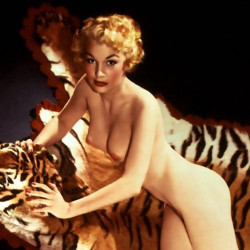
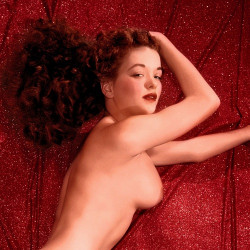
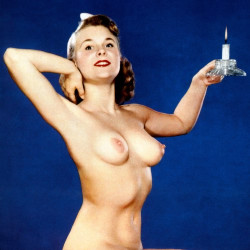
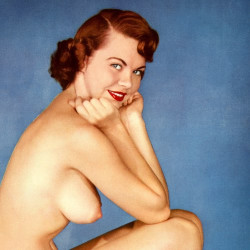
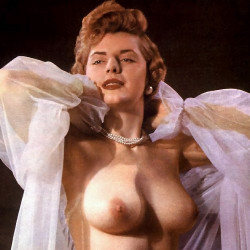
Margie Harrison was an American glamour and nude model. She was born on November 3, 1931, in Los Angeles, California. Playboy named her its June 1954 Playmate at 22. Her appearance dates from the magazine's formative 1950s, when the Playmate format was still taking shape.
Harrison had natural breasts, brown eyes and black hair. Her measurements are 36-26-37.
Her centerfolds were shot and circulated not in the bespoke studio tradition so much as the commercial one: the John Baumgarth Company produced the sequences that found life both in the middle of a magazine and on the page of pin‑up calendars. That calendar‑house provenance left Harrison’s images with a clean, staged glamour—made to read well at scale and to travel beyond a single issue—which helps explain why her photographs kept resurfacing in mid‑century print cycles.
Those recurring appearances put her in an unusually small group: Harrison is one of only two women to be featured as a Playmate on multiple separate occasions, a rarity that kept her likeness in rotation as publishers reshuffled and reissued material. Some of her pictorials were credited under the name Margaret Scott, a detail that speaks to the looser crediting practices of the era and the porous borderline between commercial pin‑ups and magazine centerfolds.
Seen together, the assignments that sustained Harrison’s visibility illustrate a particular strand of 1950s glamour—workmanlike, broadly distributable images made for calendars and syndication as much as for single‑issue splash. The John Baumgarth sequences emphasized posture, line and clean lighting over spontaneity, which suited the market that bought and reused those photographs: advertisers, calendar houses and magazine editors looking for reliable, page‑friendly images.
Her career occupies a rarefied corner of the archive: not only a subject of a single celebrated spread but a repeat presence whose photographs trace how early Playboy drew from, and in turn circulated, the commercial pin‑up economy. That dual identity—part calendar commodity, part magazine centerfold—keeps Harrison’s pictures useful to historians and quietly suggestive to anyone tracing the mechanics of midcentury glamour.