Before there was a television show called The Girls Next Door, there was already a Playboy girl next door. She was one of Hugh Hefner’s most powerful inventions: beautiful, approachable, flirtatious, polished, but never so distant that the reader could not imagine meeting her. She was not presented like a remote movie goddess, surrounded by studio fog and impossible glamour. She was a college student, a secretary, a dancer, a waitress, a neighbor with a secret smile. Playboy did not simply sell nudity. It sold the idea that desire could live close by.
That fantasy began with the magazine itself. Playboy was founded by Hugh Hefner in Chicago in 1953, with Marilyn Monroe appearing in the first issue as the magazine’s original “Sweetheart of the Month.” The term “Playmate of the Month” followed with Margie Harrison in January 1954, giving Playboy a formula that would shape American erotic publishing for decades: one woman, one month, one carefully staged dream of intimacy.
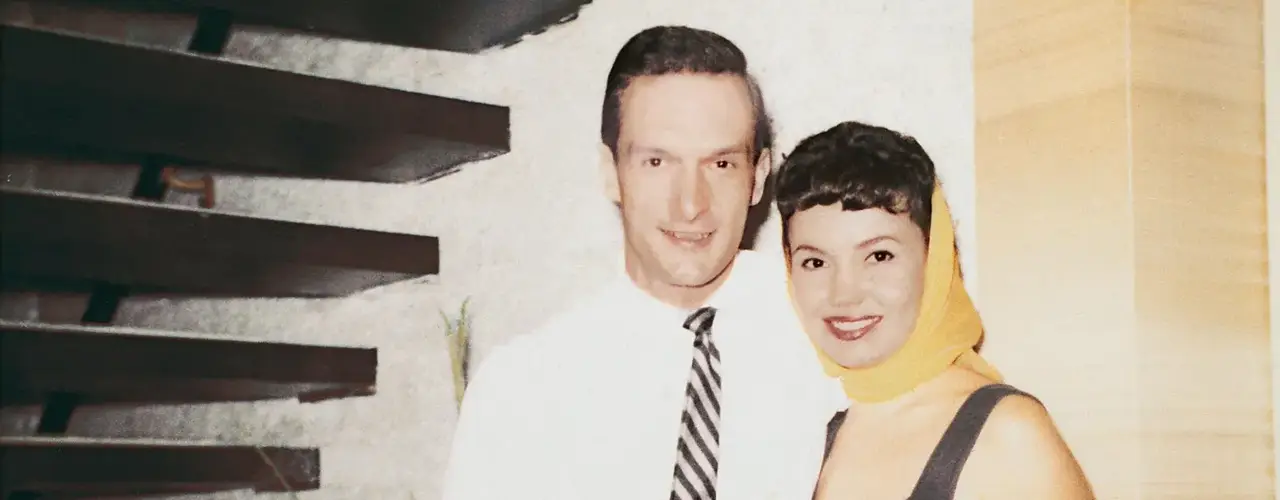
The phrase “girl next door” was never just a compliment. Inside the Playboy universe, it was a philosophy. It softened the act of looking. It suggested that beauty did not have to arrive from a distant palace of celebrity; it could come from the next dorm room, the next beach town, the next suburban street. The New Yorker later described Playboy’s centerfold tradition as an attempt to capture the essence of the “girl next door” — a figure who helped the magazine package sexuality as modern, cheerful, and familiar rather than forbidden or tragic.
When Playboy Needed a New Stage
By the early 2000s, however, the old centerfold fantasy needed a new stage. The internet had changed everything. Celebrity culture had become faster, louder, more personal. Reality television had turned private lives into public entertainment. Viewers no longer wanted only a posed photograph; they wanted the morning after, the kitchen conversation, the birthday party, the argument, the shopping trip, the backstage pass. Playboy had spent decades inviting readers into a fantasy bedroom. The Girls Next Door invited viewers through the front gates of the Playboy Mansion.
The E! reality series The Girls Next Door, also known as The Girls of the Playboy Mansion, premiered on August 7, 2005. Created by Kevin Burns and Hugh Hefner, it followed Hefner’s girlfriends at the Playboy Mansion in Los Angeles. The show ran for six seasons and 91 episodes, ending on August 8, 2010. Its first five seasons centered on Holly Madison, Bridget Marquardt, and Kendra Wilkinson, while the final season introduced Crystal Harris and twins Kristina and Karissa Shannon.

That is the simple historical record. But the cultural meaning was much richer. The Girls Next Door transformed Playboy from a magazine men read in private into a pastel-colored reality-TV brand that women watched openly. It made the Mansion less like a forbidden adult landmark and more like a glamorous, eccentric sorority house with peacocks, movie nights, theme parties, tiny dogs, elaborate costumes, and a permanent sense that every day might turn into a photo shoot.
Holly, Bridget, and Kendra: Three Faces of the Mansion Fantasy
The magic of the show was its contrast. Hugh Hefner was already an icon by then — the robe, the pipe, the parties, the myth. But Holly, Bridget, and Kendra gave the show its emotional engine. They were not interchangeable blondes, though the marketing sometimes risked presenting them that way. Each one carried a different version of Playboy femininity, and the audience quickly learned to read the difference.
Holly Madison was the romantic idealist, the polished “number one girlfriend,” the woman most closely associated with the inner mythology of the Mansion. She gave the show its fairy-tale structure: the girl who seemed to believe in the kingdom, even when that kingdom was built on complicated rules. Madison later became known not only for The Girls Next Door, but also for her solo reality series Holly’s World and her memoir Down the Rabbit Hole, published in 2015, where she revisited life inside the Mansion from a much more critical perspective.
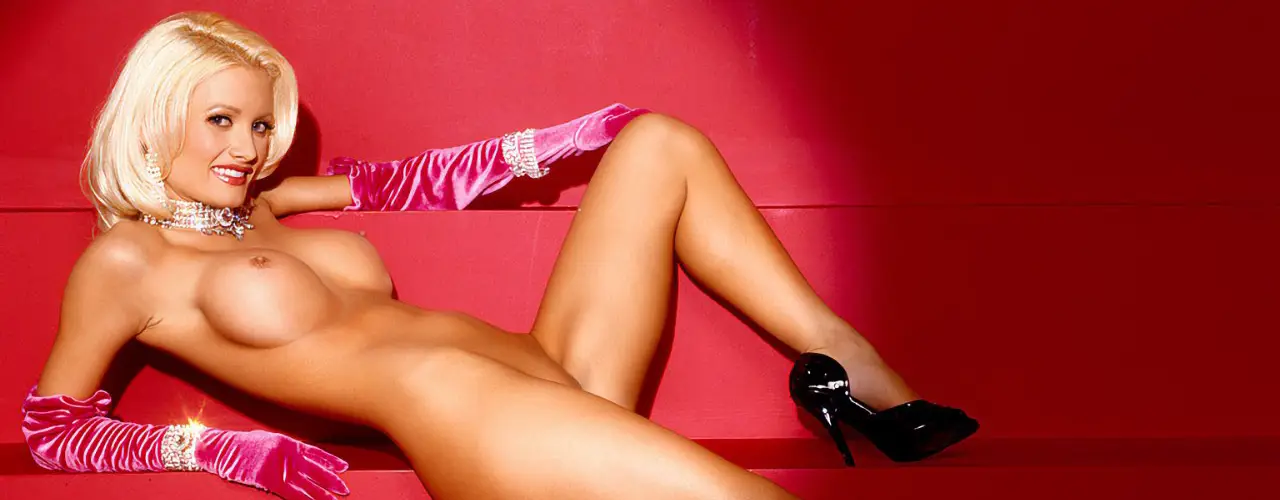
Bridget Marquardt brought warmth, curiosity, and a kind of sweet theatrical intelligence. She was the costume queen, the theme-party enthusiast, the one who could make Halloween feel like a personal religion. Unlike the cliché of the passive glamour model, Bridget often appeared as someone who studied the world she was in. She had a master’s degree in communications and understood performance, media, and image-making from the inside. Her presence helped make the show feel less coldly transactional and more playful, almost camp.
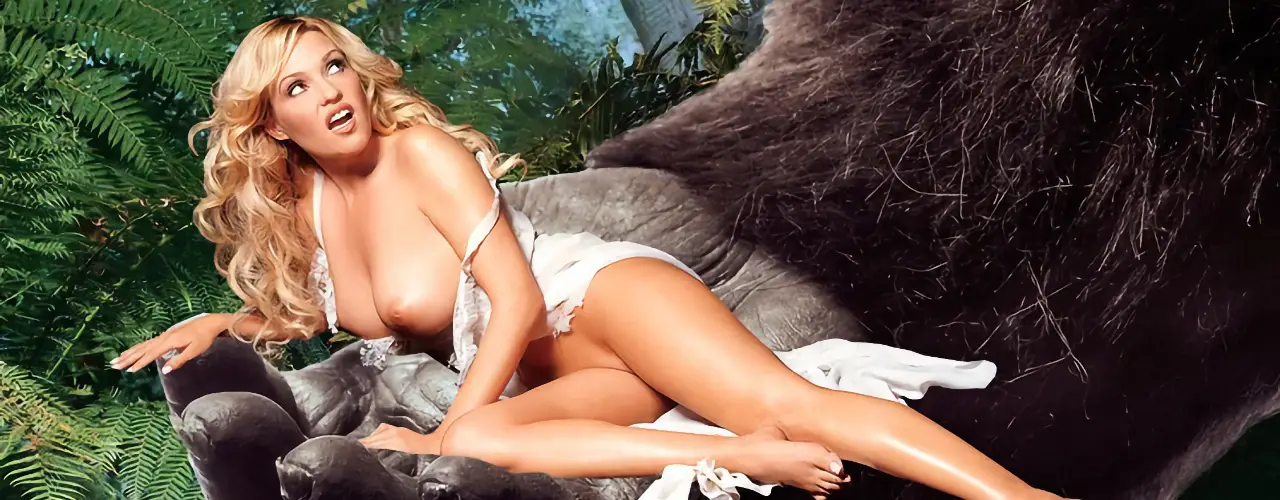
Kendra Wilkinson was the spark plug. She was younger, louder, sportier, less polished, more impulsive. If Holly represented the Mansion fantasy and Bridget represented the Mansion pageant, Kendra represented the interruption — the laugh from the hallway, the athlete in the bunny outfit, the girl who seemed less interested in preserving the myth than in surviving it with attitude. She was never a Playmate of the Month, but she became one of the most recognizable Playboy personalities of the 2000s, and her popularity later led to her own reality series, Kendra.

Together, the three women created the most commercially successful female trio in late Playboy history. They were not merely photographed; they were serialized. Audiences watched them travel, pose, argue, celebrate birthdays, attend Mansion events, prepare for pictorials, and perform the strange labor of being constantly beautiful in a house built to be looked at. IMDb describes the show as an inside look at life inside the Playboy Mansion starring Hefner’s three main girlfriends — Madison, Marquardt, and Wilkinson — which is accurate, but incomplete. What viewers really watched was the conversion of Playboy glamour into personality-driven television.
The Magazine, the Mansion, and the Reality-TV Loop
The show was an immediate hit for E!. Its first season was expanded from eight to fifteen episodes, and later season premieres drew strong ratings for the network. Its success was large enough that Playboy placed Madison, Marquardt, and Wilkinson in a nude pictorial in the November 2005 issue, followed by additional pictorials in September 2006 and March 2008. That matters because it shows how the power had shifted. The magazine no longer simply created stars; television could now create Playboy stars and send them back into the magazine.
This was the new Playboy loop: magazine, Mansion, television, pictorial, DVD, spin-off, celebrity press. The centerfold had once been a single monthly moment. The Girls Next Door became a continuing relationship. Readers and viewers did not just know what Holly, Bridget, and Kendra looked like. They knew their bedrooms, their pets, their favorite costumes, their insecurities, their jokes, their roles inside the Mansion hierarchy. Playboy had always promised intimacy. Reality television made that promise feel literal.

The pictorial approach around the Girls Next Door was different from classic Playmate photography. Traditional Playboy centerfolds often built a dream around one woman: her hometown, her hobbies, her smile, her idealized privacy. The Girls Next Door pictorials worked because viewers already knew the characters. Holly did not need to be introduced as a fantasy blonde; she already had a storyline. Bridget did not need to be explained as playful; the audience had seen her planning themes and parties. Kendra did not need to be packaged as rebellious; she had already bounced through the series with tomboy charisma and comic confidence.
That familiarity changed the erotic charge. The appeal was not only beauty. It was recognition. The viewer brought memories from the show into the photograph. A pose became part of a larger personality. A bedroom set recalled the Mansion. A smile carried a line of dialogue from an episode. The pictorial became less like a first encounter and more like a glamorous continuation of a weekly visit.
Why Women Loved The Girls Next Door
This is also why the Girls Next Door phenomenon was loved by so many women. The show arrived during an era when reality television was becoming a female-driven cultural language. Women watched The Girls Next Door not necessarily because they wanted Hugh Hefner’s life, but because the show offered fashion, friendship, rivalry, domestic spectacle, beauty rituals, emotional tension, and the guilty pleasure of entering a world designed to be off-limits. It was part pin-up, part soap opera, part lifestyle show, part behind-the-scenes Hollywood tour.
For female audiences, Holly, Bridget, and Kendra were not only bodies. They were styles of performance. Holly’s appeal was control, polish, and longing. Bridget’s was sweetness, imagination, and devotion to fantasy. Kendra’s was freedom, humor, and refusal to behave like a porcelain doll. Viewers could identify with one, compare themselves to another, or simply enjoy the strange chemistry of three women trying to make a home inside the most famous bachelor pad in America.
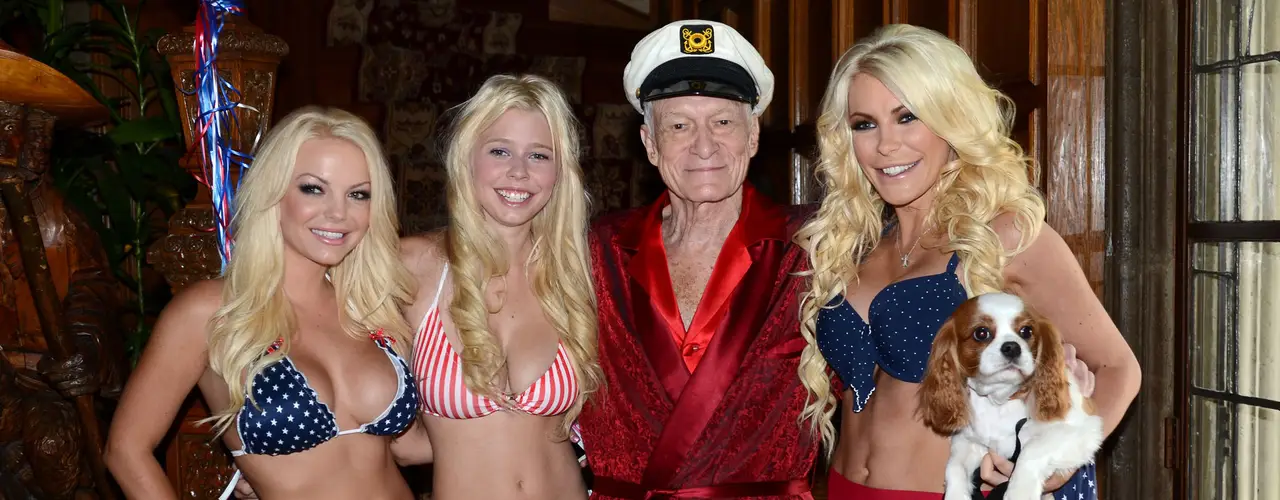
The Mansion itself became a character. The grotto, the zoo, the movie nights, the bedrooms, the parties, the staff, the endless parade of celebrities and Playmates — all of it created an atmosphere that was more surreal than purely erotic. The series showcased Mansion events such as Fight Night, the Fourth of July celebration, Midsummer Night’s Dream parties, Playboy Jazz Festival appearances, Playmate test shoots, birthday parties, and other Playboy-related rituals.
That approach helped make Playboy feel less like a sealed male fantasy and more like a pop-cultural destination. The viewer could imagine not just posing for Playboy, but attending the party, wearing the costume, walking the grounds, joining the circle. That was a powerful shift. Playboy had spent decades asking men to look at women. The Girls Next Door invited women to look at the machinery of being looked at.
The Final Mansion Era
Crystal Harris, later Crystal Hefner, entered the story during the final season. A model and television personality, she became Playboy’s Playmate of the Month for December 2009 and eventually married Hugh Hefner in 2012. Her presence marked a different era: the late-Mansion years, when the Playboy myth was still commercially valuable but increasingly shadowed by public skepticism and changing attitudes toward age, power, fame, and consent.

Kristina and Karissa Shannon, twin sisters and Playboy Playmates for July/August 2009, also appeared during this final phase. Their arrival gave the show a new visual hook, but the chemistry was never the same as the Holly-Bridget-Kendra years. The original trio had worked because their personalities formed a triangle. The later cast felt more like a replacement structure for a fantasy that had already peaked.
The spin-offs proved how strongly viewers had connected with the women themselves. Kendra Wilkinson moved into her own reality franchise, including Kendra and later Kendra on Top. Holly Madison starred in Holly’s World. Bridget Marquardt hosted Bridget’s Sexiest Beaches. These projects showed that the Girls Next Door brand could survive outside the Mansion gates, at least for a time. The women had become bigger than their original setting.
A Fantasy Reconsidered
That may be the most important legacy of the series. It created a generation of Playboy personalities whose fame did not depend solely on the centerfold. Earlier Playmates could become actresses, hosts, comedians, or celebrities, but The Girls Next Door made that transformation part of the show itself. It showed the making of Playboy fame while selling the fantasy of Playboy fame. Viewers watched the women become brands in real time.
Yet a complete article about the Girls Next Door cannot pretend the fantasy remained untouched. Over the years, the series has been reexamined by its own stars and by audiences who now see the Playboy Mansion with more complicated eyes. Madison’s memoir Down the Rabbit Hole presented a darker account of her years with Hefner. Madison and Marquardt later launched the podcast Girls Next Level, where they revisit the show and discuss what they believe was real, staged, painful, funny, or misunderstood behind the scenes.

That later reappraisal does not erase the show’s glamour, but it does change the way the glamour reads. In 2005, many viewers saw a candy-colored fantasy of access, beauty, and privilege. Two decades later, the same images can feel more fragile. The matching outfits, the curfews, the hierarchy of girlfriends, the pressure to remain desirable, the constant filming — all of it now belongs to a broader conversation about the cost of being a fantasy woman in a fantasy house.
This tension is precisely why The Girls Next Door remains fascinating. It is not simply a nostalgic reality show. It is a document of Playboy at the edge of two eras. Behind it was the old world of magazine glamour, Mansion parties, centerfold mythology, and Hefner’s carefully managed image. Ahead of it was the world of Instagram, OnlyFans, influencer branding, podcasts, memoirs, and women telling their own stories without waiting for a magazine editor to frame them.
The Front Door to the Playboy Fantasy
Playboy Girls Next Door was loved because it made the brand feel human. It gave Playboy laughter, awkwardness, friendship, jealousy, ambition, vulnerability, and domestic comedy. It let women see not only the finished pictorial, but the hair, makeup, nerves, rehearsals, and emotional weather around it. It gave men the classic Playboy fantasy with a new layer of personality. It gave female viewers a glossy, complicated mirror: part dream closet, part warning label, part pop-culture escape.
The original Playboy girl next door was a still image: a woman caught in one perfect month. The Girls Next Door were different. They moved. They talked. They complained. They packed suitcases. They chased dogs. They negotiated fame. They smiled for the camera and later questioned what the camera had done to them. That is why they matter.
Holly, Bridget, and Kendra did not just live next door to the Playboy fantasy. For a few bright, strange, unforgettable years, they became the fantasy’s front door. And millions of viewers — men and women alike — walked in.