Marilyn Monroe Bio 
Marilyn Monroe was an American actress, signer, glamour and nude model. Born Norma Jeane Mortenson on June 1, 1926, in Los Angeles, California, she has also been credited as The Blonde Bombshell. Playboy named her its December 1953 Playmate at 27. Her appearance dates from the magazine's formative 1950s, when the Playmate format was still taking shape.
Monroe had natural breasts, blue eyes and blond hair. Her measurements are 36-23-36.
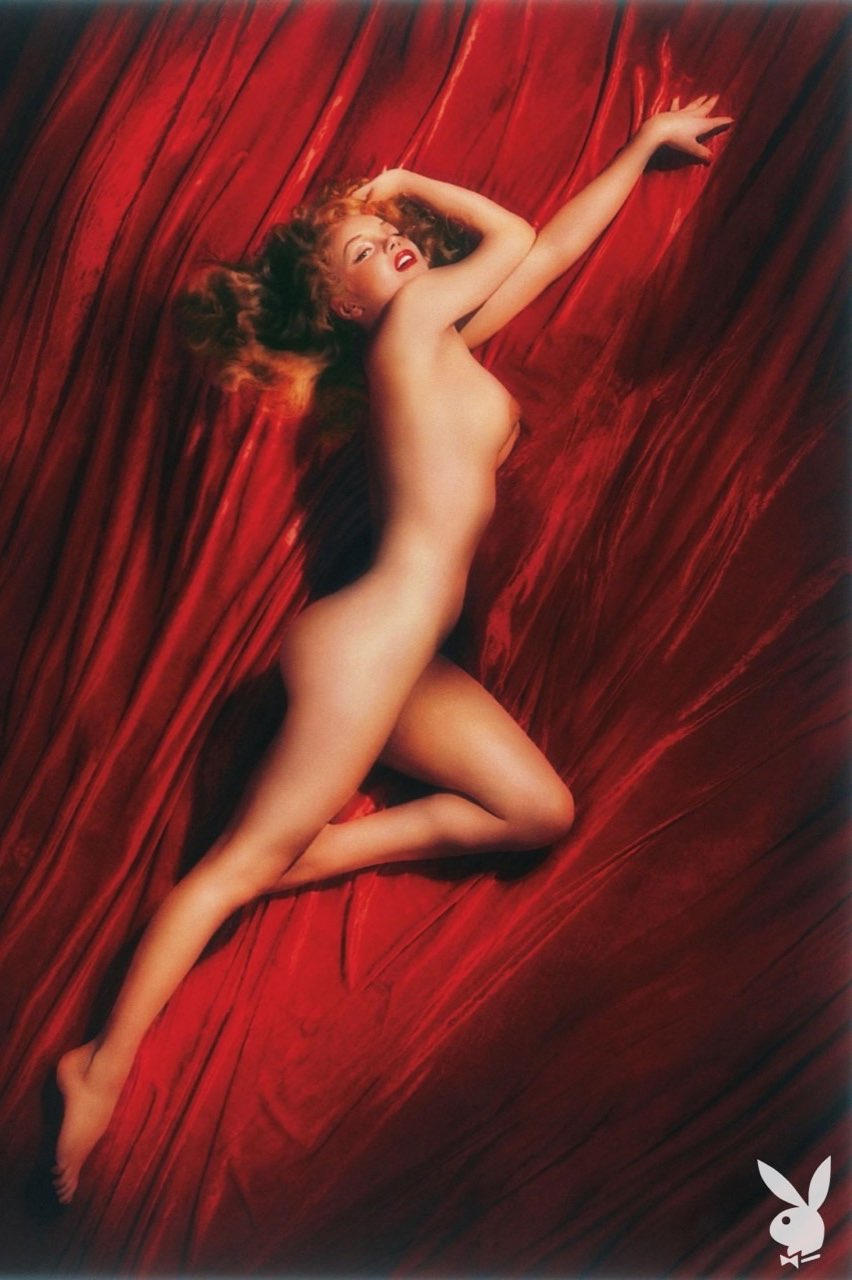
Marilyn Monroe’s connection with Playboy began before Playboy itself existed. In 1949, during a lean period in her still-developing film career, she posed nude for photographer Tom Kelley on red velvet. The photographs were made for calendar use, not for Hugh Hefner, and Monroe had no involvement in their later acquisition by the new magazine. By the time Hefner selected one of Kelley’s images for Playboy’s debut issue four years later, the struggling model in the photograph had already become one of Hollywood’s most talked-about actresses.
That distinction matters. Playboy did not discover Marilyn Monroe or launch her career; it attached itself, brilliantly, to a star whose momentum was already unmistakable. Small but memorable parts in The Asphalt Jungle and All About Eve had been followed by Niagara, Gentlemen Prefer Blondes and How to Marry a Millionaire. Her combination of comic timing, sexuality and carefully constructed screen presence was becoming a cultural phenomenon just as Hefner was searching for an image powerful enough to introduce his new magazine. Monroe supplied exactly that. The association helped give Playboy’s first issue an instant identity, even though the woman on its pages had never posed for Playboy and never met Hefner.
Monroe was also far more ambitious about acting than the blonde-bombshell mythology allowed. She resisted being treated merely as a studio commodity, studied acting seriously and increasingly sought roles that gave her something beyond decorative glamour. Bus Stop offered a more demanding showcase, while The Prince and the Showgirl paired her with Laurence Olivier. Then came Some Like It Hot, where the breathy voice and comic sexuality audiences thought they understood were matched by impeccable timing and a performance that remains central to her reputation as an actress rather than simply an image.
Her private life became almost as heavily consumed as her films. Marriages to baseball star Joe DiMaggio and playwright Arthur Miller unfolded under relentless attention, while rumors surrounding other relationships became part of a celebrity mythology that has often proved difficult to separate from documented fact. Monroe herself repeatedly pushed against the simplistic character assigned to her. Beneath the carefully styled platinum hair, gowns and publicity photographs was a performer who wanted artistic credibility and understood better than most how an image could both create opportunity and become a trap. Her final completed film, The Misfits, offered one more glimpse of the dramatic actress she had spent years trying to prove was there.
Monroe died in 1962 at only 36, but Playboy never really escaped the gravitational pull of that first issue. Her red-velvet photograph linked the magazine’s birth to the most potent sexual icon of its era and established a visual proposition Playboy would spend decades exploring: glamour could be playful, sophisticated, provocative and unmistakably mainstream all at once. The irony is that Monroe’s place in Playboy history was created without a Playboy photo session, without a meeting with Hefner and largely without her participation. Yet no model is more inseparable from the magazine’s origin story. Playboy had thousands of centerfolds to come; Marilyn Monroe was the image that helped make the first one matter.