Sandra Edwards Bio
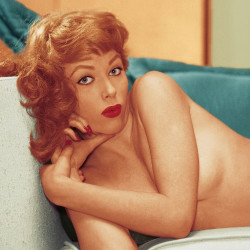
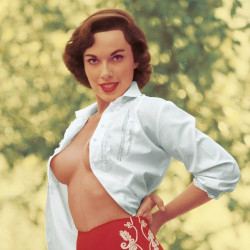
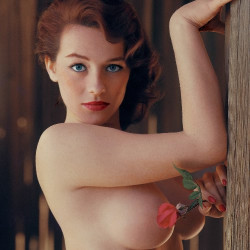
Sandra Edwards was an American glamour and nude model. She was born Sandra Lee Edwards on March 12, 1938, in Los Angeles, California. Playboy named her its March 1957 Playmate at 18. Her appearance dates from the magazine's formative 1950s, when the Playmate format was still taking shape.
Edwards had natural breasts, blue eyes and brown hair. Her measurements are 36-20-36.
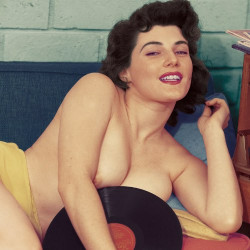
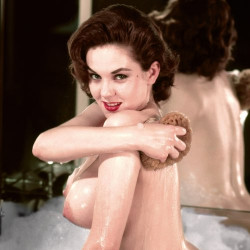
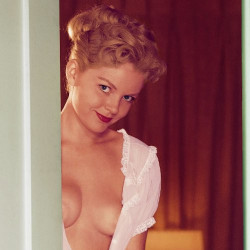
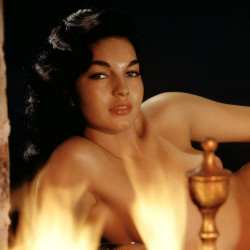
Sandra Edwards came to Playboy from the established glamour circuit rather than as an unknown discovery. She had already worked as a model for men’s magazines and spent time as a Las Vegas showgirl, building the camera experience that photographer Peter Gowland drew upon for her centerfold. The session gave Edwards one of her most enduring images, but her ambitions were already moving toward film and television.
In 1958, Warner Bros. signed her as a contract player. Television proved the more immediate outlet, including western work such as Maverick: “Holiday at Hollow Rock”, where she appeared opposite James Garner. Like many studio contract actresses of the period, Edwards moved between modeling and screen assignments while trying to establish herself as more than a photographic face.
Her private life later overwhelmed that developing career. Edwards married actor Tom Gilson, but the marriage deteriorated and the couple separated. On October 6, 1962, Gilson entered the home where Edwards was staying with family after earlier incidents of violence and threats. Edwards shot him with a shotgun. She was arrested on suspicion of murder, but a coroner’s jury subsequently ruled the killing justifiable homicide on the grounds of self-defense.
The ruling did not erase the consequences. Edwards’ Warner Bros. career ended soon afterward, and the screen opportunities that had once appeared to be building steadily largely disappeared. The episode became far more publicly defining than the years of modeling, showgirl work and television appearances that had preceded it—a stark example of how quickly a studio-era career could be derailed by events outside the set.
What remains is a complicated Hollywood story rather than a conventional Playmate trajectory. Edwards moved from glamour photography and Las Vegas stages into a major-studio contract, only for a violent personal crisis to eclipse that progress. Her Gowland centerfold survives as a portrait from the beginning of that story, before her public identity became inseparable from the tragedy that followed.