There was always a difference between being undressed and being dressed for desire. Playboy understood that difference better than most magazines. From its first issue in 1953, the magazine sold a fantasy built not only on nudity, but on atmosphere: the apartment, the record player, the cocktail, the smart conversation, the woman who was desirable because she seemed alive inside the frame. That idea followed Playboy from the centerfold into its many special editions, and nowhere did it find a softer, more stylish expression than in Playboy’s Book of Lingerie, later known simply as Playboy’s Lingerie. Playboy itself began in Chicago in 1953 under Hugh Hefner, with Marilyn Monroe as the famous first centerfold; by the 1980s, the brand had already become an empire of photography, publishing, fashion, clubs, videos, calendars, and fantasy.

The history of Playboy Lingerie begins in 1984, when the first Playboy’s Book of Lingerie appeared as a special edition. Two more one-shot issues followed in 1987 and 1988, before the concept became a bimonthly series beginning with the November 1988 issue. It proved to be one of the most durable ideas in the Playboy Special Editions family: 82 issues under the Book of Lingerie title were published from 1988 to 2002, and after the September 2002 rename to Playboy’s Lingerie, another 62 issues followed through 2012. In the long catalogue of Playboy newsstand specials, Lingerie became the longest-running series — a quiet triumph of satin over shock value.
The Perfect Moment for a Silk Revolution
The timing was perfect. The 1980s were a decade of performance and polish: power suits, gym bodies, high-gloss advertising, big hair, sharp silhouettes, and a new confidence in the way women could use fashion to control attention. Lingerie was no longer only something hidden beneath clothes. It was becoming costume, mood, attitude, private luxury. Brands such as Victoria’s Secret helped shift the American lingerie market toward a more romantic, glamorous, and female-facing language during the 1980s, selling underwear as fantasy but also as personal style. Playboy’s Lingerie special editions entered that cultural space with a very specific promise: not simply to show the body, but to stage the ritual around it.

That was the genius of the pictorial approach. The Lingerie editions were not built like ordinary centerfold presentations. They were closer to boudoir fashion portfolios: lace against skin, stockings against polished floors, satin slips on rumpled beds, corsets photographed with the careful drama of eveningwear. The models were not merely revealed; they were styled. The bra, the garter belt, the silk robe, the sheer camisole, the high heel, the string of pearls — each object had a role. Lingerie created a pause before nudity, and that pause was where Playboy found its most elegant form of erotic suspense.
Why Playboy Lingerie Seduced Men and Women Alike
For male readers, Playboy Lingerie offered the pleasure of anticipation. It understood that suggestion can be stronger than exposure, and that a woman adjusting a strap or looking over her shoulder could carry more electricity than a straightforward nude pose. For female readers, the appeal was more layered. The pictorials were not only about looking at women; they were also about looking at a language of self-presentation. The lingerie pages offered styling ideas, beauty cues, fantasy wardrobes, and a kind of permission: to be playful, theatrical, feminine, polished, shamelessly decorative, or quietly commanding. The women in these layouts were not dressed for the office, the school run, or the supermarket. They were dressed for a private mythology.
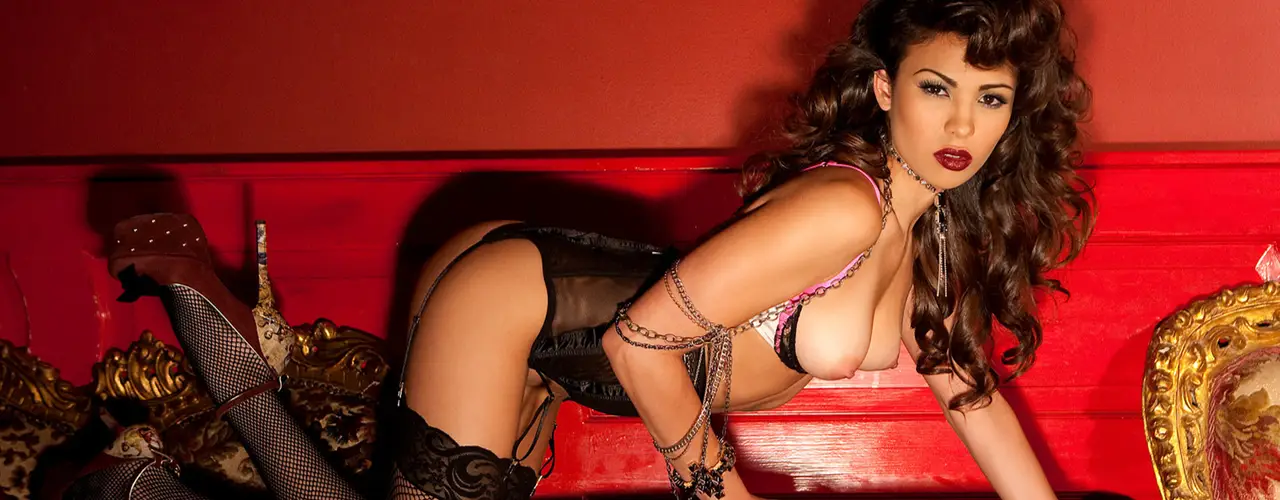
That is why Playboy Lingerie could reach beyond the usual male fantasy market. The strongest images in the series were not vulgar; they were aspirational. They sold atmosphere. They made lingerie feel like a room you could enter, a mood you could wear, a version of yourself you could try on. Many women who enjoyed Playboy’s glamour did not necessarily read it the way men did. They could admire the styling, the confidence, the photographic polish, the fantasy of being admired without apology. Decades later, Playboy’s business would increasingly acknowledge women as a major consumer base for the brand: former Playboy Enterprises CEO Scott Flanders said that outside China, almost all Playboy-licensed products were bought by women, while PLBY Group CEO Ben Kohn later said that 55% of the company’s customers were women.
The Models Who Defined the Playboy Lingerie Fantasy
The series also benefited from Playboy’s deep bench of models. Some were Playmates whose names became inseparable from the brand; others were glamour models who found in the Lingerie editions a recurring stage. Pamela Anderson stands above almost everyone in this conversation. Selected as Playboy’s Playmate of the Month for February 1990 after appearing on the October 1989 cover, she became the most recognizable Playboy figure of the modern era and appeared on more Playboy covers than any other individual. Playboy itself later noted her 14 cover appearances and 15 pictorials when announcing her January/February 2016 cover for the magazine’s final nude issue.

Anderson’s presence suited the Lingerie universe perfectly because her image always balanced California freshness with high-voltage glamour. She could look playful, cinematic, sunlit, or dangerous depending on the styling. In lingerie, she was not simply the blonde bombshell; she was the late-20th-century Playboy ideal updated for video, television, and global celebrity. Her appearances in Playboy’s video projects, including the Sexy Lingerie series, helped carry the boudoir aesthetic from the magazine rack to the screen. IMDb lists her among the cast of Playboy: Sexy Lingerie II in 1990 and Playboy: Sexy Lingerie III in 1991, which shows how quickly Playboy turned the Lingerie concept into a multimedia format.
Jenny McCarthy brought a different energy. She became Playmate of the Month in October 1993 and Playmate of the Year in 1994, after Playboy selected her out of thousands of applicants. Her early persona was cheeky, Midwestern, comic, and rebellious — less remote goddess, more beautiful troublemaker. In Lingerie-style photography, that mattered. Playboy was never only about perfect bodies; it was about personality made visible. McCarthy’s appeal was that she seemed to be in on the joke. She made glamour feel less icy and more mischievous, and that made her one of the defining Playboy personalities of the 1990s.

Kimberley Conrad represented the opposite pole: classic, composed, almost old-Hollywood in her softness. Chosen as Playmate of the Month in January 1988 and Playmate of the Year in 1989, she became even more famous as Hugh Hefner’s second wife. Her look fit the late-1980s Lingerie mood beautifully: elegant, blonde, polished, more romantic than outrageous. If Pamela Anderson was the electric 1990s, Conrad was the candlelit close of the 1980s — the woman who made lace look aristocratic.
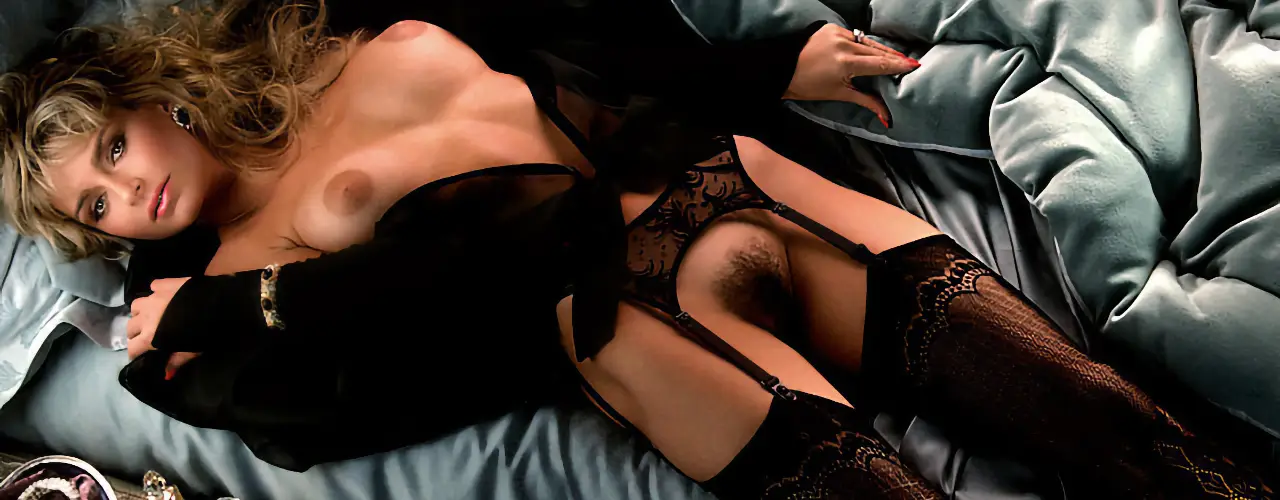
Deborah Driggs, Lisa Matthews, Ava Fabian, and Rebekka Armstrong also belong in the larger Playboy Lingerie story. Driggs was Playmate of the Month for March 1990 and appeared in the Playboy video ecosystem; Lisa Matthews was Playmate of the Month for April 1990 and became Playmate of the Year in 1991. Ava Fabian, Playmate of the Month for August 1986, appeared in numerous Playboy videos, while Rebekka Armstrong, Playmate of the Month for September 1986, was part of the first Playboy: Sexy Lingerie video cast listed by IMDb. These were women who gave the Lingerie format its range: athletic, sweet, dramatic, statuesque, fresh-faced, mature, playful.
From Print Pages to Playboy Video
The video series is important because it reveals how Playboy thought about lingerie visually. The first Playboy: Sexy Lingerie video appeared in 1989, with IMDb describing it as a showcase of Playmates and models capturing the changing look of elegant boudoir fashions in silk and satin. Later entries featured names such as Pamela Anderson, Deborah Driggs, Ava Fabian, Karen Foster, Samantha Dorman, Debra Jo Fondren, Morgan Fox, Wendy Hamilton, Shae Marks, Tiffany Sloan, and Carrie Westcott. This was not just a print spin-off; it was a fully developed Playboy mood, extended into motion, music, lighting, and bedroom choreography.
The Playboy Lingerie Aesthetic
What made the pictorials work was restraint. Playboy Lingerie was rarely about brute explicitness. It preferred composition: a woman seated at a vanity, a silk robe falling from one shoulder, a corset laced just tightly enough, a stocking line guiding the eye. The sets mattered as much as the model. A bed was not just a bed; it was a stage. A dressing room mirror was not just a prop; it was a second gaze. The camera often suggested that the viewer had arrived a moment early, before the evening began or just after it ended. That sense of stolen intimacy gave the series its signature.
The best Playboy Lingerie photography also understood texture. Satin caught light differently from lace. Lace softened the skin. Silk created movement. Leather or vinyl introduced a sharper edge. White lingerie suggested innocence; black lingerie suggested control; red was pure theatre. A garter belt could make a pose architectural. A sheer robe could blur the line between dressed and undressed. The series turned lingerie into grammar, and the models spoke it fluently.

That grammar mattered to women. A nude pictorial may invite the viewer to look; a lingerie pictorial invites the viewer to imagine dressing. There is a difference. Lingerie is chosen. It is bought, fitted, fastened, adjusted, hidden, revealed. It belongs to the model’s performance, but it also belongs to the reader’s possible life. A female reader could look at a Playboy Lingerie spread and see not only fantasy, but styling: a neckline, a color, a silhouette, a way to stand, a way to hold eye contact. In that sense, the pictorials worked almost like forbidden fashion editorials. They were too sensual for Vogue, too polished for ordinary men’s magazines, and too glamorous to be dismissed as simple pin-up work.
Why the Series Still Matters
This also explains why Playboy Lingerie aged differently from many adult pictorials. A centerfold can belong very specifically to the erotic style of its year. Lingerie, however, carries fashion history with it. A 1980s bodysuit, a 1990s push-up bra, a satin teddy, a high-cut panty, a lace balconette, a sheer black slip — these are not only erotic objects. They are artifacts of taste. They show how women’s bodies were styled, how glamour was lit, how confidence was packaged, and how Playboy translated the lingerie trends of each decade into its own visual vocabulary.
By the 2000s, the title change from Book of Lingerie to Lingerie signaled a cleaner, more modern brand language. Playboy was adapting to a world of websites, DVDs, celebrity culture, and increasingly fragmented attention. The old newsstand special still mattered, but the fantasy had to move faster. The models became glossier, the styling more contemporary, the covers more direct. Yet the central idea remained the same: lingerie as the doorway between fashion and desire.
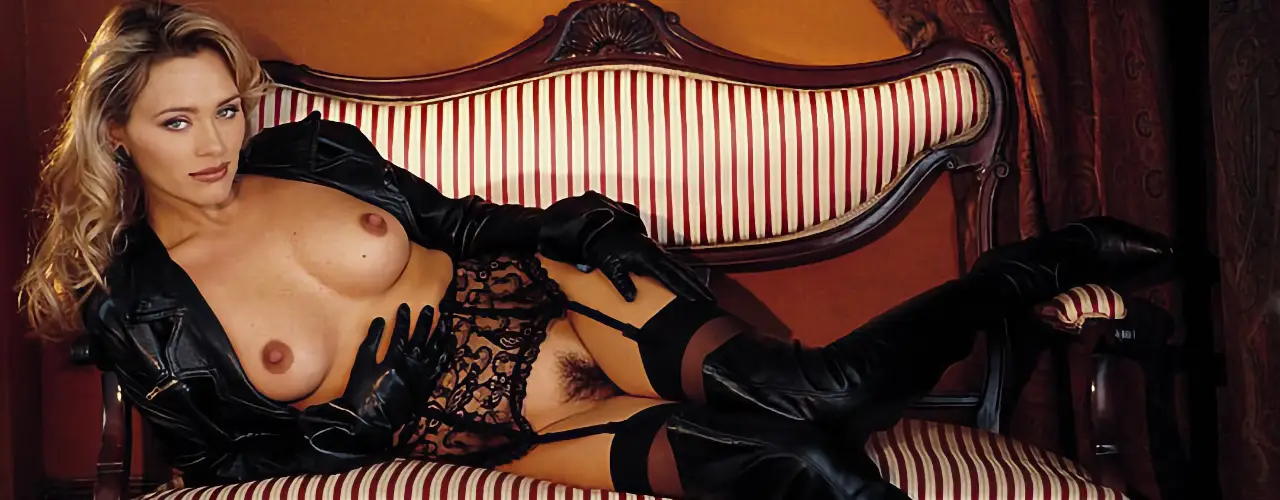
Playboy’s later real-world lingerie ventures confirmed how natural this territory was for the brand. In 2014, Bendon and Playboy introduced the BIOFIT x Playboy intimate apparel collection, built around push-up bra technology and positioned as an intimate apparel line rather than merely a souvenir product. The collaboration made commercial what the pictorials had long suggested: Playboy was not only a publisher of erotic imagery; it was a style symbol with enough power to live on bras, panties, corsets, robes, and everyday fashion.
The Art of Getting Dressed for Desire
The deeper truth is that Playboy Lingerie softened the Playboy myth without weakening it. It gave the brand romance when the culture expected only provocation. It let the models be seductive without always being fully exposed. It gave readers a fantasy of rooms, fabrics, colors, rituals, and private confidence. It made the act of getting dressed as charged as the act of getting undressed.
For men, it was an invitation. For women, it could be a mirror, a mood board, a dare. That dual appeal is what kept the series alive for so long. Playboy Lingerie did not ask why lace mattered, why a silk strap could change a room, why confidence sometimes begins with something no one else can see. It simply knew. And for nearly three decades, issue after issue, it turned that knowledge into one of Playboy’s most elegant, collectible, and quietly influential fantasies.