December 1953. A young publisher named Hugh Hefner released the first issue of Playboy with Marilyn Monroe on the cover, and American culture quietly changed its posture.
It was not simply the arrival of another men’s magazine. The country already had pin-up calendars, burlesque postcards, bachelor jokes, and a long tradition of winking at desire while pretending not to notice it. What made Playboy different was its confidence. It did not whisper. It did not apologize. It placed beauty, pleasure, literature, jazz, politics, style, and sex inside the same elegant package and suggested that a man could want all of it.
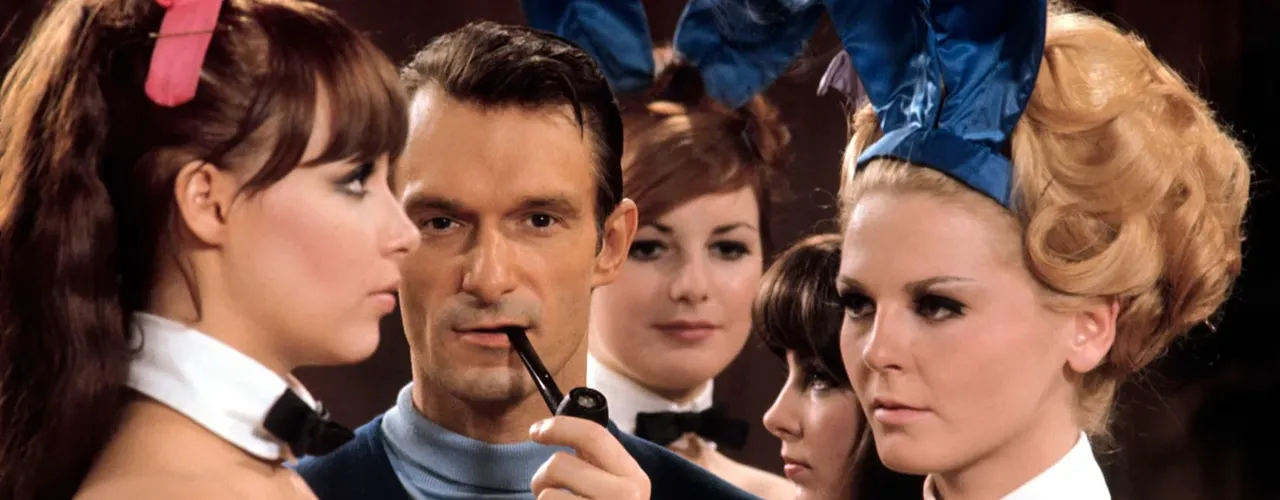
That was Hefner’s great instinct. He understood that the postwar American man was changing. He was moving into apartments, buying hi-fi systems, learning how to mix a martini, listening to Miles Davis, reading modern fiction, and imagining a life beyond the old rules of marriage, duty, and quiet conformity. Playboy gave that man a mirror — polished, provocative, and just dangerous enough to feel new. The magazine did not invent desire. But it gave desire a lifestyle.
The Formula: Beauty, Intelligence, and Rebellion
From the beginning, Playboy understood something many of its competitors missed: fantasy becomes more powerful when it is surrounded by taste.
The centerfold may have brought readers to the magazine, but the world around it kept them there. Playboy was not built as a cheap thrill. It was designed as an invitation into a more stylish version of masculinity — one with good furniture, good music, good conversation, good tailoring, and good company.
During the 1950s, 1960s, and 1970s, this formula became irresistible. The magazine offered beautiful women, certainly, but it also offered a voice: urbane, clever, liberal, curious, and deeply in love with pleasure. It spoke to the man who wanted to be more than respectable. He wanted to be interesting.
Other magazines sold sex as something hidden, naughty, or crude. Playboy sold it as part of a complete life. That distinction made all the difference.
Its pages carried fiction, essays, interviews, satire, cartoons, criticism, and style advice with the same confidence as its nude pictorials. The result was a magazine that could sit on a coffee table and feel both scandalous and sophisticated. It gave its reader permission to be curious about the world and honest about his appetites.
In conservative mid-century America, that was not merely clever publishing. It was rebellion in a silk robe.
The Playboy Interview: Conversation as Seduction
One of Playboy’s most brilliant editorial inventions was the Playboy Interview. It turned long-form conversation into a signature feature and gave the magazine an intellectual weight that separated it from ordinary men’s entertainment.
These were not decorative chats placed between pictorials. They were serious, extended encounters with some of the most important voices of the age. Civil rights leaders, musicians, actors, writers, athletes, politicians, and cultural rebels all appeared in its pages. The interviews were often sharp, intimate, and revealing, giving readers access to people who were shaping the century.
That was part of the genius. Playboy understood that provocation was not limited to nudity. A dangerous idea could be just as exciting as a beautiful body. A fierce political argument, a confession from a celebrity, or an unfiltered conversation with a controversial figure could carry the same electricity as a centerfold.
The magazine’s message was clear: a modern man should know how to appreciate beauty, but he should also know how to listen, argue, read, and think.
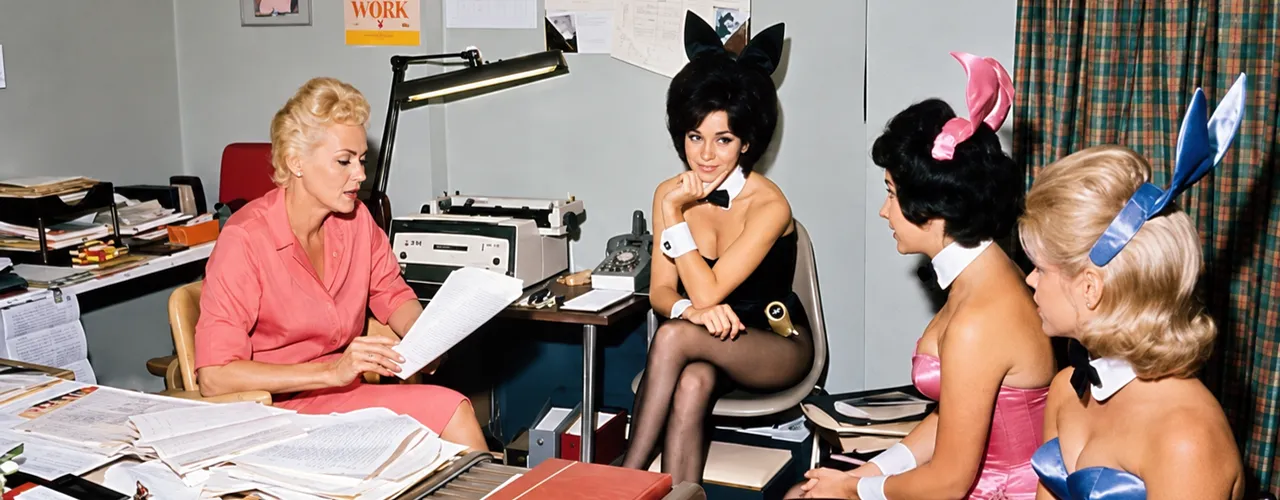
Literature Between the Silk Sheets
Playboy also built prestige through literature. It published major writers, sharp stylists, and bold storytellers, creating a space where fiction and erotic glamour could exist side by side without embarrassment.
This was not accidental. Hefner wanted the magazine to feel adult in the fullest sense of the word. Adult did not mean merely sexual. It meant worldly. It meant literate. It meant sophisticated enough to enjoy both a beautiful woman and a beautifully turned sentence.
For readers, that combination became part of the pleasure. Opening an issue of Playboy meant entering a world where sensuality and intelligence were not enemies. A man could admire a Playmate, read a short story, discover a new musician, consider a political argument, and learn what kind of stereo system belonged in his apartment.
That editorial mixture gave the magazine its cultural authority. Playboy was not only selling images. It was selling taste.
Sexual Liberation in a Buttoned-Up America
To understand why Playboy mattered, one must remember the atmosphere into which it arrived.
America in the 1950s was prosperous, anxious, optimistic, and deeply controlled. Public conversations about sex were wrapped in euphemism. Desire existed everywhere, but polite culture preferred to keep it hidden behind closed doors, wedding vows, and nervous jokes.
Playboy challenged that silence. It did not treat sex as shameful or dirty. It treated sex as part of modern life — something to be discussed, enjoyed, styled, photographed, debated, and understood.
That attitude helped prepare the ground for the sexual revolution of the 1960s and 1970s. The magazine did not cause that revolution alone, but it gave it a glossy, articulate, masculine voice. It argued, issue after issue, that pleasure was not the enemy of civilization. In fact, pleasure might be one of civilization’s finest achievements.
This was the true scandal of Playboy. Not simply that it showed women nude, but that it made nudity seem elegant, intelligent, and modern.
The Allure of Becoming a Playboy Playmate
For generations of models, becoming a Playboy Playmate was more than a modeling job. It was a transformation.
The Playmate was not presented as distant royalty or anonymous decoration. She was the girl next door touched by fantasy — approachable, radiant, flirtatious, and unforgettable. She had a name, a hometown, a personality, and a story. The magazine did not merely display her. It introduced her.
That introduction carried enormous power. A Playmate of the Month could move from relative obscurity into national recognition almost overnight. Her image reached millions. Her name entered popular culture. She became part of a glamorous lineage that mixed beauty, ambition, charm, and carefully staged intimacy.
For glamour and nude models, Playboy offered something other magazines could rarely match: prestige.
There were many publications that featured nudity, but few carried the same aura. Playboy had taste, money, influence, and myth. Its photography was polished. Its brand was powerful. Its women were not presented as disposable. At its best, the magazine made them look iconic.
That mattered. To appear in Playboy was to step into a fantasy larger than oneself. It could open doors to television, film, modeling, nightclub appearances, endorsements, and celebrity. For some women, it became a launchpad. For others, it became a defining chapter. For many, it was a badge of confidence — proof that they had been chosen by the most famous men’s magazine in the world.
Beauty, Power, and the Playboy Myth
The appeal of the Playmate was never only physical. The most memorable Playmates carried a certain attitude. They looked as if they understood the camera and were not afraid of what it wanted from them.
That quality gave Playboy glamour its charge. The magazine sold a fantasy of availability, but also one of self-possession. The women were styled, lit, and idealized, yet the best pictorials suggested a woman who was in on the game. She was not merely being looked at. She was looking back.
This is where Playboy became more complicated than its critics sometimes allowed. It could be commercial, male-driven, and deeply shaped by fantasy. But it also gave many women visibility, money, fame, and a platform at a time when mainstream culture often demanded modesty, obedience, and silence.
For some models, posing for Playboy was an act of ambition. For others, it was adventure. For others still, it was a way to claim beauty on their own terms. The meaning was never exactly the same for every woman, and that is part of what made the Playmate tradition so enduring.
Hugh Hefner: The Architect of the Playboy World
Hugh Hefner was not merely an editor. He was a world-builder.
He understood branding before the word became exhausted. He created not just a magazine, but a universe: the Bunny, the Mansion, the clubs, the pipe, the robe, the parties, the interviews, the cartoons, the bachelor pad, the centerfold, the philosophy. Everything belonged to the same dream.
Hefner’s genius was his ability to turn private fantasy into public lifestyle. He made desire look organized. He made indulgence look tasteful. He made the bachelor seem less like a lonely man and more like a cultural rebel with good lighting and better furniture.
He also positioned himself as a defender of free expression. At a time when censorship still shaped what Americans could read, watch, and discuss, Playboy pushed against the boundaries. It published controversial voices, defended sexual openness, and insisted that adult conversation deserved adult freedom.
Hefner’s critics were many, and not all of them were wrong. But his cultural impact is impossible to dismiss. He helped change how America talked about sex, how men imagined sophistication, and how magazines could blend entertainment, politics, literature, and eroticism into one powerful editorial identity.
The Mansion and the Lifestyle
Beyond the printed page, Playboy became a physical fantasy.
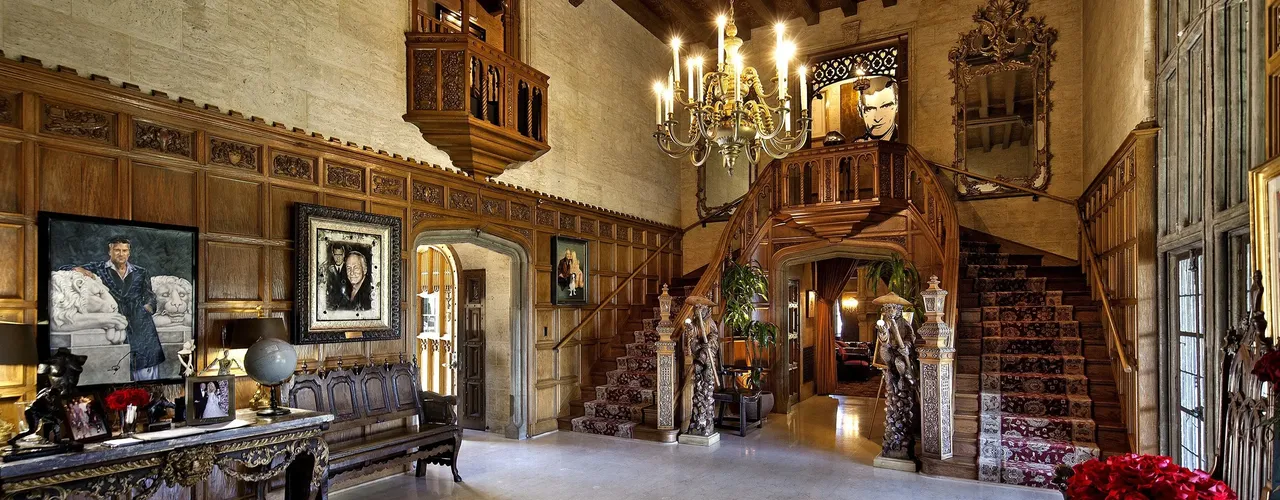
The Playboy Mansion was not just a residence. It was a stage set for the brand’s mythology — part nightclub, part salon, part private kingdom. Celebrities, models, musicians, athletes, writers, and socialites passed through its rooms, giving the magazine a sense of living glamour. Playboy was no longer something one merely read. It was something one imagined entering.
The clubs extended that fantasy. The Playboy Bunny became one of the most recognizable symbols of the twentieth century: playful, polished, flirtatious, and instantly marketable. She represented the magazine’s ability to turn erotic suggestion into mainstream iconography.
That was the larger achievement. Playboy did not remain trapped in the adult section. It entered fashion, nightlife, television, film, music, comedy, politics, and celebrity culture. It became a shorthand for a certain kind of life — stylish, permissive, masculine, and always lit by the promise of pleasure.
The Golden Age: From Jazz Cool to Disco Heat
The 1950s gave Playboy its foundation. The 1960s gave it momentum. The 1970s gave it scale, excess, and empire.
Across those decades, the magazine became a companion to the changing American mood. In the jazz-age cool of the late 1950s and early 1960s, it offered sophistication and escape. During the social upheavals of the 1960s, it became a forum for sex, politics, race, freedom, and rebellion. By the 1970s, as disco lights replaced cocktail shadows, Playboy had become a full cultural institution — glamorous, controversial, imitated, attacked, desired, and impossible to ignore.
Its success came from knowing how to evolve without losing its central promise. The promise was not merely to show beautiful women. The promise was to make the reader feel that he belonged to a more exciting world.
That world had better music, better clothes, better parties, better conversations, and better lovers. It was fantasy, of course. But fantasy has always been one of America’s most profitable exports.
Why Playboy Endured
The lasting power of Playboy came from its contradictions.
It was commercial but literary. Erotic but polished. Masculine but dependent on female charisma. Rebellious but carefully branded. Sophisticated but never innocent. It could publish serious interviews and playful cartoons, political arguments and nude pictorials, fiction and consumer fantasy, all under the same rabbit-head logo.
Those contradictions made it fascinating. They also made it resilient.
As America changed, Playboy became a record of changing desire. It captured the rise of the modern bachelor, the mainstreaming of sexual conversation, the glamour of the centerfold, the power of magazine celebrity, and the complicated dance between liberation and objectification.
Its influence reached far beyond the newsstand. It shaped how men’s magazines were edited, how models were promoted, how interviews were packaged, how sexuality entered mainstream conversation, and how lifestyle itself could be sold as seduction.
The Legacy of a Beautiful Revolution
Playboy did not conquer America because it showed skin. Skin was only part of the story.
It conquered because it understood atmosphere. It knew how to create a mood, a world, a philosophy. It gave the American man permission to imagine himself as stylish, intelligent, sexually confident, culturally alert, and just a little dangerous.
It turned Playmates into icons. It turned interviews into events. It turned the bachelor pad into a dream. It turned a rabbit in a bow tie into one of the most recognizable symbols in modern media.
And above all, it understood that pleasure becomes more powerful when it is presented with taste.
From Marilyn Monroe’s famous first cover to the golden decades that followed, Playboy was never merely a magazine. It was an invitation — to look, to read, to think, to desire, and to believe that life could be lived with more beauty, more freedom, and more nerve.
That is how Playboy conquered the market.
It sold the fantasy of a better life — and made the fantasy look irresistible.