Laura Misch Bio
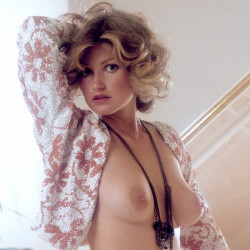
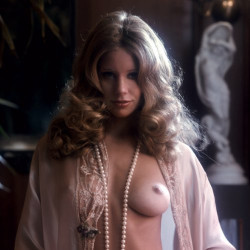
Laura Misch is an American Playboy Bunny, adult model, actress, journalist, and author. Born Laura Misch Owens on November 23, 1953, in Tulsa, Oklahoma, she has also been credited as Laura Watt. Playboy named her its February 1975 Playmate at 21. Her appearance came during Playboy's 1970s print era, when the magazine reached the height of its mass-market influence.
Misch has natural breasts, blue eyes and brown hair. Her measurements are 37-24-36.
Her signature centerfold was shot by Richard Fegley, a detail that points to the glossy portraiture of the time and to the photographic craft that framed her early public image. At nineteen Misch decamped for Louisiana and worked as a Bunny at the Playboy Club in New Orleans; those years in the city provided both the stage and the informal network that placed her before magazine lenses and local casting directors.
That New Orleans connection carried into a brief screen career in the mid-to-late 1970s. She turned up in a string of regional productions and studio pictures filmed around the Gulf—small parts in Mandingo and Hard Times, bit roles in French Quarter and the cult horror Mardi Gras Massacre—alongside a made-for-television turn as a prostitute in A Shadow in the Streets and even a Miller Lite commercial. The work never pushed her into stardom, but it left a scatter of recognizable credits across genre and local filmmaking.
Misch later redirected her energies toward reporting. She moved to Miami to write for The Miami Herald and subsequently took a position with The Rocky Mountain News in Denver; it was there she met her second husband, Joe Watt. An earlier marriage, to a New Orleans police officer named Eddie, ended in divorce—facts that mark the personal side of a life lived between cities and professions.
In 1997 she published her first novel, Carry Me Back, under her married name, Laura Watt. Taken together, the credits—club work and centerfold, small-screen parts, newspaper bylines and a published novel—trace a career made up less of steady genre loyalty than of practical shifts between the pages, the screen and the newsroom.