Before the Playboy Bunny became a Halloween costume, a pop-culture silhouette, a collector’s dream, or one of the most recognizable symbols in adult entertainment history, she was a working woman standing at the velvet edge of an American fantasy.
She wore satin ears, a corseted bodice, cuffs, collar, bow tie, high heels, and the most famous tail in nightlife history. But she was never only an outfit. The Playboy Bunny was the living emblem of Playboy’s grandest idea: that the magazine’s world of style, flirtation, jazz, cocktails, literature, and carefully lit desire could step off the printed page and greet you at the door.
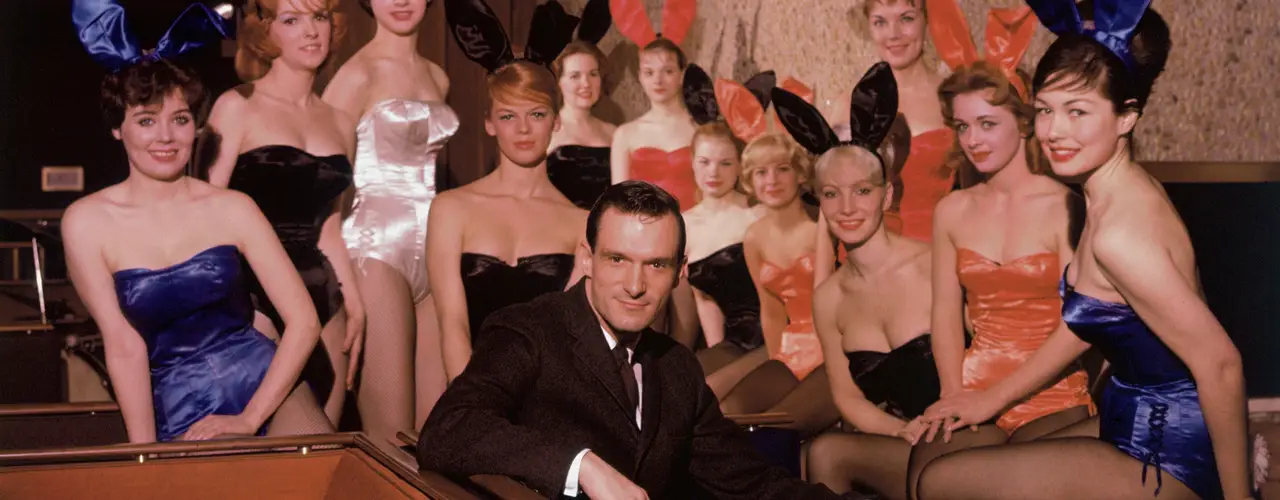
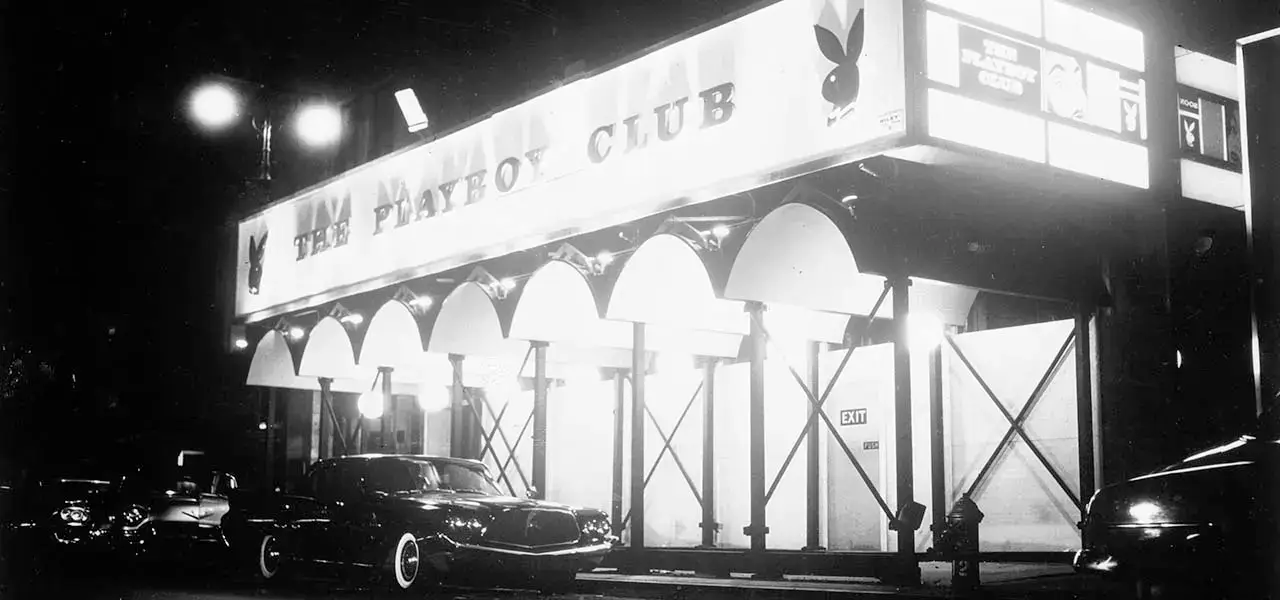
The first Playboy Club opened in Chicago on February 29, 1960, at 116 East Walton Street. It was not merely a bar. It was a membership fantasy, a key club where men bought entry into the Playboy lifestyle, and where Bunnies served drinks among comedians, musicians, centerfold imagery, intimate rooms, and the hum of urban sophistication.
Hugh Hefner had already changed the American newsstand with Playboy’s 1953 debut, famously featuring Marilyn Monroe. But the Club changed something else: it turned Playboy from a publication into a place.
The Birth of the Playboy Bunny
The Bunny was born from a clever collision: the Playboy rabbit logo, cocktail service, showgirl glamour, and the crisp formality of a tuxedo. She was flirtation with rules. Sensuality with a manual. Fantasy with table numbers.
The origin of the Bunny costume has been retold in several ways. Early versions of the story credit Ilse Taurins, then connected to Playboy executive Victor Lownes, and her seamstress mother with helping create the first prototype. Hugh Hefner and his team then refined the look, sharpening the silhouette and making it unmistakably Playboy.
Fashion designer Zelda Wynn Valdes also played an important role in the costume’s history. Valdes, a gifted Black designer associated with stars such as Dorothy Dandridge, Eartha Kitt, Ella Fitzgerald, and Josephine Baker, was engaged by Playboy to produce Bunny outfits and staged fashion presentations at the New York Playboy Club in the early 1960s.
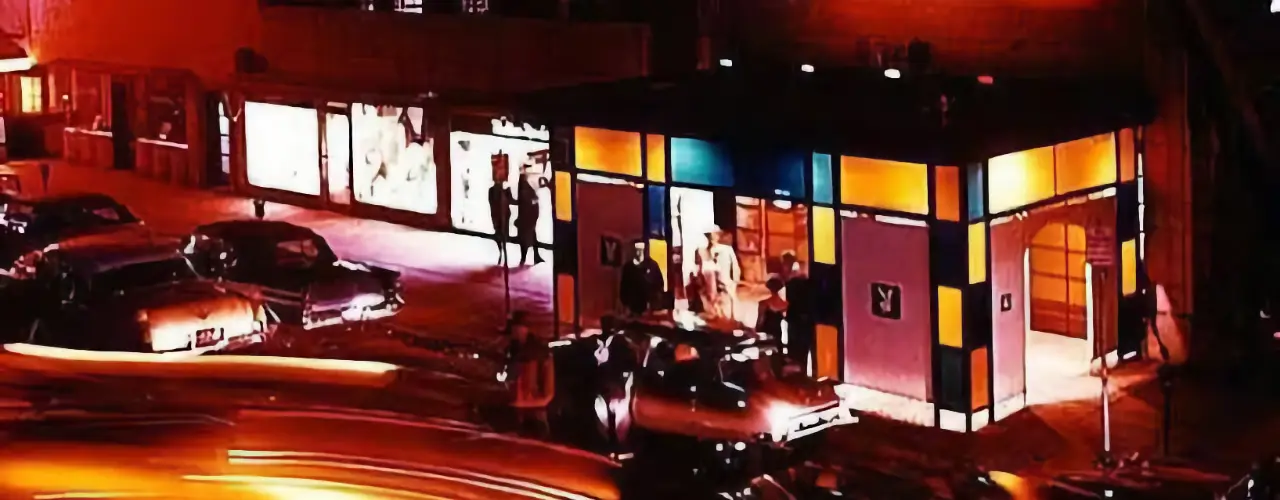
That slight tension in the historical record is fitting. Like all true icons, the Bunny suit was not born in one clean moment. It evolved. It was sketched, pinned, altered, mythologized, and eventually canonized. Today, the Playboy Bunny costume is recognized not only as a nightclub uniform, but as a piece of American cultural design history.
The suit was brilliant because it balanced contradiction. It was revealing, yet formal. Playful, yet controlled. It borrowed from lingerie, but also from the tuxedo. It suggested availability while the Club rules strictly controlled access. The Bunny was trained to smile, pose, serve, turn, perch, bend, and move according to a specific choreography. Playboy sold fantasy, but managed it like theater.
Inside the Playboy Club
The Playboy Club was a stage, and every Bunny knew her blocking.
Members entered with numbered keys. Inside, they found dining rooms, bars, lounges, comedy, jazz, celebrity guests, and the sense that they had entered a private world. At its height, Playboy operated clubs in major American cities and international locations, including London, Tokyo, Manila, and beyond.
The Bunny Manual turned glamour into procedure. There was the Bunny Stance, the Bunny Perch, and the Bunny Dip. A Bunny did not simply carry a tray; she performed a branded ritual. She did not just introduce herself; she delivered a line. She did not just stand; she became part of the architecture.
This is where the myth and the job diverged. To the customer, the Bunny represented ease, glamour, and flirtation. To the women, it was work: long shifts, physical demands, strict standards, and constant performance.
Gloria Steinem’s famous undercover assignment at the New York Playboy Club in 1963 exposed the less glamorous side of the job, describing long hours, difficult working conditions, and the pressure placed on women to maintain the Bunny image.
Yet the story is not one-note. Many former Bunnies remembered camaraderie, discipline, tips, independence, and an entry into entertainment, modeling, media, or social life. The Bunny was both a symbol of male fantasy and, for some women, a practical professional platform. That tension is exactly why she remains fascinating.
Bunnies, Playmates, and the Playboy Ladder
One important distinction is often missed: a Playboy Bunny was not automatically a Playmate. A Bunny worked in the Playboy Club. A Playmate appeared in the magazine as a monthly centerfold. Some women crossed from one world into the other, and those stories became part of Playboy legend.
Marilyn Cole is one of the great Bunny-to-Playmate examples. She worked at the London Playboy Club, became Playboy’s January 1972 Playmate of the Month, and later became 1973 Playmate of the Year. She remains one of the most famous British women in Playboy history.
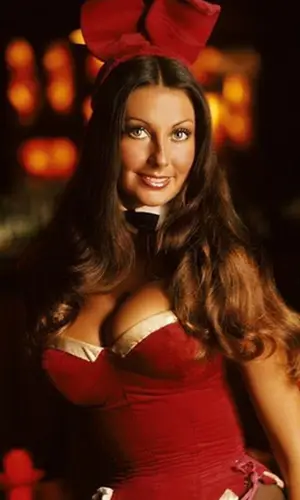
Patti McGuire followed a similarly glamorous path. She worked as a Bunny at the Playboy Club in St. Louis before becoming Playboy’s November 1976 Playmate of the Month and then 1977 Playmate of the Year.
Candace Collins Jordan also embodied the Club-to-centerfold bridge. She worked as a Bunny in St. Louis and Chicago, became Chicago Bunny of the Year, appeared as Playboy’s December 1979 Playmate, and went on to become one of the magazine’s familiar faces.
These women show why the Bunny job mattered. It was not simply a service role. It could be a casting room, a social salon, a finishing school in poise and performance, and a portal into Playboy’s larger media universe.
Famous Women Who Wore the Bunny Ears
Not every famous Bunny became a Playmate, and not every famous Playmate worked as a Bunny. But the Bunny roster included women who later became important names in culture, entertainment, music, fashion, and media.
Debbie Harry, before Blondie made her a punk and new-wave icon, worked as a Bunny at New York City’s Playboy Club. Before she became a defining face of late-1970s cool, she was part of the Playboy nightlife machine.
Lauren Hutton, later one of the most influential American fashion models and actresses, also worked briefly as a Playboy Bunny before moving toward the modeling career that would put her on magazine covers and into Hollywood films.
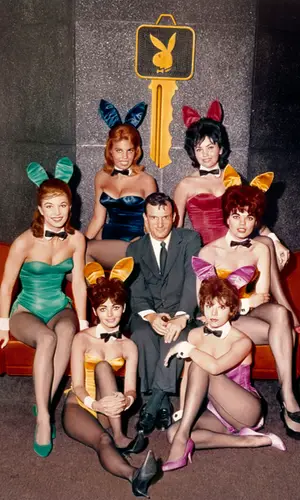
Gloria Steinem’s Bunny experience was different: she went undercover, not to become part of the mythology but to investigate it. Yet her 1963 assignment became inseparable from the Bunny story because it forced the public to look beneath the satin and consider labor, objectification, and power.
Together, these women reveal the Bunny’s paradox. The same costume could be a stepping stone, a paycheck, a critique, a trap, a joke, a memory, or a badge of survival, depending on who wore it and why.
Why the Playboy Clubs Worked
The Playboy Club worked because it arrived at the perfect cultural moment.
In 1960, America was changing but still buttoned up. The cocktail lounge, the bachelor pad, jazz, cigarettes, modern furniture, and sexual sophistication all carried a charge. Playboy did not invent desire, but it packaged desire as taste. The Club made that package walk, smile, and pour a drink.
It also gave members a feeling of belonging. The Playboy key was genius. It was not just a membership card; it was a prop. It told a man he had access. It said he was not merely reading Playboy — he was inside Playboy.
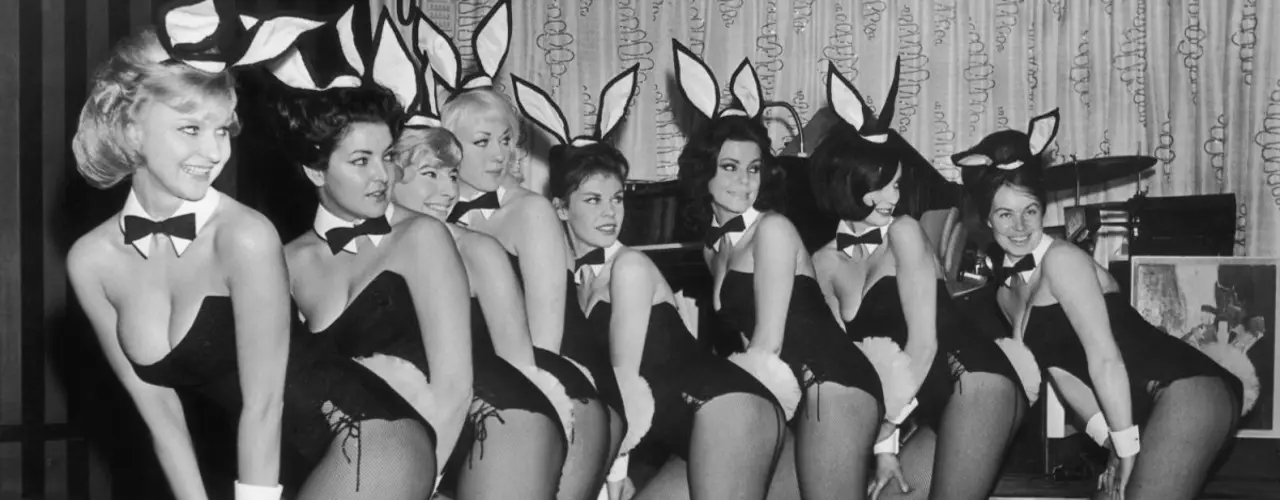
The Clubs also benefited from live entertainment. They were not only about Bunnies. They booked comedians, singers, musicians, and celebrities. They were rooms where the aspirational male consumer could feel modern, cosmopolitan, and close to fame.
And then there was the Bunny herself: polished, approachable, disciplined, and instantly recognizable. Playboy understood branding before branding became a religion. The Bunny was logo, hostess, performer, waitress, fantasy, and ambassador all at once.
Why the Playboy Clubs Disappeared
The original Playboy Clubs did not vanish because people suddenly stopped liking glamour. They disappeared because the world changed faster than the concept.
By the mid-1970s and early 1980s, several pressures were closing in. Urban nightlife had changed. Inner-city entertainment districts were no longer as dominant as before. Discos, celebrity clubs, modern restaurants, casinos, private lounges, and more explicit adult entertainment all competed for the same attention.
There were cultural pressures too. The rise of feminism forced a new conversation about the Bunny image, women’s labor, and male-centered fantasy. What had felt daring and modern in 1960 began to look nostalgic, complicated, and sometimes outdated by the 1980s.
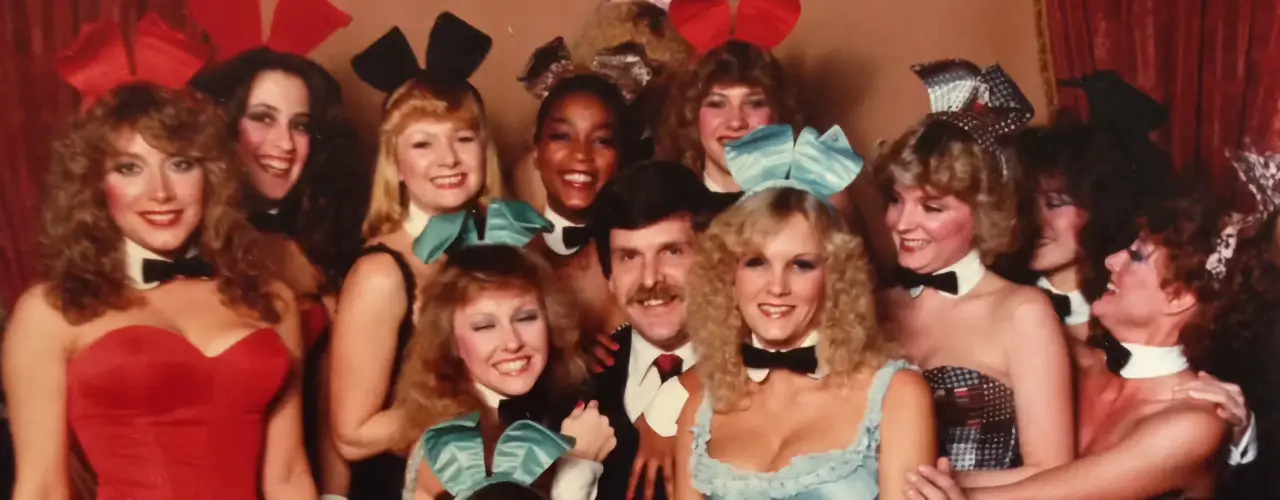
There were also business problems. Playboy Enterprises had expanded widely, and the clubs were expensive to operate. As revenues declined, the company began closing locations. The major company-owned clubs in cities such as Chicago, New York, and Los Angeles closed in the 1980s, while the last original-era American Playboy Club closed in Lansing, Michigan, in 1988.
The deeper reason was symbolic. The Bunny had once represented the future: liberated, urban, playful, modern. By the 1980s, she increasingly represented the past: male-only fantasy, corporate nostalgia, and a style of seduction that felt out of step with the era’s new conversations about gender, work, and power.
The Clubs did not die because the Bunny lost her allure. They died because allure alone could not support a hospitality empire once the culture around it had moved on.
The Comebacks: Vegas, New York, Digital, and Miami
Playboy has never stopped trying to revive the Bunny.
The Las Vegas Playboy Club opened at the Palms in 2006, leaning into retro chic, casino glamour, and nightlife spectacle. Later revival attempts included clubs and lounges in markets such as Macau, Cancún, London, and New York.
The New York relaunch in 2018 arrived in a very different cultural climate. By then, the #MeToo movement had transformed the public conversation around gender, power, hospitality, and sexuality. The Bunny could still attract attention, but the meaning of the costume had changed.
Today, the most important replacement for the old Playboy Club may not be a room at all. It is a platform.
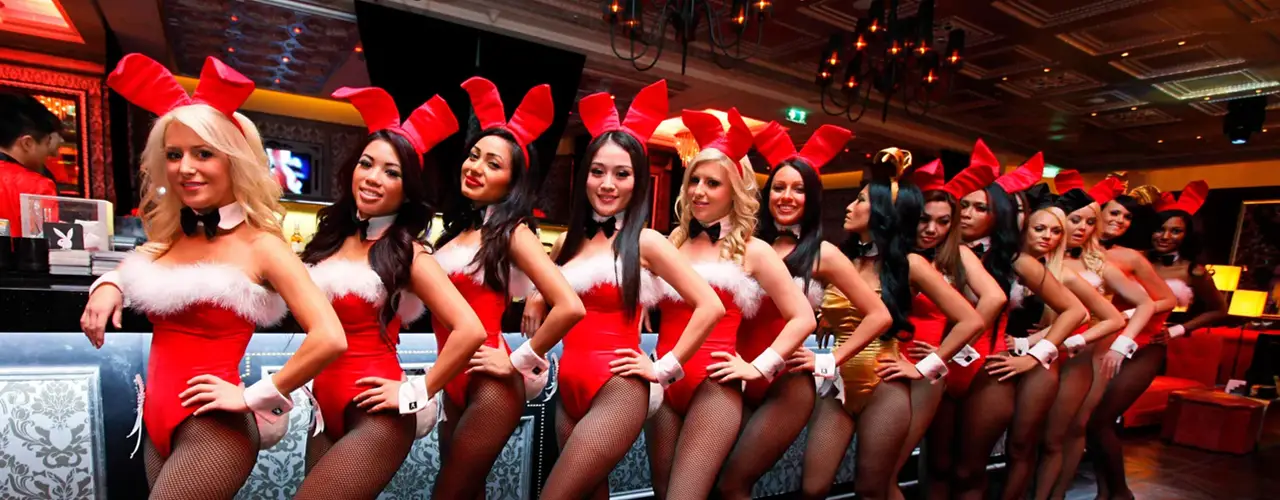
In the modern era, Playboy has explored a digital version of the Club, where members can interact with Playboy creators through subscriptions, private messaging, livestreams, social content, and exclusive events. The old key has become a login. The velvet rope has become a subscription gate. The private club has become part of the creator economy.
Still, Playboy has not abandoned physical hospitality. In recent years, the company has announced plans connected to Miami Beach, including a new Playboy Club concept with restaurant, members-only space, and content studios designed to support Playboy’s modern creator network.
So what replaced the Playboy Club? Nothing replaced it exactly. Its functions split apart. The hospitality went to VIP lounges, members-only restaurants, casinos, and private events. The visual icon went to fashion, parties, music videos, and pop culture. The personal access went to digital creator platforms. The mythology went everywhere.
The Bunny’s Legacy
The Playboy Bunny remains one of the most complicated icons in American popular culture.
She was glamorous, but she worked hard. She was celebrated, but controlled. She was desired, but disciplined. She was part of a male fantasy, but many women used the role to earn money, enter modeling, build confidence, travel, meet influential people, or launch careers.
She also tells the history of Playboy better than almost anything else. The magazine was always about more than nudity. It was about aspiration: what to drink, what to wear, what to read, what music to play, what apartment to live in, what conversation to have, what kind of life to imagine. The Bunny was the hostess of that dream.
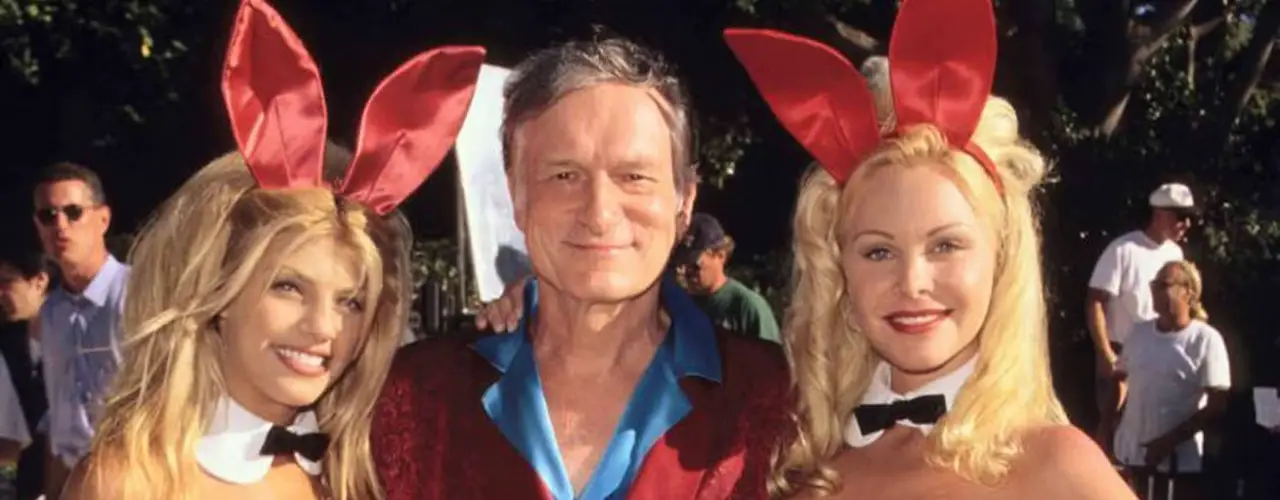
For some, she is nostalgia. For others, she is a symbol of outdated gender politics. For collectors, she is design history. For former Bunnies, she may be a memory of discipline, sisterhood, pressure, opportunity, and youth. For Playboy, she remains its most powerful three-dimensional logo.
The Bunny endures because she was never just one thing. She was satin and ambition. Service and spectacle. A smile and a system. A woman in costume and a culture looking at itself.
The old Playboy Club is gone, and perhaps it could only have existed in that exact cocktail of time: postwar prosperity, urban nightlife, bachelor culture, jazz sophistication, and the first waves of sexual revolution. But the Bunny survived the rooms that created her. She stepped out of Chicago, London, New York, and Vegas and into museums, archives, fashion, television, digital platforms, and memory.
The Club had a closing time. The Bunny, somehow, never left.