Bettie Page Bio
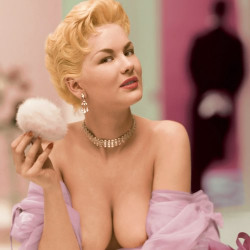
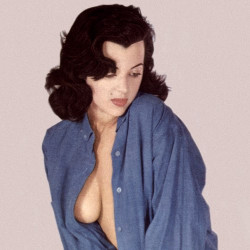
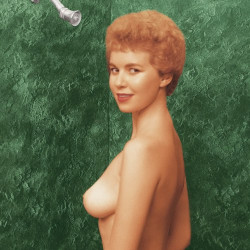
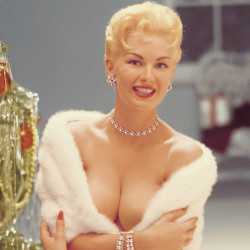
Bettie Page was an American actress, burlesque performer, pin-up and fetish model. Born Betty Mae Page on April 22, 1923, in Nashville, Tennessee, she has also been credited as Betty Page. Playboy named her its January 1955 Playmate at 31. Her appearance dates from the magazine's formative 1950s, when the Playmate format was still taking shape.
Page had natural breasts, blue eyes and black hair. Her measurements are 36-23-37.
Bettie Page’s route to pin-up fame was anything but inevitable. A strong student in Tennessee, she graduated from Peabody College for Teachers on a scholarship and initially pursued teaching and acting rather than modeling. After moving to New York, however, a chance encounter with an amateur photographer on a city beach led to her first portfolio. The camera suited her immediately. Page’s wide smile, jet-black hair and distinctive short bangs created a look that was unmistakably hers, and within a few years her photographs were circulating through camera clubs, calendars, magazines and mail-order businesses across the country.
Her work with Irving Klaw pushed that image into more provocative territory. Page posed for bondage and fetish photographs and appeared in short films that explored imagery far outside respectable 1950s conventions. What made the pictures unusual was the contrast between their subject matter and Page’s demeanor: even in elaborate restraints or towering heels, she often appeared cheerful, playful and completely at ease. The Klaw material later drew the attention of politicians and anti-obscenity campaigners, and Page was called to testify privately during a congressional investigation into pornography.
A very different side of her emerged through photographer Bunny Yeager. Their Florida sessions produced some of Page’s most enduring photographs: tropical settings, handmade bikinis, leopard patterns and famously, live cheetahs. Yeager also created the Santa-themed image that became part of Playboy’s early history. The collaboration showed why Page was more than a conventional pin-up. She could shift from fetish fantasy to sunny cheesecake without losing the sense that she was enjoying the joke along with the viewer.
By the late 1950s, Page abruptly withdrew from modeling. She moved to Florida, underwent a religious conversion and studied at Bible colleges with hopes of becoming a missionary. She later worked with Billy Graham’s ministry. The decades that followed were far more private and frequently difficult, including troubled marriages and serious mental-health problems that resulted in periods of psychiatric hospitalization. For years, many of the people buying and reproducing her photographs had little idea where she was or what had become of her.
Meanwhile, Bettie Page the image refused to disappear. A major revival began in the 1980s as collectors, artists, comic-book creators and a new generation of admirers rediscovered the photographs. Her bangs, high-waisted lingerie and combination of mischief and confidence became instantly recognizable elements of retro pin-up culture. When Page eventually resurfaced publicly, she found that an entire mythology had grown around photographs made decades earlier. She later took legal steps to gain greater control over—and financial benefit from—the commercial use of her likeness.
Page died in 2008 at the age of 85. By then, the model who had walked away from the camera half a century earlier had become more famous than ever. Her Playboy appearance was only one piece of that story, but it joined a body of work that stretched from cheerful beach pin-ups to some of the most transgressive commercial erotic photography of the 1950s. Few models have demonstrated so clearly how an image can outlive the moment that produced it—and take on an entirely new cultural life of its own.