There are television costumes, and then there is the red swimsuit. By the middle of the 1990s, a woman running across a California beach in that unmistakable one-piece required almost no explanation. The ocean, the lifeguard tower and a few seconds of slow motion did the rest. Baywatch had become something larger than a television drama: it was an international shorthand for sun, bodies, California and a particularly polished version of American glamour. Playboy understood that language very well.
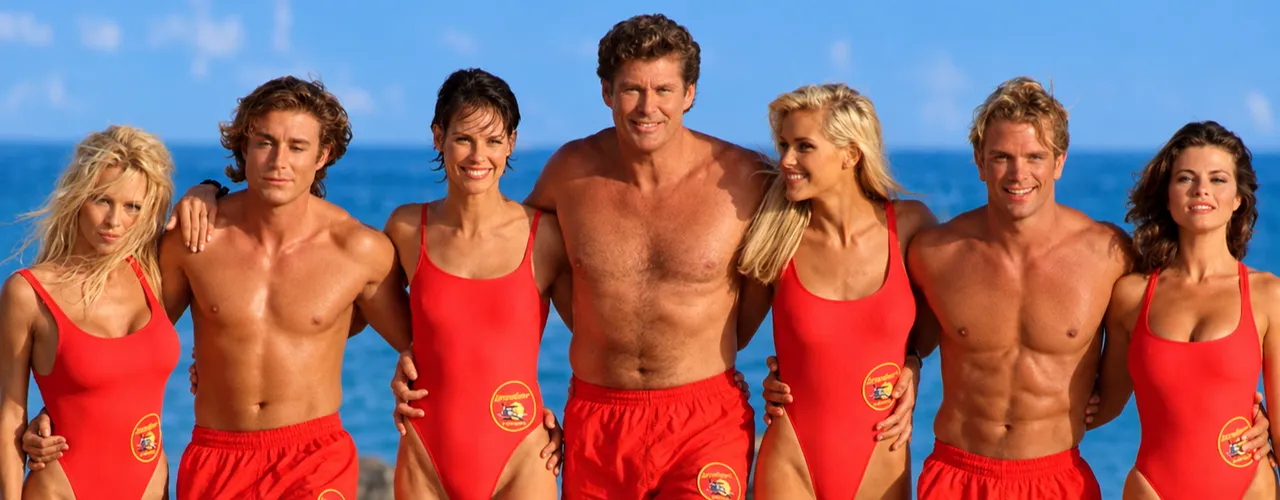
The connection between the magazine and Baywatch eventually became so natural that it is difficult to tell where one phenomenon ended and the other began. Playboy Playmates became Baywatch actresses. Women made famous by Baywatch later appeared in Playboy. Producers looked toward the magazine for camera-ready talent, while Playboy saw the world's most visible beach series as an obvious source of new stars.
It was not merely coincidence. Gary Cole, who worked with Playboy, later recalled that the two operations developed an informal alliance: Baywatch hired women who had appeared in Playboy, while Playboy approached women from the show for pictorials. Producer Douglas Schwartz remembered something even more wonderfully specific: on the show's regular "swimsuit day," Playboy Playmates sometimes modeled the suits being considered for the series.
Two of the most successful glamour machines of the era had discovered that they spoke the same visual language. And nobody embodied their connection more completely than Pamela Anderson.
How Baywatch Began as a Serious Lifeguard Drama
The first surprise in the Baywatch story is that nobody originally set out to create what Baywatch eventually became.
Gregory Bonann was a real Los Angeles County lifeguard who had spent years trying to turn the world he knew into television. Working with Michael Berk and Douglas Schwartz, he developed a drama centered on the professional lives of beach lifeguards: rescues, accidents, relationships, teamwork and the peculiar dangers that came with protecting Southern California's coastline.
NBC aired the original Baywatch television movie in 1989 and ordered the series for the 1989–90 season. In those early episodes, the show was considerably more restrained than its later reputation suggests. Erika Eleniak would remember the NBC version as a serious attempt to portray lifeguarding in much the same way television portrayed doctors, lawyers or police officers. Even the swimsuits were comparatively conservative and close to professional lifeguard regulation.
The premise was straightforward: Baywatch was supposed to be a workplace drama that happened to have an exceptionally photogenic workplace.
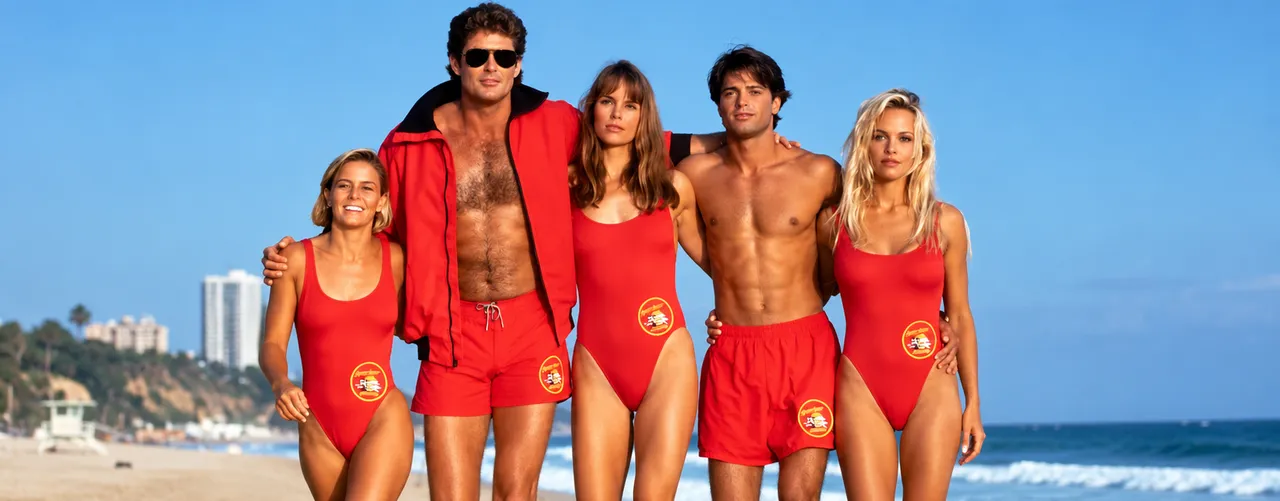
Playboy, however, was present almost from the beginning.
One of the original show's most important young stars was Erika Eleniak, Playboy's Playmate of the Month for July 1989. As Shauni McClain, Eleniak became part of the central lifeguard ensemble just months after her centerfold appeared. Her presence is an important correction to the common assumption that Playboy entered the Baywatch story only after Pamela Anderson arrived. A Playmate was already standing on the beach during the show's first year.
At that point, however, Baywatch still had no idea what it was about to become.
The TV Show That Came Back From the Dead for $10
The NBC version lasted only one season, and the reasons for its disappearance were more complicated than simply poor ratings. The series was expensive to make. Shooting in the water, staging rescues, filling beaches with extras and maintaining a large action-oriented production cost considerably more than an ordinary television drama.
Yet something unexpected was happening overseas. International distributors saw potential in the show, particularly in Europe, and encouraged the producers to consider making new episodes. That required getting Baywatch back.
The story has become one of television's great pieces of business folklore. Berk later recalled that the producers bought the rights back for just $10. Schwartz and Berk then spent much of 1990 rebuilding the financial structure needed to produce the series for first-run syndication. David Hasselhoff agreed to become an executive producer and take a substantial salary reduction, while his popularity in Germany helped unlock European financing. The resurrection changed the show.
Without the constraints of NBC, Baywatch could become more visually distinctive and more easily sold around the world. Swimsuits were redesigned. The beach became brighter. The physicality of the cast mattered more. The camera lingered a little longer. And one stylistic experiment became its signature.
How Slow Motion and the Red Swimsuit Created the Baywatch Look
The famous slow-motion run was not originally conceived as a way of photographing attractive women.
Michael Berk recalled that Greg Bonann had returned from filming Olympic sprinters and had been struck by footage of athletes running in slow motion. The production began experimenting with the technique, and it soon became one of Baywatch's most recognizable devices.
Placed on a beach, however, slow motion acquired an entirely different cultural meaning.
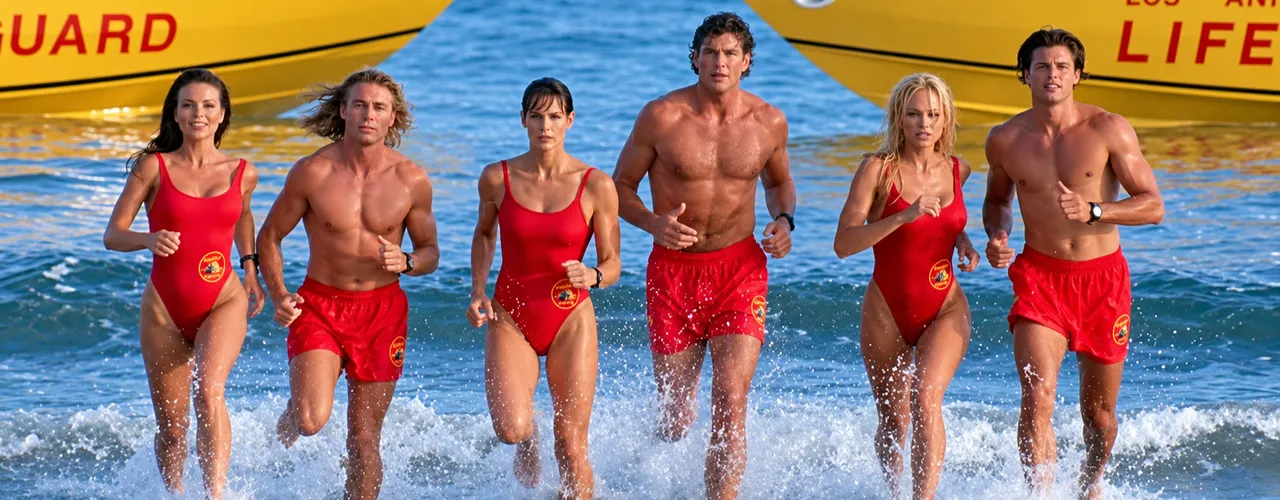
The suits evolved too. Once the show moved into syndication, producers had greater freedom with their design and fit. Individual tailoring helped create the high-cut silhouette that audiences came to associate with Baywatch. What had begun as functional lifeguard clothing gradually became one of television's most effective costumes.
The transformation was remarkably similar to Playboy's understanding of visual branding. Playboy had the Rabbit Head, Bunny ears and the centerfold. Baywatch had the tower, the rescue can and the red swimsuit.
Both understood that a powerful image should be recognizable before anyone has read a word or heard a line of dialogue. Then a woman arrived who could connect the two worlds almost effortlessly.
Pamela Anderson: Where Playboy and Baywatch Truly Met
Before C.J. Parker ever ran down a California beach, Pamela Anderson was already a Playboy phenomenon.
Her discovery had the accidental quality of a Hollywood fable. Anderson was shown on a stadium video screen at a Canadian football game in 1989 while wearing a Labatt beer T-shirt. The audience reaction led to promotional work, Playboy noticed her, and she appeared on the magazine's October 1989 cover. A few months later she was named Playboy's Playmate of the Month for February 1990.
Television followed. Anderson appeared on Home Improvement as Lisa, the original Tool Time girl, before joining Baywatch in 1992 as C.J. Parker.
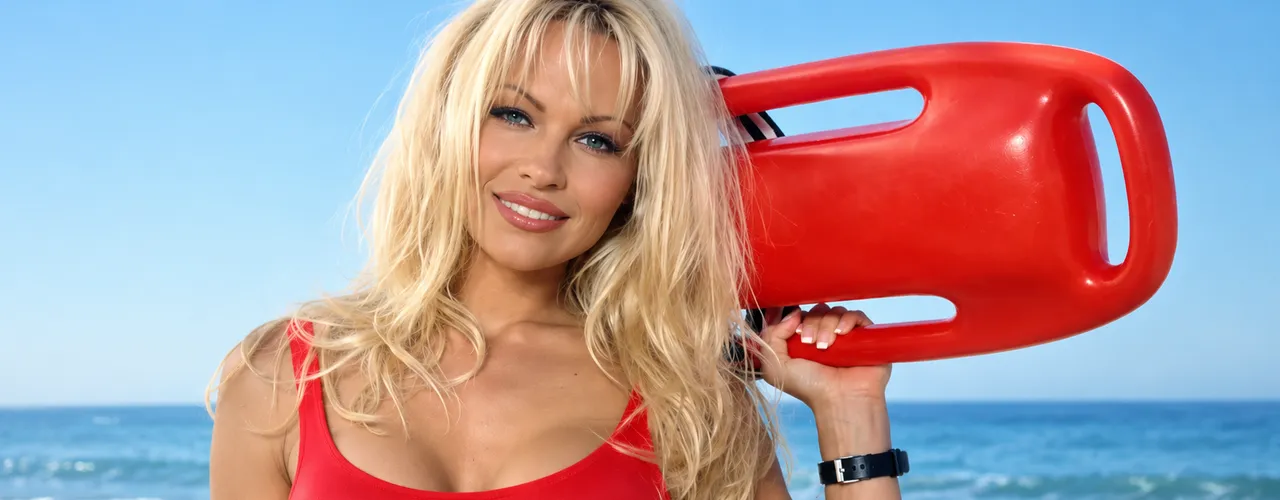
The effect was immediate.Anderson did not invent the Baywatch aesthetic, but she seemed almost uncannily designed for the version of the show that had emerged in syndication. Blonde hair, an athletic pin-up figure, California sunlight and the red swimsuit combined into an image that traveled with extraordinary ease across cultures.
Baywatch made Anderson internationally famous on a scale Playboy alone could never have achieved. Playboy, in turn, gave Baywatch a performer who already understood glamour photography and whose public image fitted the show's new direction perfectly. Biography's retrospective on the cast describes her Playboy and advertising visibility as the prelude to the international fame she achieved playing C.J. from 1992 to 1997.
Her connection with Playboy did not disappear once television took over. Anderson returned to the magazine repeatedly throughout her career and ultimately became one of the personalities most closely associated with Playboy's modern history.
The two brands amplified one another through her. Playboy had introduced Pamela Anderson to a national glamour audience. Baywatch introduced her to much of the planet.
The Playboy-to-Baywatch Pipeline
Once Pamela became one of the show's defining faces, the relationship between Playboy and Baywatch was impossible to ignore.
Gary Cole later described the connection quite plainly: the show hired women associated with Playboy, and Playboy approached actresses associated with the show. It was advantageous to both sides. The logic was simple.
A successful Playboy model arrived with professional camera experience, name recognition and an understanding of glamour presentation. For Baywatch, that could make her a natural candidate for a series in which physical presence mattered alongside acting and athletic performance.
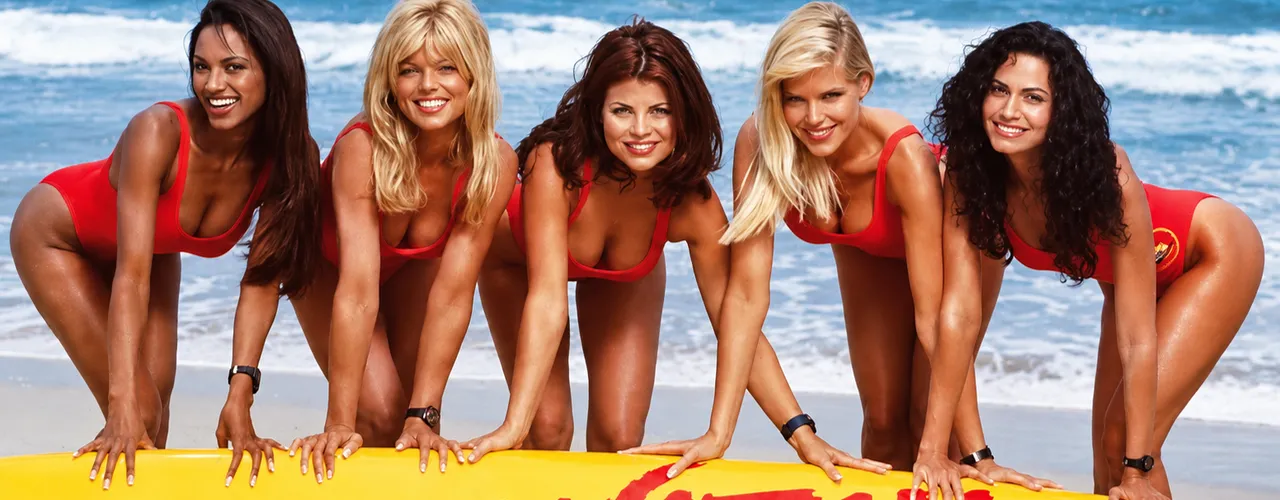
Meanwhile, a Baywatch actress came to Playboy with something equally valuable: television fame. At the show's peak, that fame was international.
The pipeline therefore worked in both directions.
Playboy could introduce a woman to America. Baywatch could introduce her to the world.
And sometimes Baywatch supplied Playboy with the star after television had already made her famous.
Erika Eleniak: The Original Playmate Lifeguard
Erika Eleniak deserves a special place in the story because she was there before the formula existed.
Named Miss July 1989, Eleniak joined Baywatch as Shauni McClain during its original NBC period. Her character was not merely scenery on the beach; Shauni developed from an inexperienced rookie into a capable lifeguard and became one of the young emotional centers of the early series.
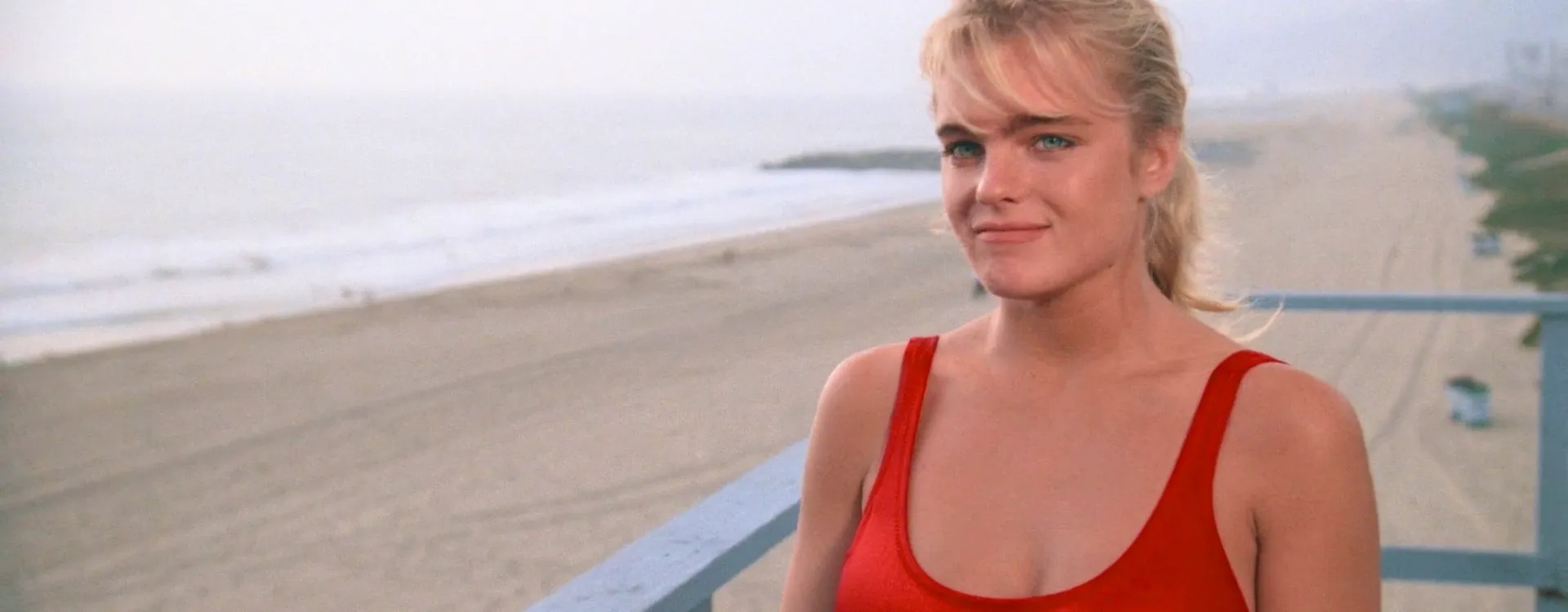
Her timing makes her an important bridge between two versions of Baywatch. She entered when the show still thought of itself primarily as an earnest workplace drama, then remained through the beginning of the syndicated transformation.
Only later would the idea of "Playmate turned Baywatch star" become so familiar that it almost seemed like part of the casting formula. Eleniak had done it first.
Donna D'Errico: From Miss September to Donna Marco
A few years later, the route from Playboy to the beach had become much more direct.
Donna D'Errico was named Playboy's Playmate of the Month for September 1995. Before Playboy, she had operated a limousine business in Las Vegas; afterward, television quickly became the larger opportunity. D'Errico entered the Baywatch franchise through Baywatch Nights and became Donna Marco on the main series.
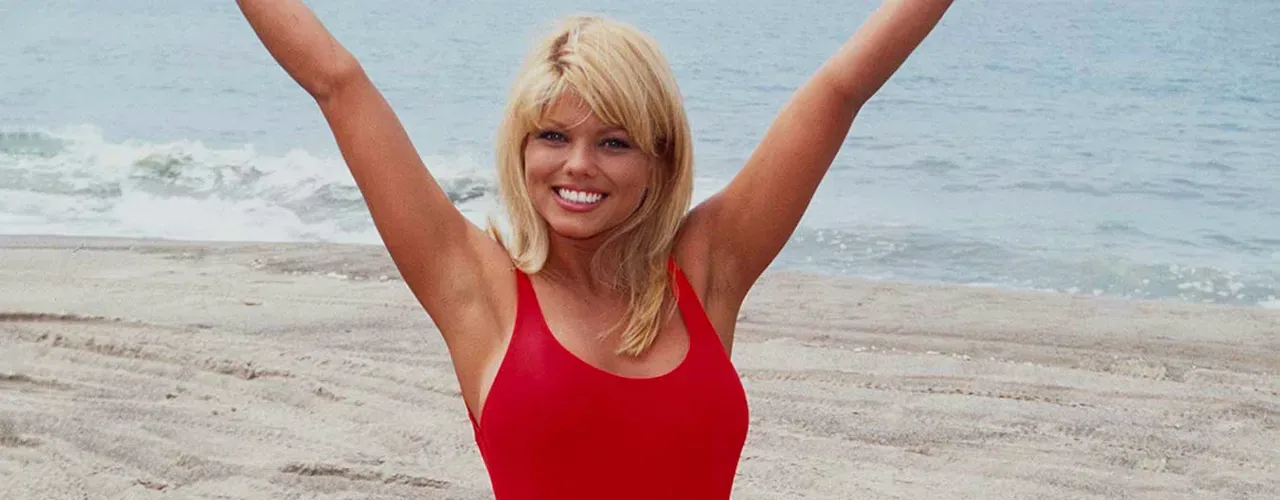
By then, nobody needed to explain why Playboy and Baywatch might share talent. Pamela Anderson had already demonstrated the commercial power of the combination.
D'Errico also represents an important shift in how a Playmate career could develop during the 1990s. The centerfold no longer necessarily stood at the peak of a model's public visibility. It could function as an introduction, followed by television, acting and a much broader celebrity career.
For Playboy, Baywatch was becoming something close to a global amplifier.
Kelly Monaco: A Real Lifeguard Becomes a Playmate, Then Joins Baywatch
Few stories connect the two brands as neatly as that of Kelly Marie Monaco.
Before Playboy, Monaco had actually worked as a lifeguard at a resort in Pennsylvania's Pocono Mountains. She sent photographs to Playboy in 1996 and became the magazine's Playmate of the Month for April 1997.
Her original Playboy profile practically predicted what came next. Noting her real-world lifeguard experience, the magazine wondered whether she might follow Pamela Anderson and Donna D'Errico onto the set of Baywatch. She did.
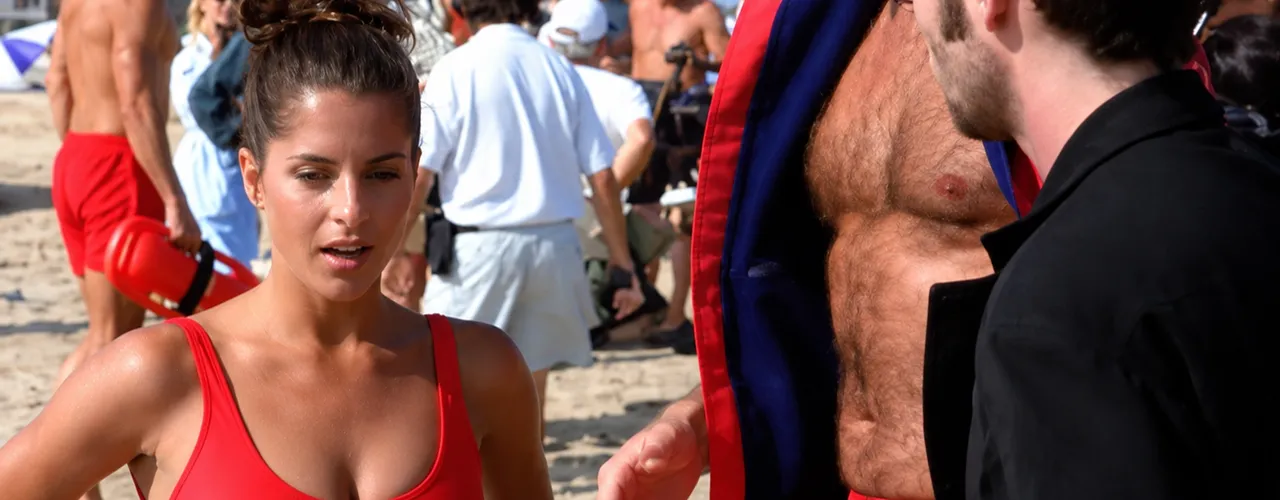
Monaco appeared on the show in 1997 and 1998, including as rookie lifeguard Susan, and also occasionally doubled for Carmen Electra in swimming scenes. Her part was far smaller than Anderson's or Eleniak's, but as a piece of Playboy/Baywatch history it is almost perfect: real lifeguard, Playboy Playmate, then Baywatch lifeguard.
Television would eventually take Monaco much further, particularly through Port Charles, General Hospital and the first season of Dancing with the Stars. But the path into television had run directly through Playboy and the beach.
Marliece Andrada: When the Playboy Shoot Met the Baywatch Set
Marliece Andrada made the relationship even more literal.
After working as a Raiderette and beginning to pursue acting in Los Angeles, Andrada auditioned for Baywatch and underwent a water "tank test" before winning the role of lifeguard Skylar Bergman. Her athletic background suited a series that increasingly demanded performers who looked convincing both in glamour shots and in the water.
Then came Playboy. Andrada became Playboy's Playmate of the Month for March 1998, and part of her pictorial was photographed on the Baywatch set.
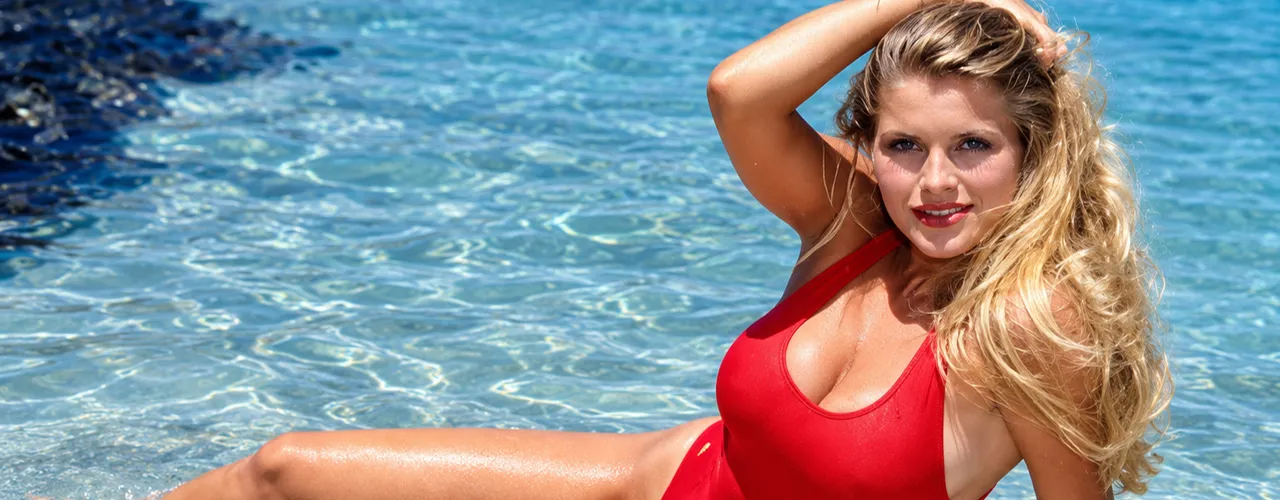
By this point the overlap no longer required much explanation. Playboy imagery could borrow the visual world of Baywatch, and Baywatch could recruit women whose magazine credentials already fitted its own aesthetic.
The red swimsuit and the centerfold had become neighboring pieces of 1990s popular culture.
Carmen Electra: Baywatch First, Playboy Celebrity Too
Not every Playboy woman on Baywatch was a Playmate, and that distinction matters.
Carmen Electra was never a Playmate of the Month. Her relationship with Playboy belonged to the magazine's celebrity tradition, including pictorial appearances that became part of her broader rise through music, MTV, modeling and television.
Electra joined Baywatch as Lani McKenzie for the 1997–98 season, bringing an already highly recognizable pop-culture persona to the beach. She later returned to the role for Baywatch: Hawaiian Wedding.
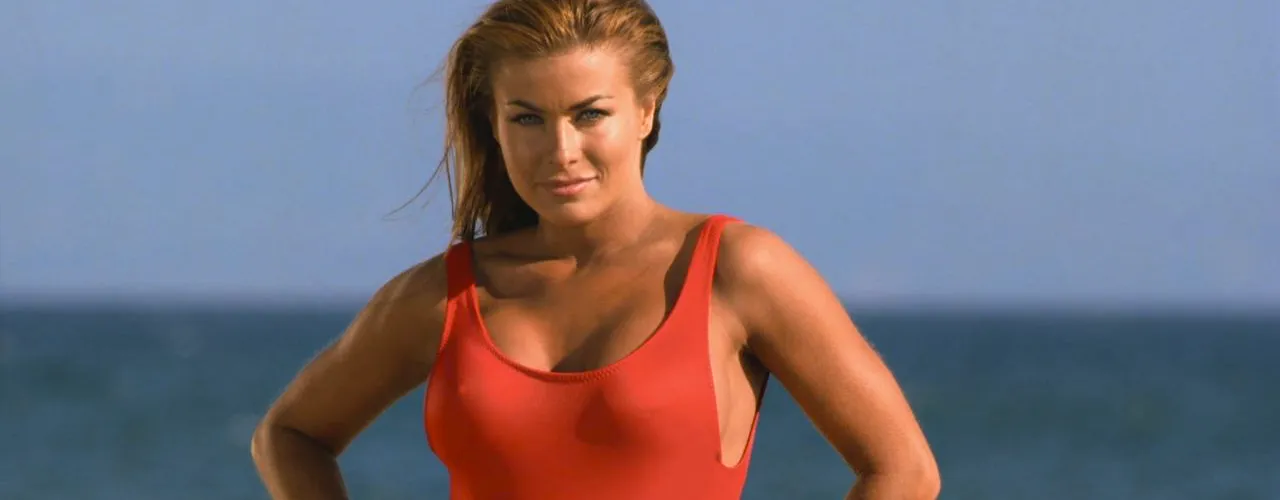
Her career demonstrates the reverse version of the Playboy/Baywatch relationship. By the late 1990s, appearing on Baywatch could itself make a woman an obvious Playboy subject. The show had become one of the world's most efficient showcases for a certain kind of glamour celebrity. That was precisely why the relationship worked both ways.
Gena Lee Nolin: From Baywatch Fame to Playboy
Gena Lee Nolin provides another example of the television-to-Playboy route.
Nolin joined Baywatch in 1995 as Neely Capshaw, a considerably more complicated character than the relentlessly noble lifeguard stereotype. Neely could be ambitious, manipulative and unpredictable, giving Nolin a distinctive place within the ensemble.
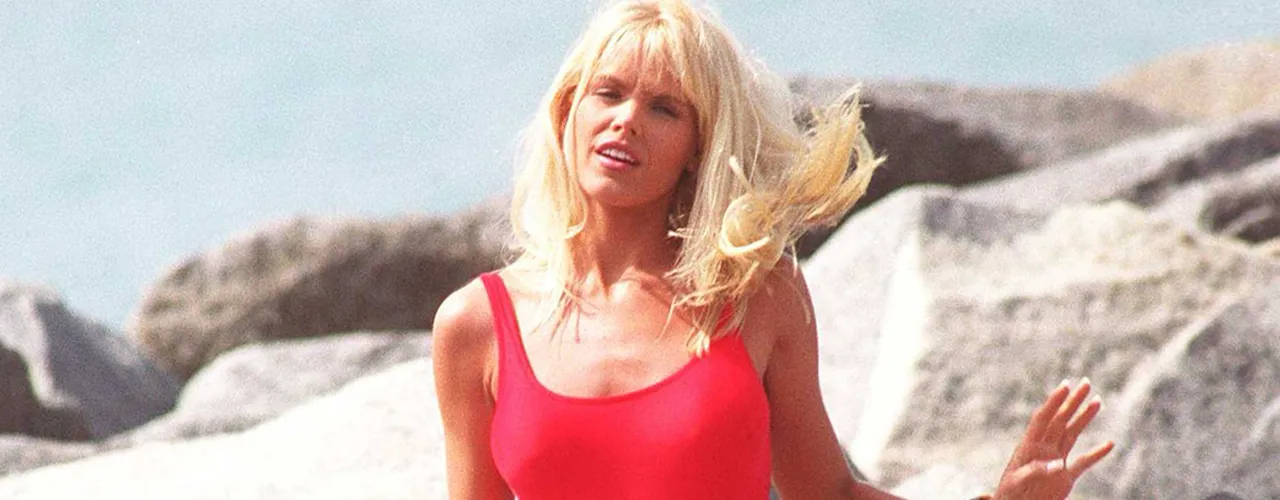
Playboy pursued her during the Baywatch era, but Nolin did not immediately accept. Her eventual Playboy celebrity appearance came later, in 2001, after she had left the regular series and moved on to star in Sheena.
That chronology is important. Nolin wasn't a Playmate recruited by Baywatch. She was a television star whose Baywatch image made her a natural fit for Playboy. Once again, the pipeline operated in reverse.
Brande Roderick and Playboy in the Baywatch Hawaii Era
By the time the production moved to Hawaii, the original 1990s Baywatch phenomenon was nearing its final chapter, but the Playboy connection remained.
Brande Nicole Roderick became Playboy's Playmate of the Month for April 2000 and later Playmate of the Year 2001. At roughly the same stage of her career, she joined Baywatch Hawaii as Leigh Dyer.
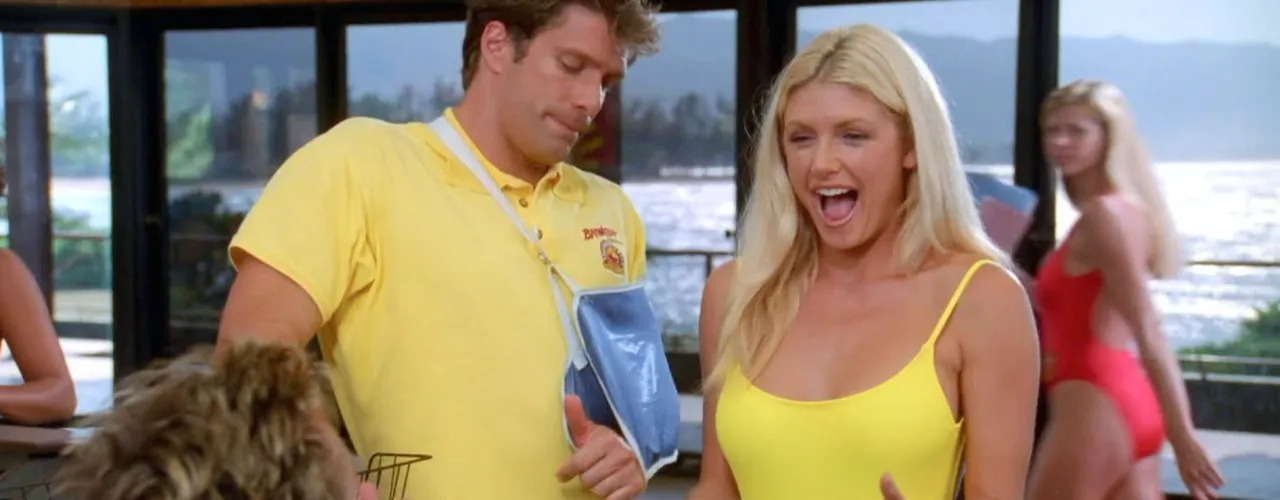
Roderick would later describe Playboy as an important platform in her career, while also observing that one of the attractions of Baywatch was that its female characters were not presented solely as ornaments. They might look glamorous, but within the fiction they were professionals with authority who rescued people and took command of emergencies.
That observation gets to something important about the unusual compatibility between the two brands. Baywatch could borrow the visual appeal of the pin-up while giving that image a heroic occupation.
Alicia Rickter and the Final Playboy Generation of Baywatch
Another Playmate made the transition during the Hawaiian period. Alicia Rickter, Playboy's Playmate of the Month for October 1995, later appeared on Baywatch Hawaii as Carrie Sharp during the show's final years.
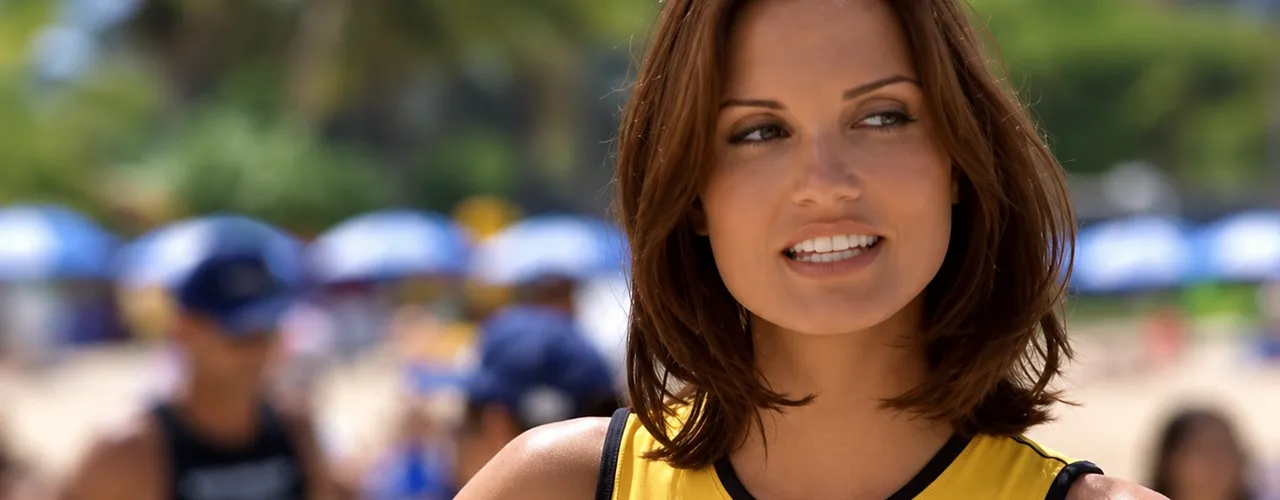
By then the pattern had existed for more than a decade. From Erika Eleniak in 1989 through Pamela Anderson, Donna D'Errico, Marliece Andrada and the later Hawaiian cast, Playboy had become part of the broader casting history of the franchise.
What began as an incidental overlap had become one of the show's recurring cultural signatures.
Why Playboy Models Were Such a Natural Fit for Baywatch
The obvious explanation is that both Playboy and Baywatch valued beauty. The more interesting explanation is that both were selling different versions of the same fantasy. Playboy had spent decades constructing a world of leisure, pools, travel, glamorous women, celebrity and the promise that ordinary life could somehow be upgraded into something more stylish.
Baywatch relocated many of those ingredients to the beach. There was sunshine, fitness, beautiful bodies, desirable locations and a seemingly endless Southern California summer. But the television show added an important ingredient: heroism.
The women of Baywatch might be photographed with all the visual attention normally associated with glamour modeling, but within the story they were also lifeguards. They performed rescues, administered first aid, drove boats, confronted criminals and ran toward emergencies while everybody else ran away.
That contradiction was part of the appeal. The show was simultaneously a pin-up fantasy and an action drama.
Roderick later suggested that Hugh Hefner appreciated exactly that aspect of the series: beautiful women were also portrayed as strong, authoritative figures.
For Playboy models trying to build careers beyond the magazine, that was a particularly useful combination. A woman could retain the glamour that first made her famous while television gave her a character, dialogue and a profession.
When Baywatch Became Bigger Than Television
To understand why the Playboy connection mattered so much, it helps to remember the extraordinary scale of Baywatch at its peak. This was not merely a successful American series.
Guinness World Records records that in 1996 Baywatch reached an estimated weekly audience of more than 1.1 billion viewers across 142 countries. It was translated into dozens of languages and broadcast across almost every part of the globe. Numbers on that scale transform what a television role can do.
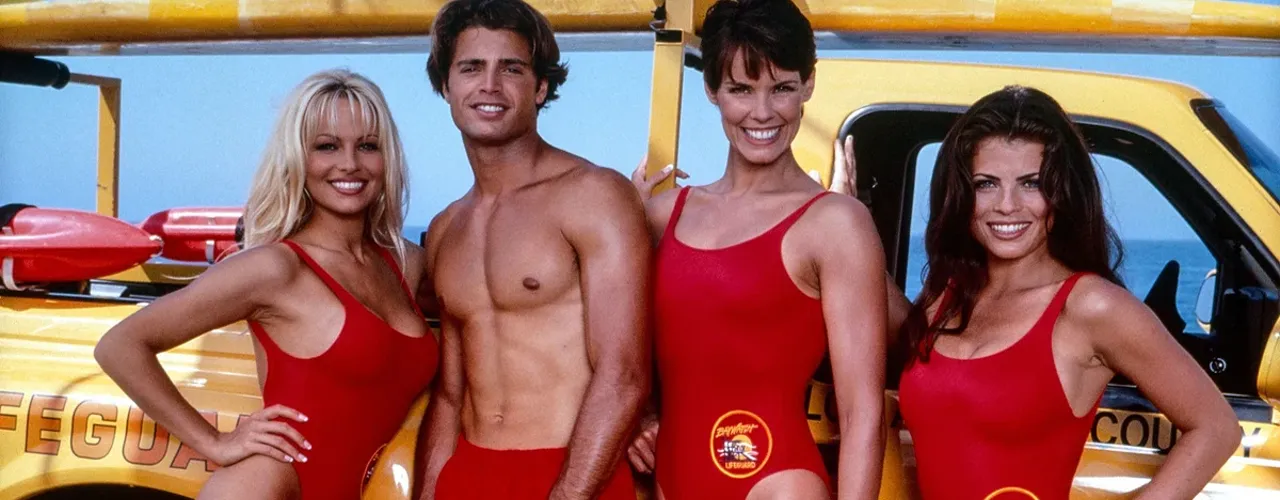
A Playboy centerfold could create substantial fame in the United States and other markets where the magazine circulated. A regular role on Baywatch could put the same face into living rooms from Britain to Germany, Australia to Latin America.
Pamela Anderson was the ultimate beneficiary, but she was hardly the only one. The show offered something extraordinarily valuable in the pre-social-media era: instant international visual recognition. The red swimsuit traveled very well.
Behind the Scenes: When Playboy Playmates Modeled Baywatch Swimsuits
Perhaps no anecdote captures the relationship better than "swimsuit day."
Douglas Schwartz recalled that swimwear companies regularly sent products to the production hoping to place their designs on the show. Every Friday, the producers would review possible suits—and Playboy Playmates were brought in to model them.
It's difficult to invent a more perfect picture of 1990s entertainment culture.
A global television series needed swimsuits. Fashion companies wanted exposure. Playboy supplied models. Producers chose what looked best on camera. Eventually those designs appeared on actresses who might themselves already have posed for Playboy—or would do so in the future. The entire relationship existed in miniature in one room.
There are other Baywatch production stories that sound almost fictional. Leonardo DiCaprio auditioned for the role of Hobie but was considered too old for the part. Pamela Anderson reportedly missed or delayed auditions before finally appearing and becoming one of the show's defining stars. And the producers who had once struggled to finance the series watched it grow into an international phenomenon after buying back the rights for less than the cost of lunch.
Baywatch was always a slightly improbable success story. Its relationship with Playboy simply made the story more colorful.
Pamela Anderson and the Perfect Collision of Two Brands
In the end, the Playboy–Baywatch connection always leads back to Pamela. Other Playmates appeared before her. Others joined after her. Some actresses moved from the television show into Playboy rather than the other way around. But Anderson became the point at which the two brands fused completely.
Playboy gave her an early national platform and helped construct the glamour identity that made Hollywood pay attention. Baywatch took that image, added a character, a red swimsuit and weekly television exposure, then distributed it around the world.
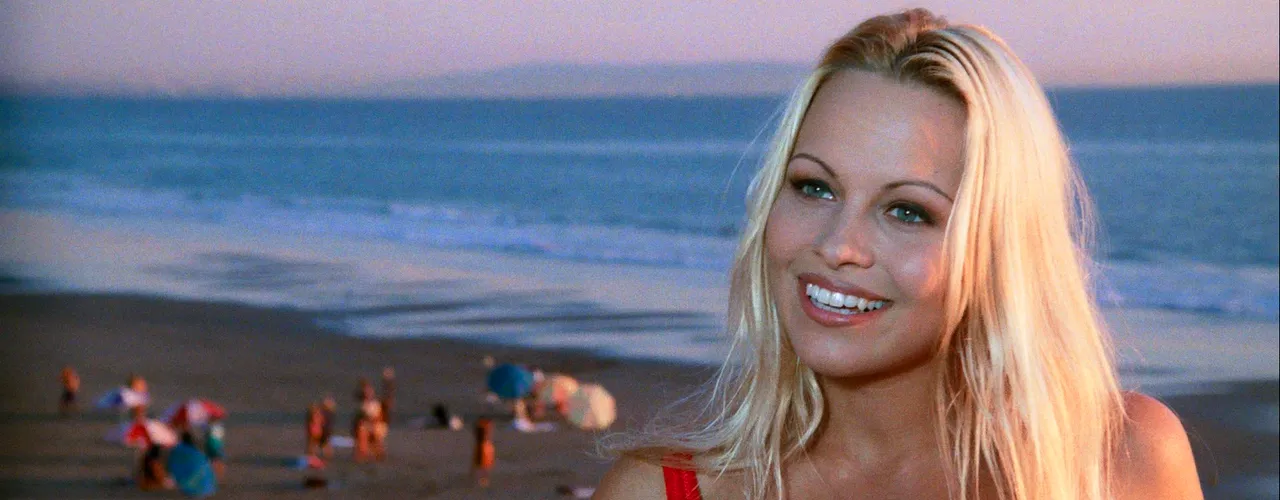
Her continued relationship with Playboy meant that each side reinforced the other. Television viewers knew the Playboy connection; Playboy readers knew C.J. Parker. Neither identity cancelled the other.
That was relatively unusual at the time. Mainstream television and nude modeling were still often treated as separate career worlds. Anderson crossed between them without ever fully abandoning either. The result was not simply a successful actress who had once been a Playmate. It was one of the defining celebrity images of the 1990s.
The Legacy of Baywatch and Playboy
Baywatch was never a Playboy production, and Playboy did not create the show. Their histories should not be collapsed into one. What developed between them was more interesting than that.
For much of the 1990s, the two occupied neighboring territories in popular culture. Both understood glamour. Both understood the appeal of California. Both knew the commercial power of a memorable image. And both were unusually good at taking people who were largely unknown and turning them into faces the public recognized.
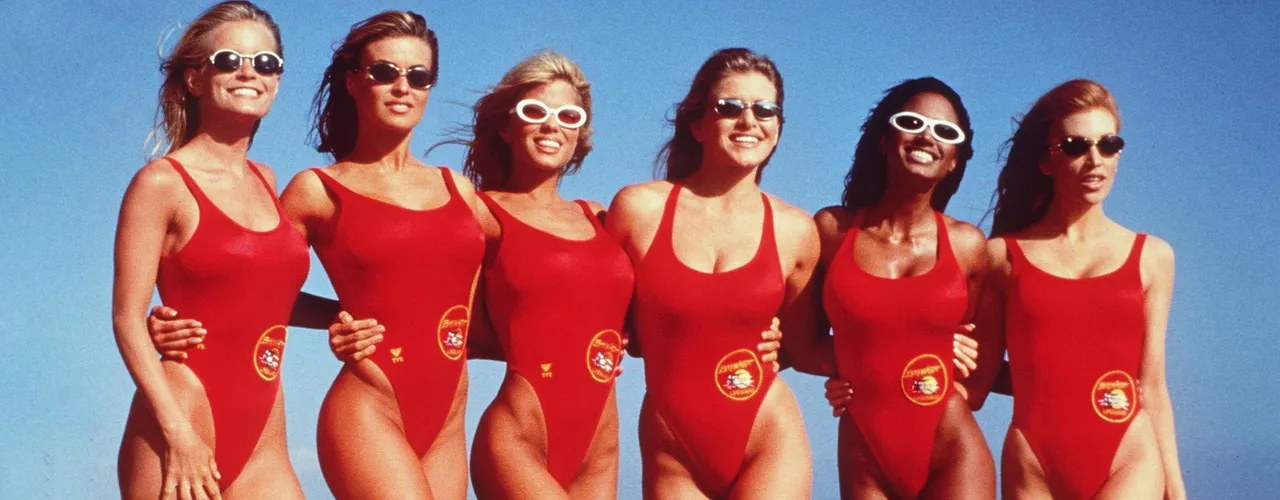
Playboy supplied Baywatch with women who already understood the camera. Baywatch supplied Playboy with television stars whose fame could sell magazines. Sometimes one woman traveled from one world into the other; sometimes she made the trip several times.
Erika Eleniak was there during the NBC beginning. Pamela Anderson turned the connection into a global phenomenon. Donna D'Errico, Kelly Marie Monaco, Marliece Andrada, Brande Nicole Roderick and Alicia Rickter continued the Playmate-to-beach tradition, while women such as Carmen Electra and Gena Lee Nolin demonstrated that the traffic could travel just as easily in the opposite direction.
For a generation, Playboy had the centerfold and Baywatch had the red swimsuit. Put them together, and you have one of the clearest snapshots of 1990s glamour culture imaginable.